

Exquisite Neo-Grec Ormolu & Champleve Enamel Jardiniere by Barbedienne & Sévin
ON HOLD
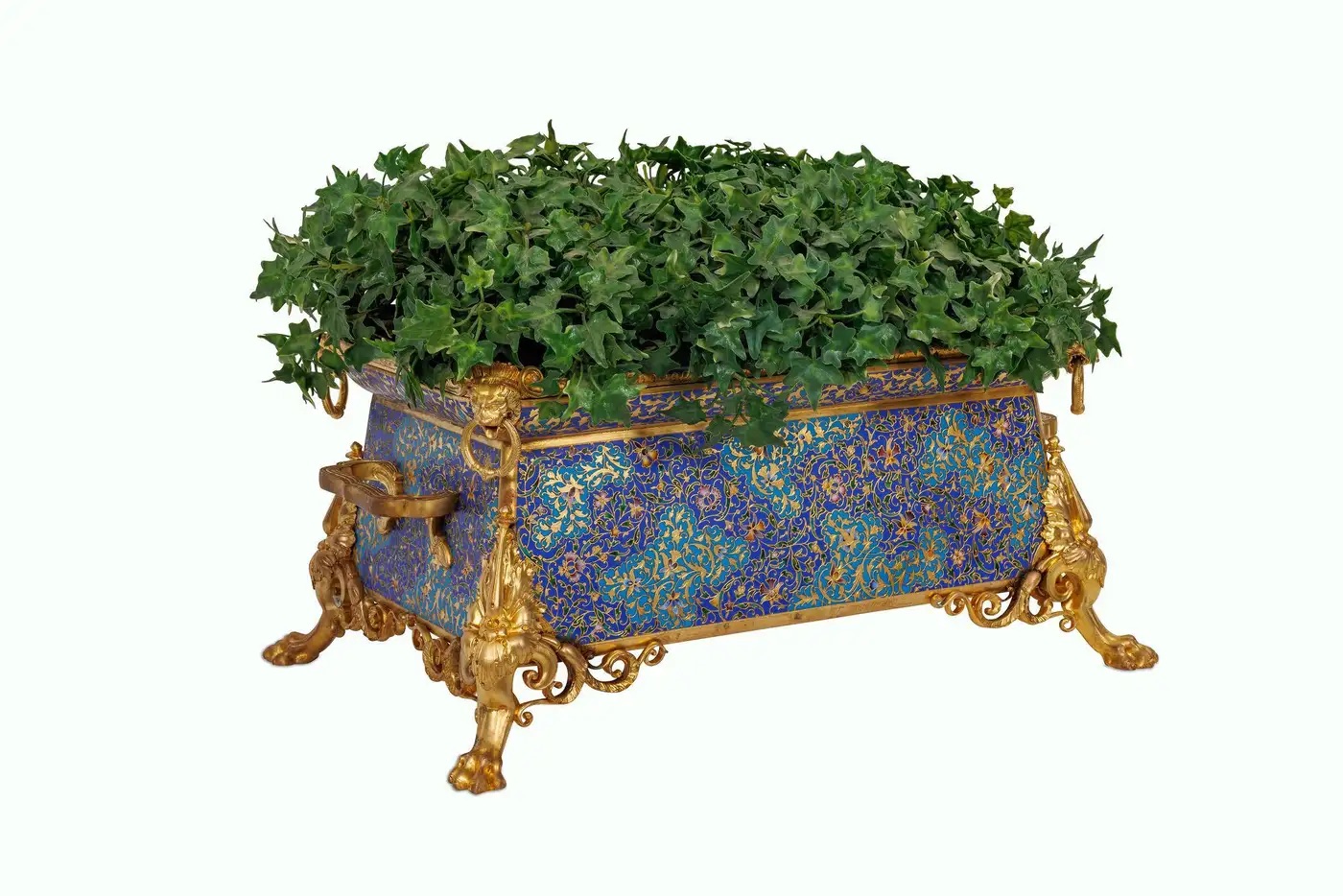
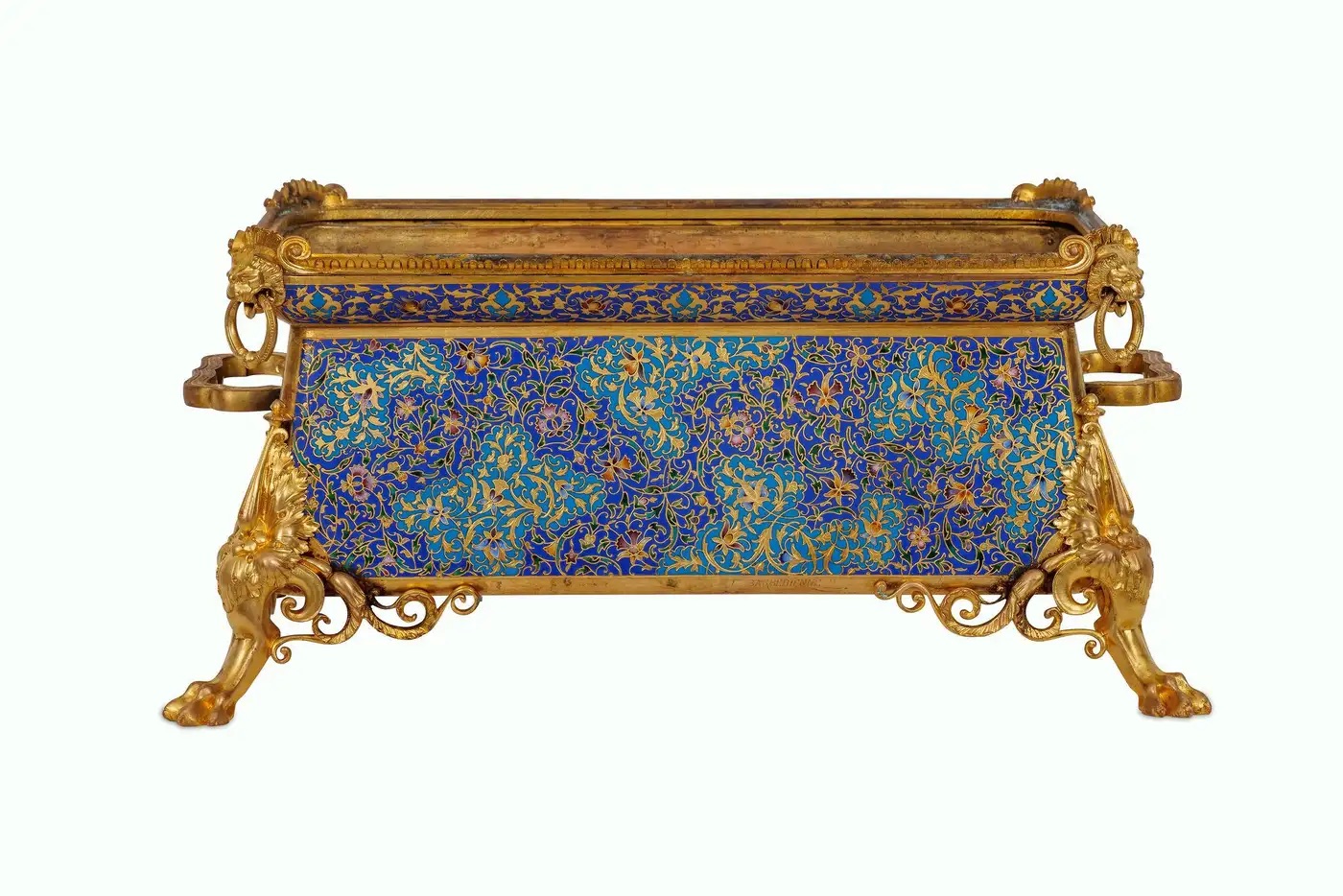
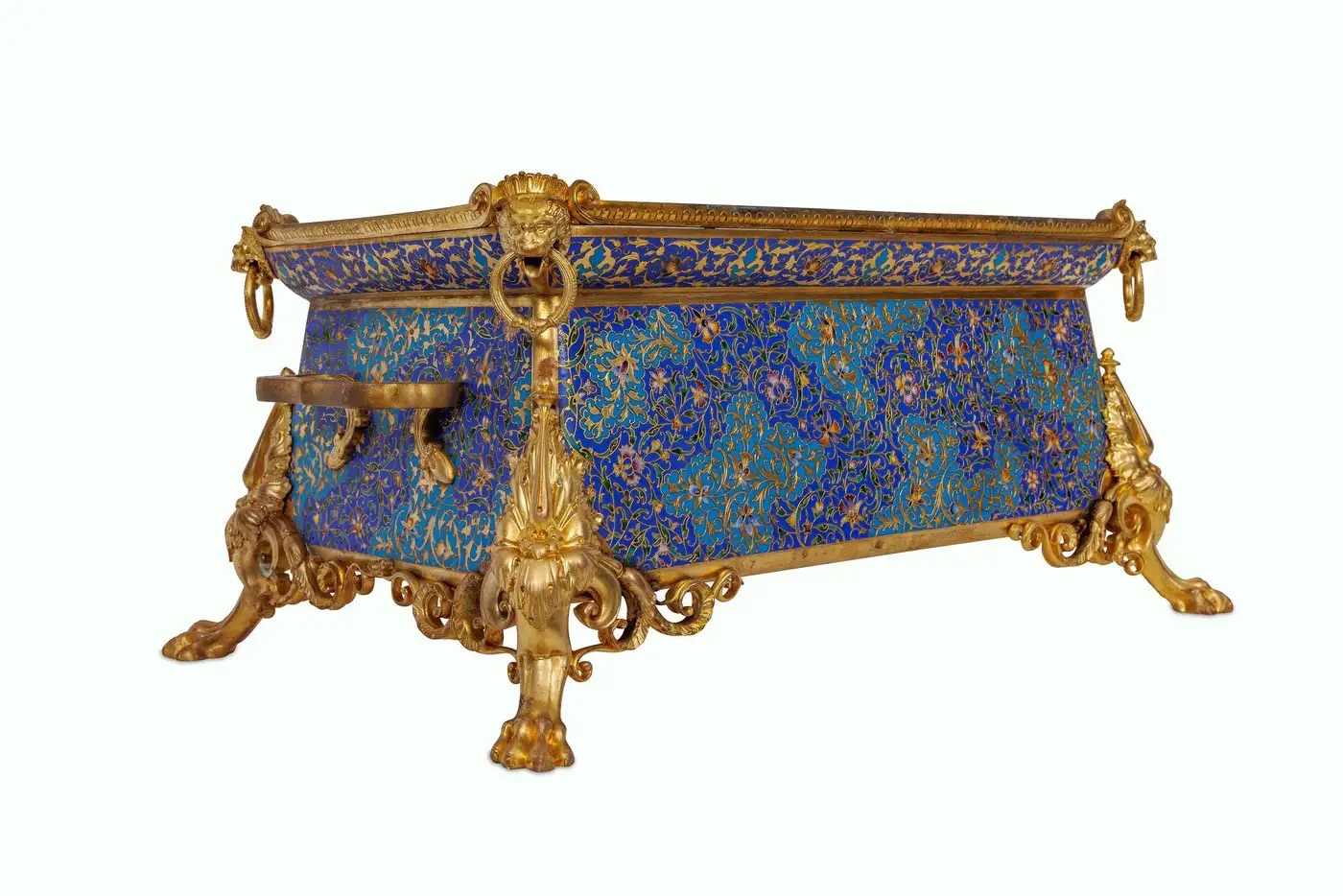
- A French Neo-Grec Ormolu and Champlevé Enamel Jardinière by Ferdinand Barbedienne and Louis-Constant Sévin, circa 1870
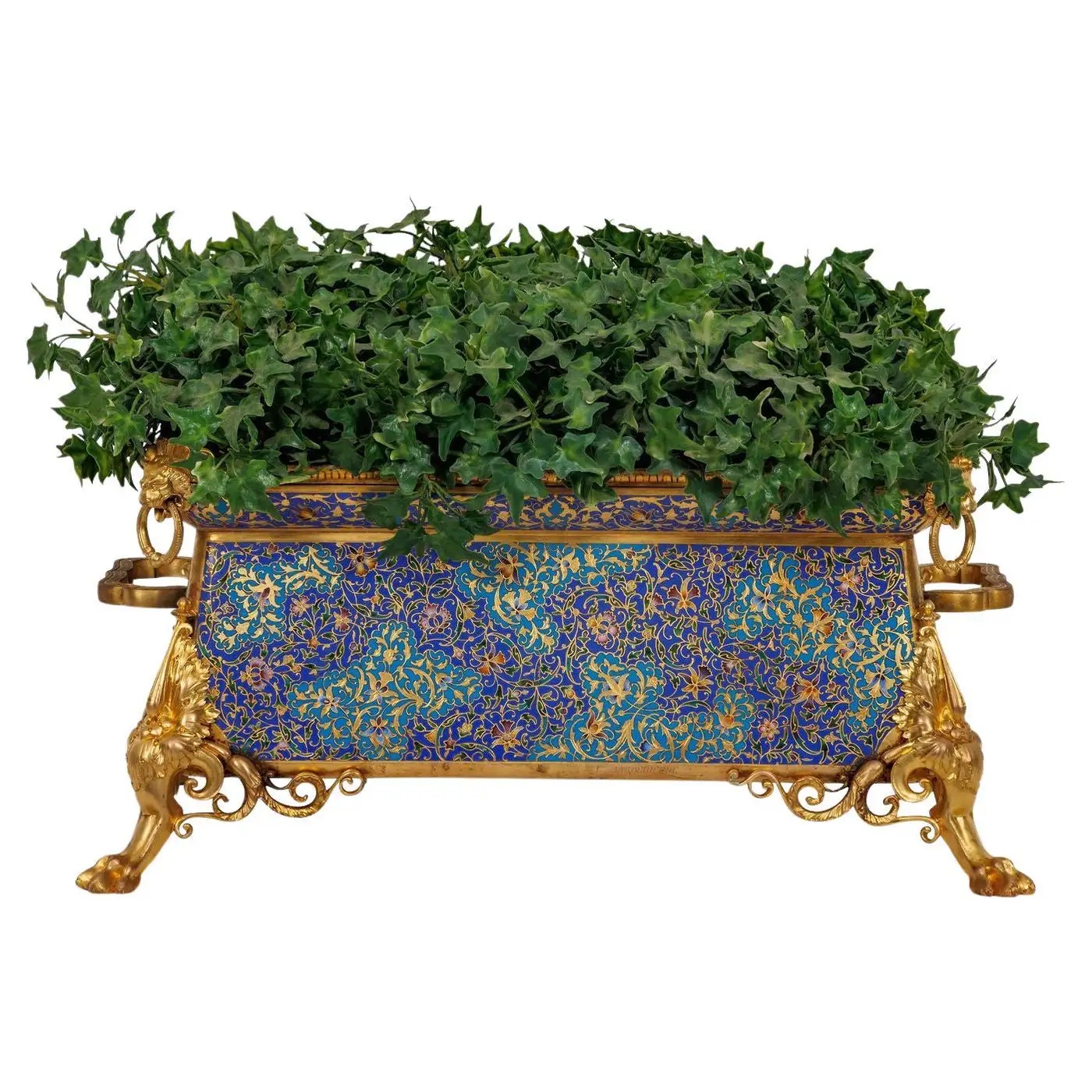
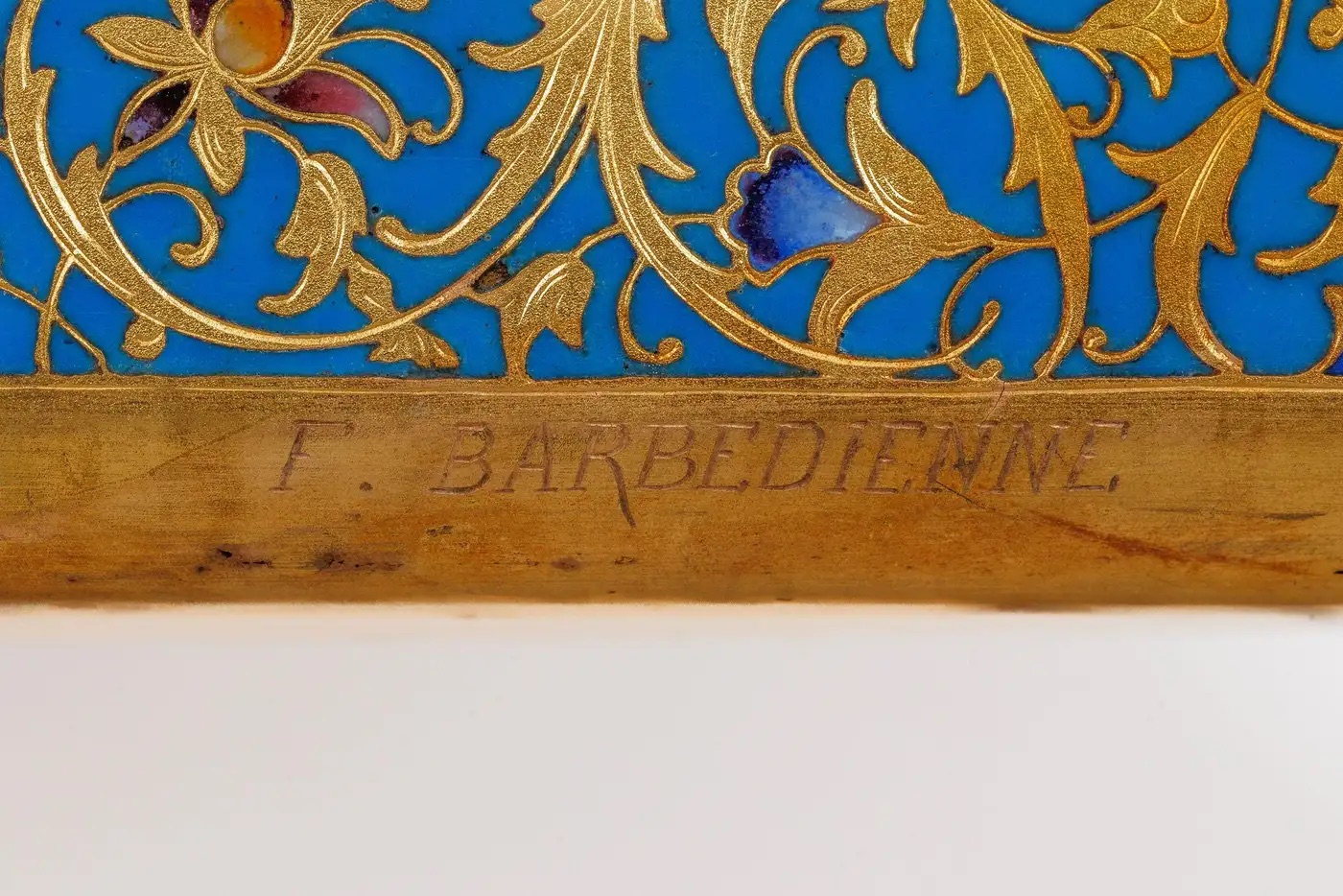
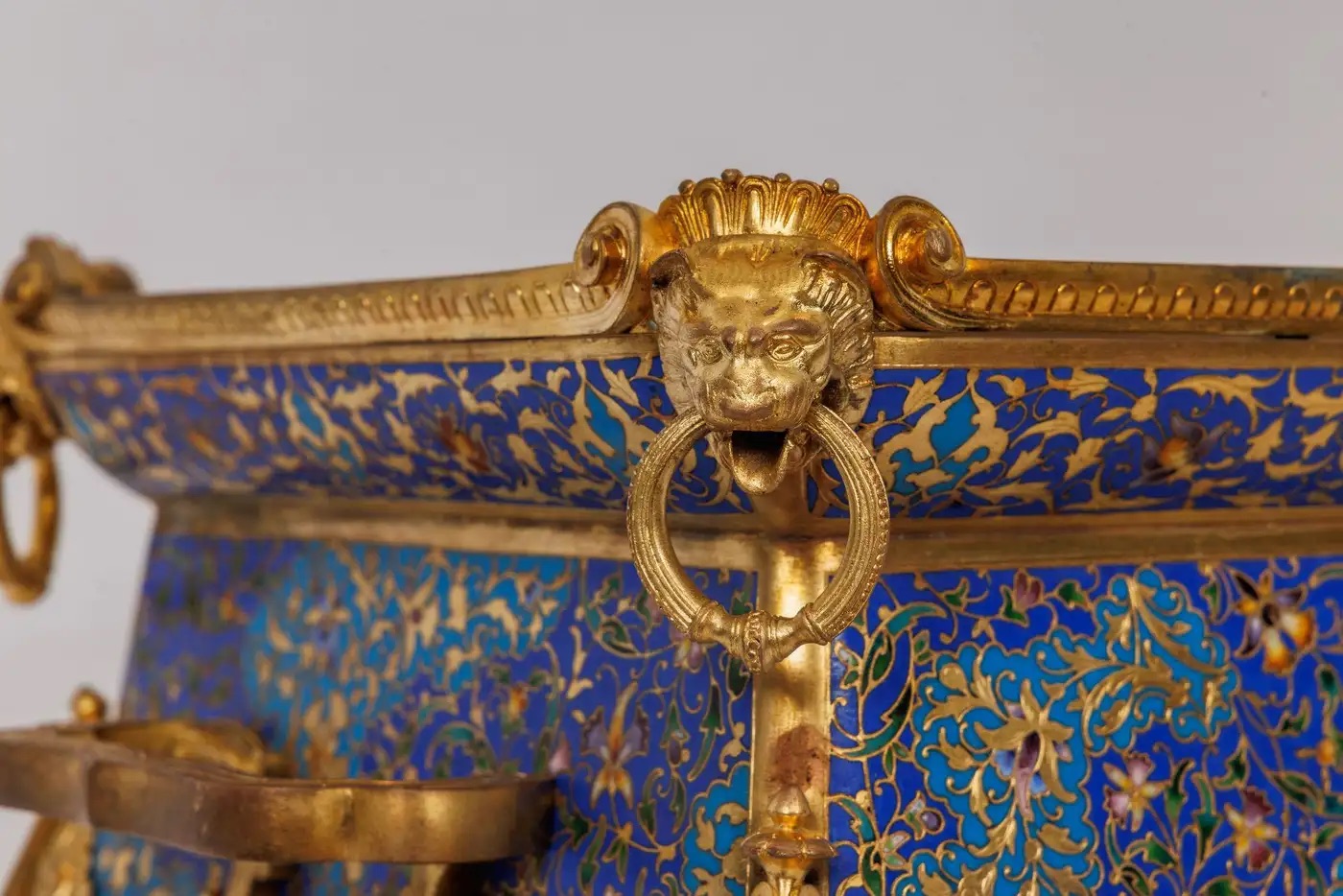
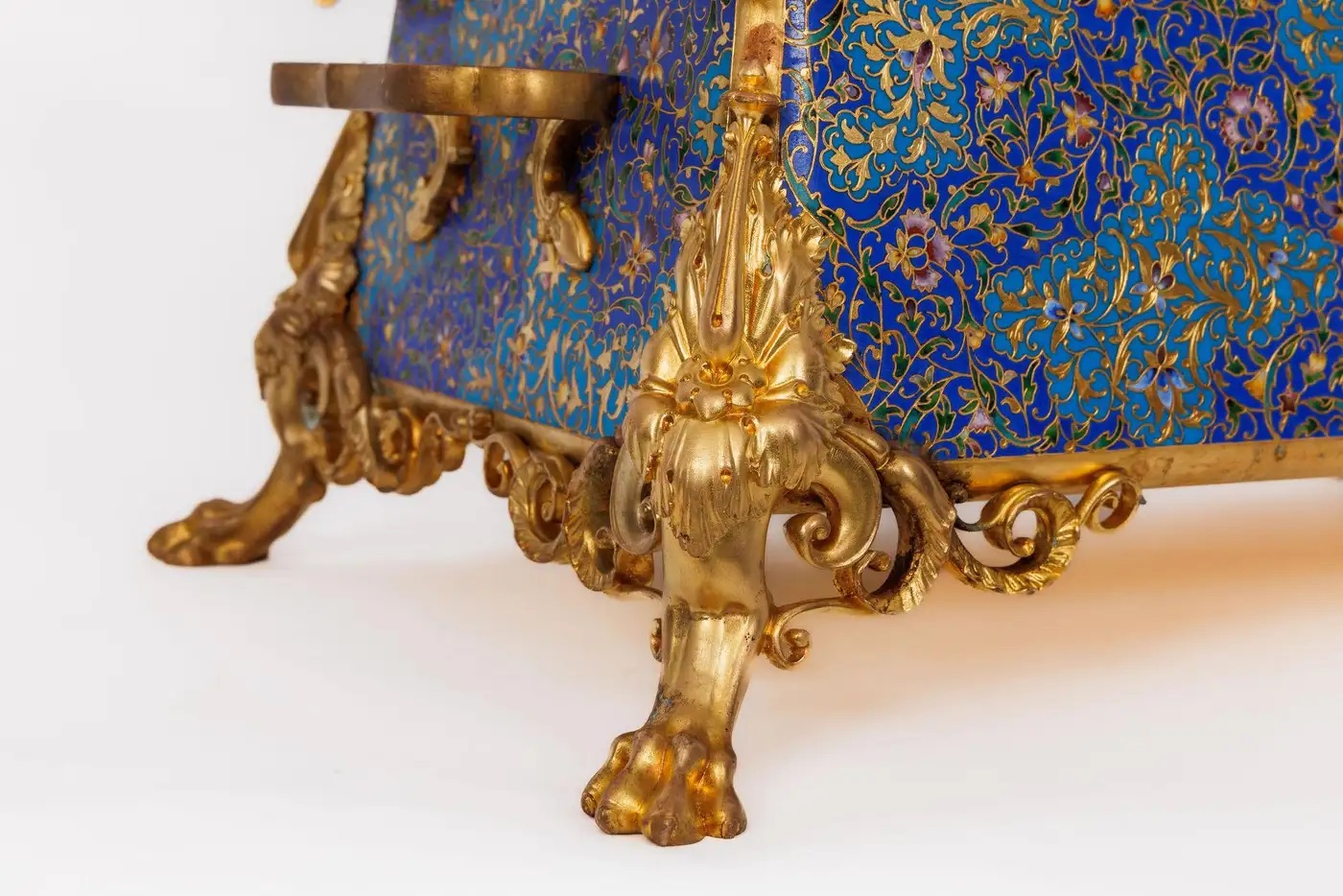
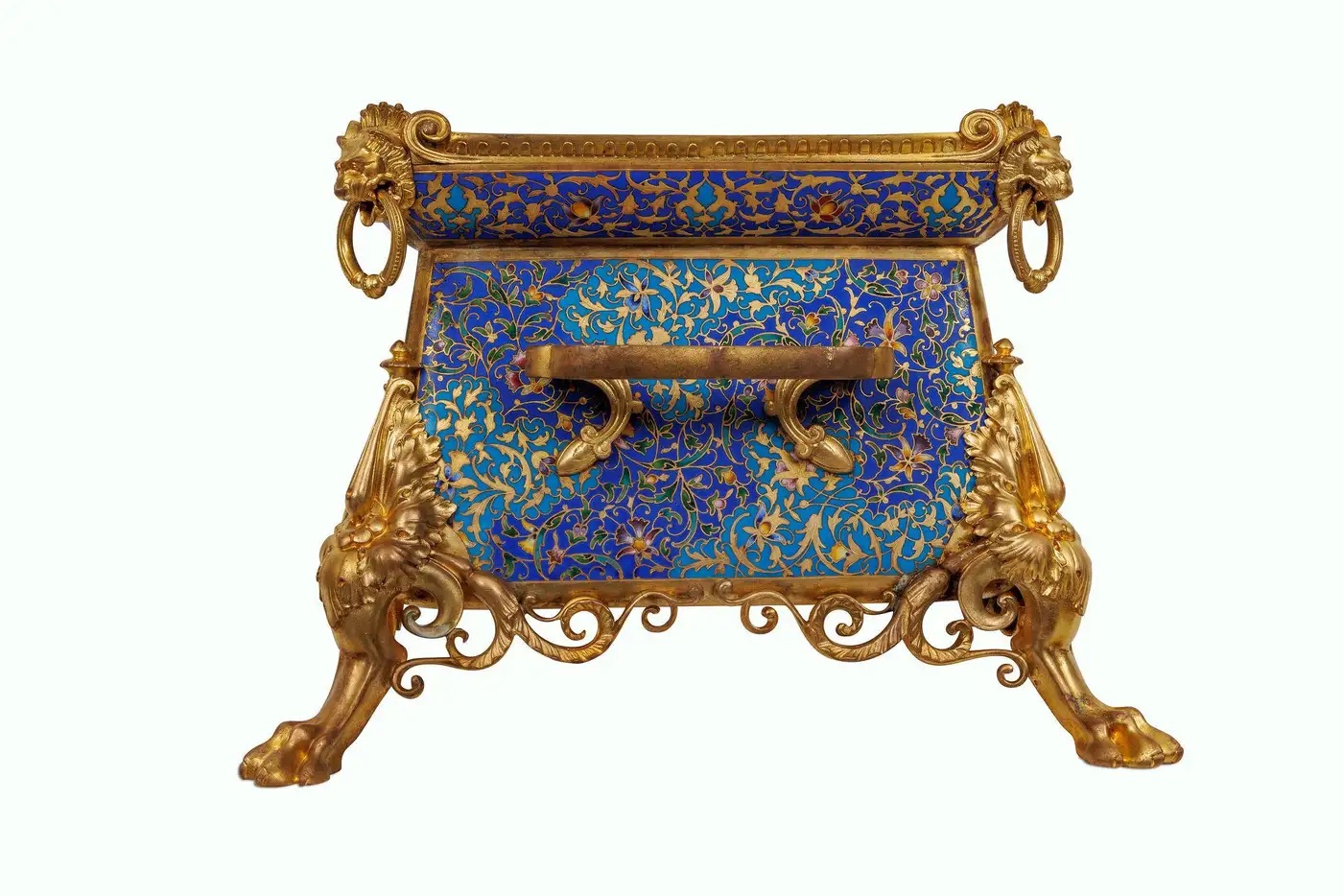
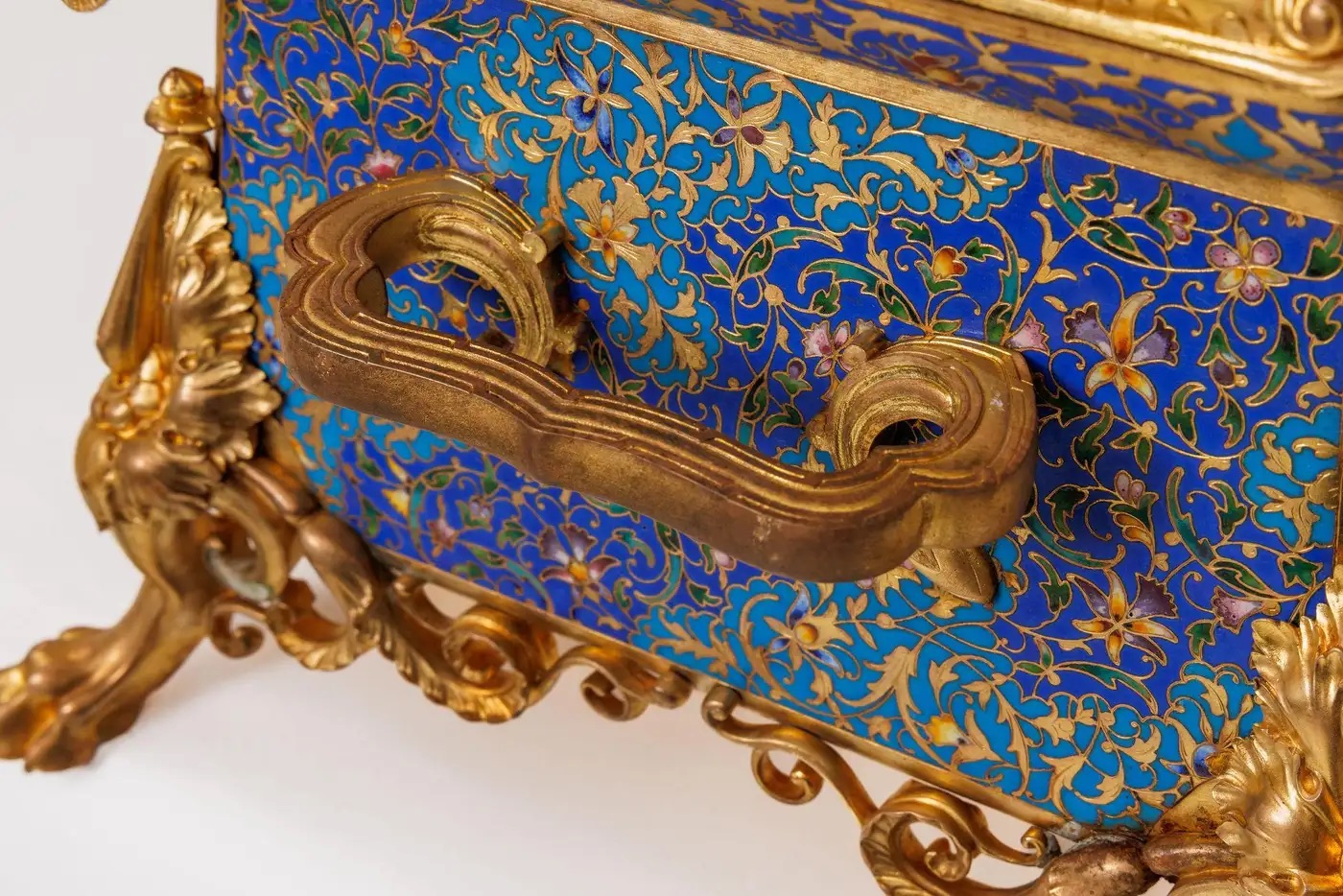
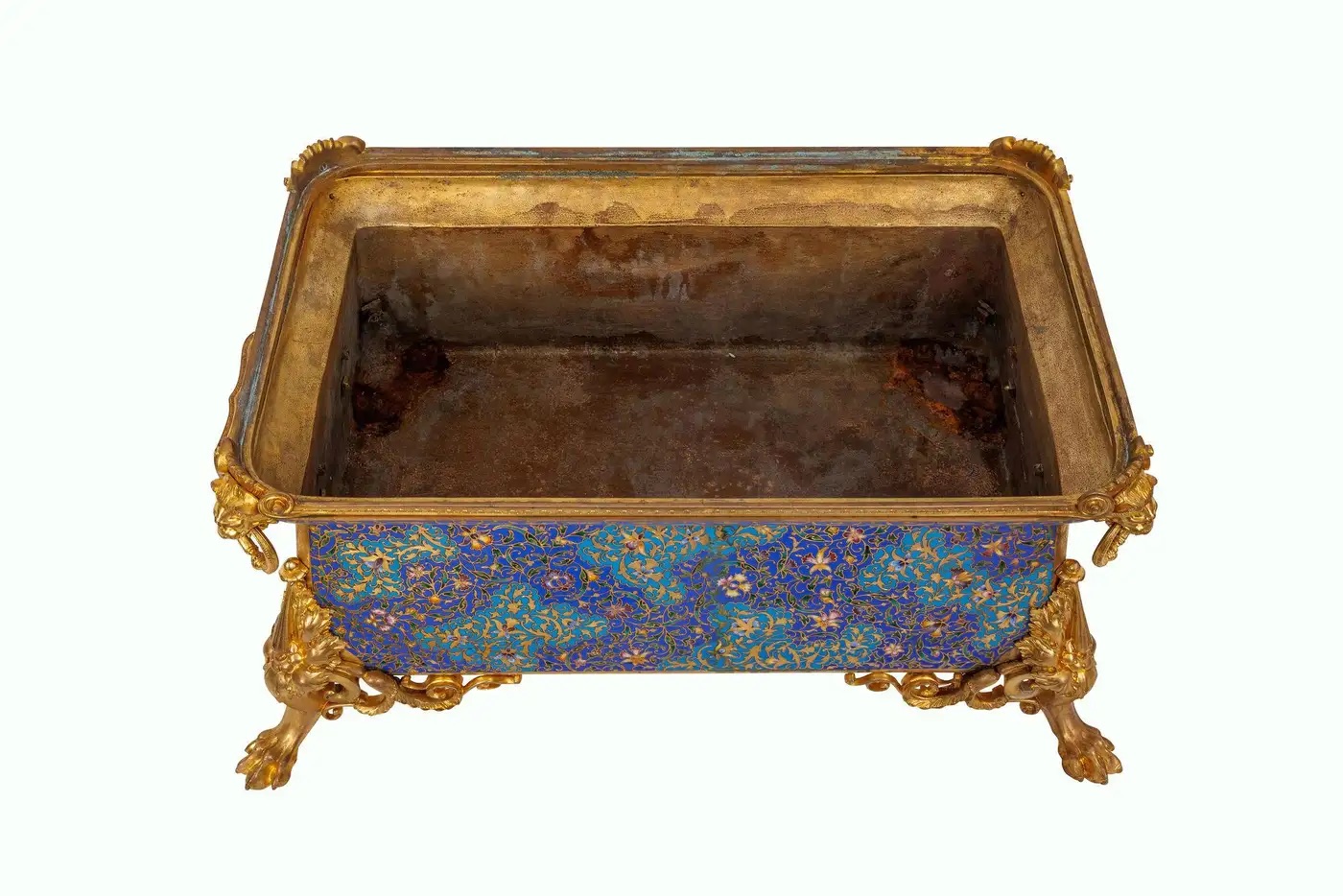
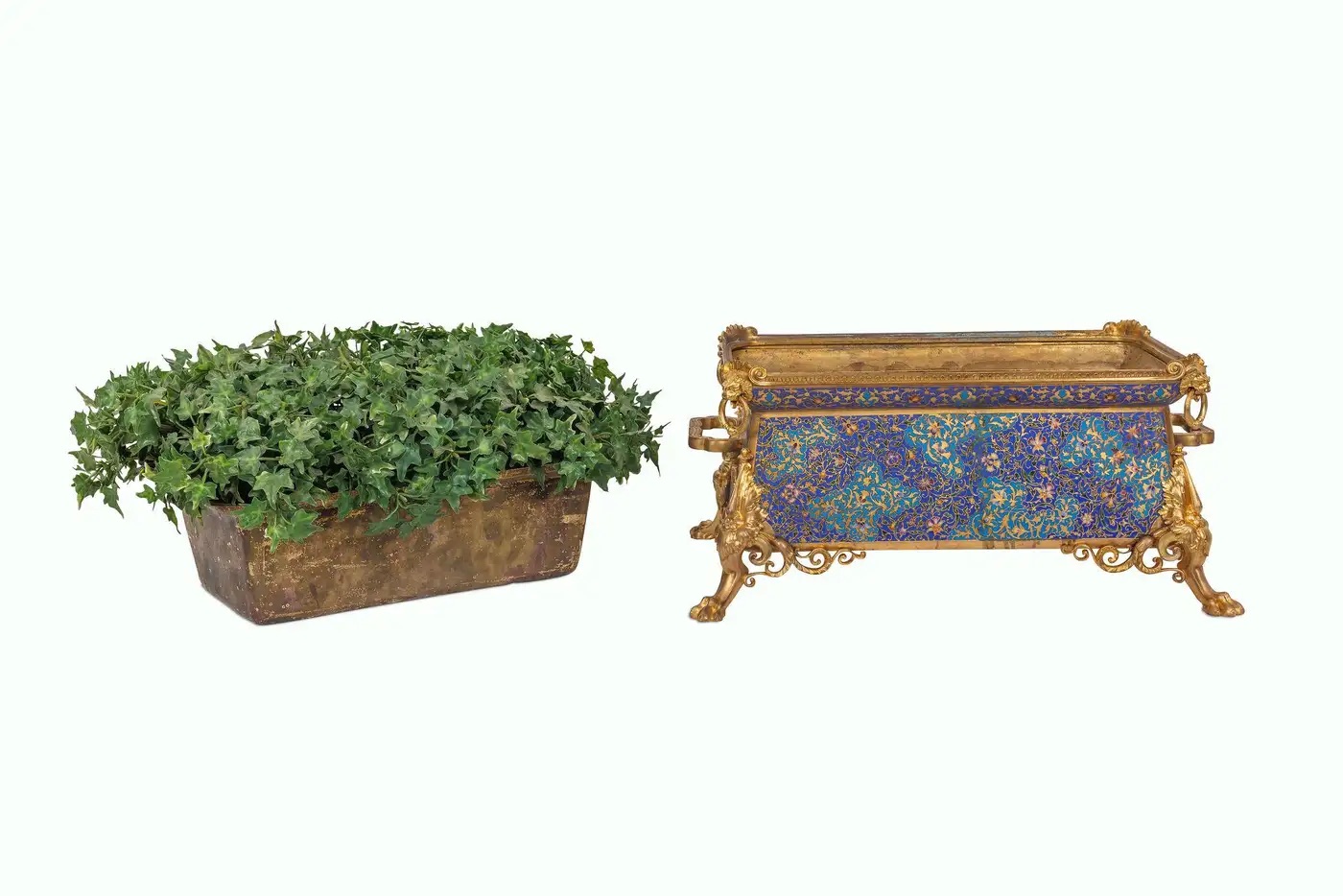
- An outstanding ormolu-mounted and champlevé enamel jardinière, designed by Louis-Constant Sévin and executed by Ferdinand Barbedienne, the premier Parisian bronzier of the 19th century.
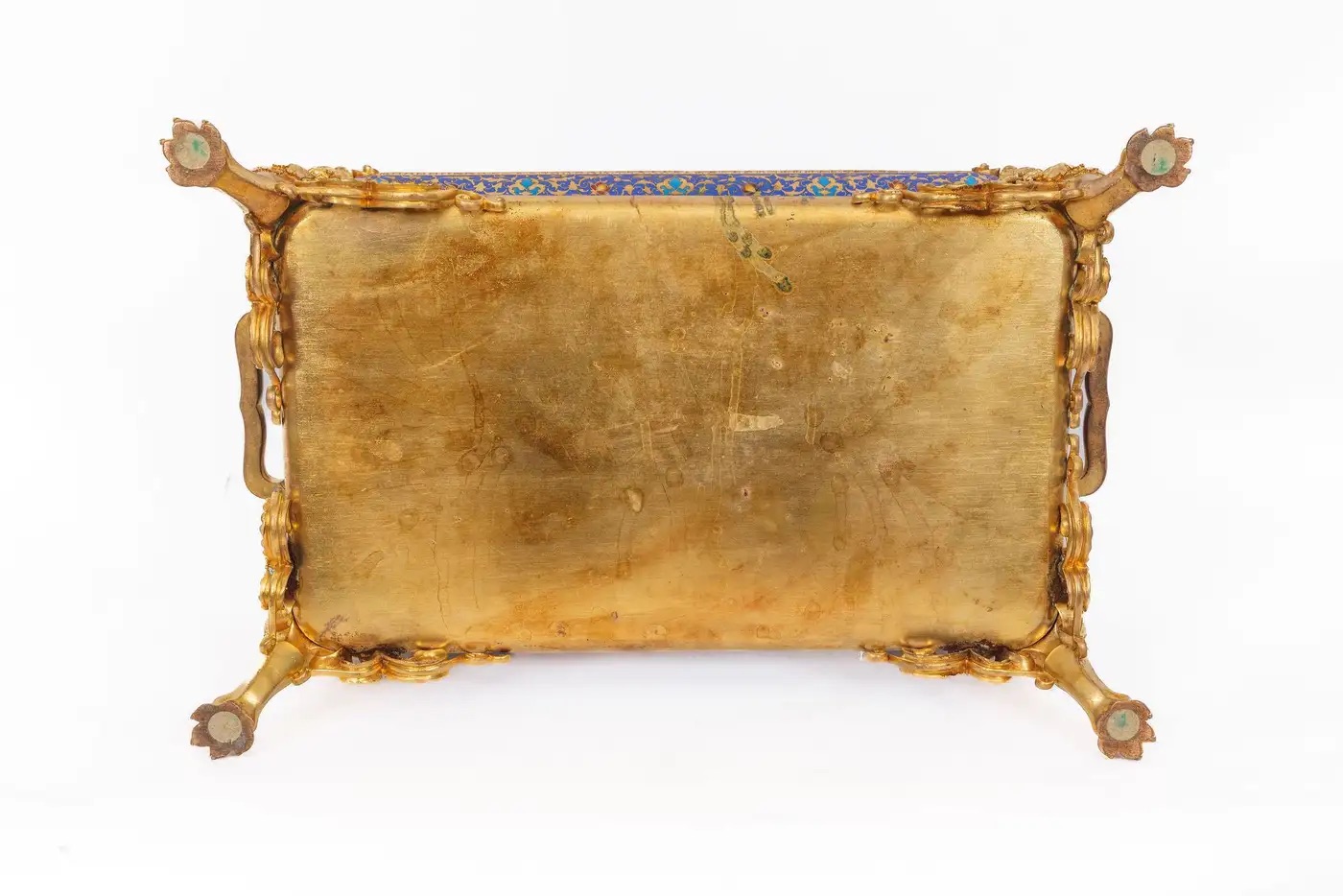
- Rectangular in form, the jardinière is decorated throughout with intricate Neo-Grec polychrome enamel ornament in shades of turquoise, cobalt, ruby, and emerald, punctuated by finely chased gilt-bronze mounts. Each side is flanked by lion-mask ring handles, while the piece rests on boldly cast paw feet. The crispness of the gilded bronze combined with the jewel-like brilliance of the enamel reflects Sévin’s highly sophisticated design language, which married classical inspiration with modern refinement.
- Barbedienne and Sévin’s partnership, beginning in the 1850s, is widely celebrated; their works were exhibited at the Expositions Universelles and are today represented in major museum collections.
- This jardinière stands as a superb example of the Barbedienne workshop’s ability to blend technical mastery with artistic invention, the bronze mounts lending weight and permanence far surpassing purely ceramic or plaster examples.
- Similar champlevé enamel pieces by Barbedienne and Sévin are held in the Musée des Arts Décoratifs, Paris, and the Musée d’Orsay, as well as the Victoria and Albert Museum (London), and the Metropolitan Museum of Art (New York).
- 9″ high x 18.5″ wide x 12″ deep
- Very good condition, normal wear consistent with age and use. This is the most magnificent example of a Jardiniere by Barbedienne and Sevin in all our years of collecting and dealing.
- Period: 19th Century
- Origin: France
- Style: Napoleon III (Of the Period)
- Depth: 12 in (30.48 cm)
- Width: 18.5 in (46.99 cm)
- Height: 9 in (22.86 cm)
- Creator: Ferdinand Barbedienne (Maker)
- Attributed to: Louis-Constant Sevin (Maker),Ferdinand Barbedienne (Maker)
- Date of Manufacture: circa 1870
- Materials & Techniques: Enamel,Ormolu
Price Range
◆ Under $5,000
◆ $5,000–$10,000
◆ $10,000–$25,000
◆ $25,000–$50,000
◆ $50,000–$100,000
◆ Over $100,000