

Meiji Japanese Cloisonné Enamel Ginbari Dragon Vase by Kumeno Teitaro
$6,600.00
- An exceptional and visually commanding Japanese cloisonné enamel vase by Kumeno Teitaro, one of the most innovative and technically accomplished artists working in Nagoya during the Meiji period.
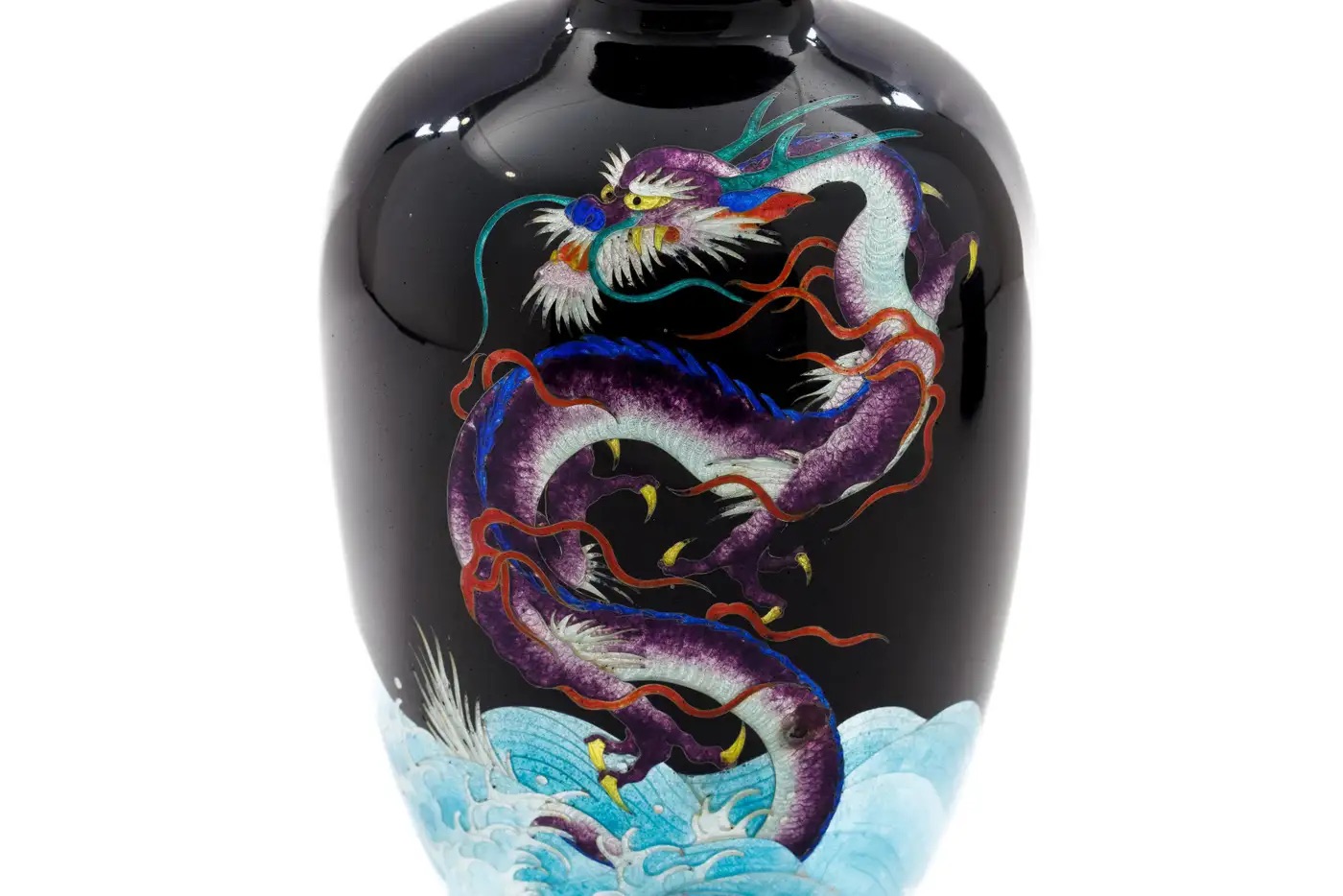
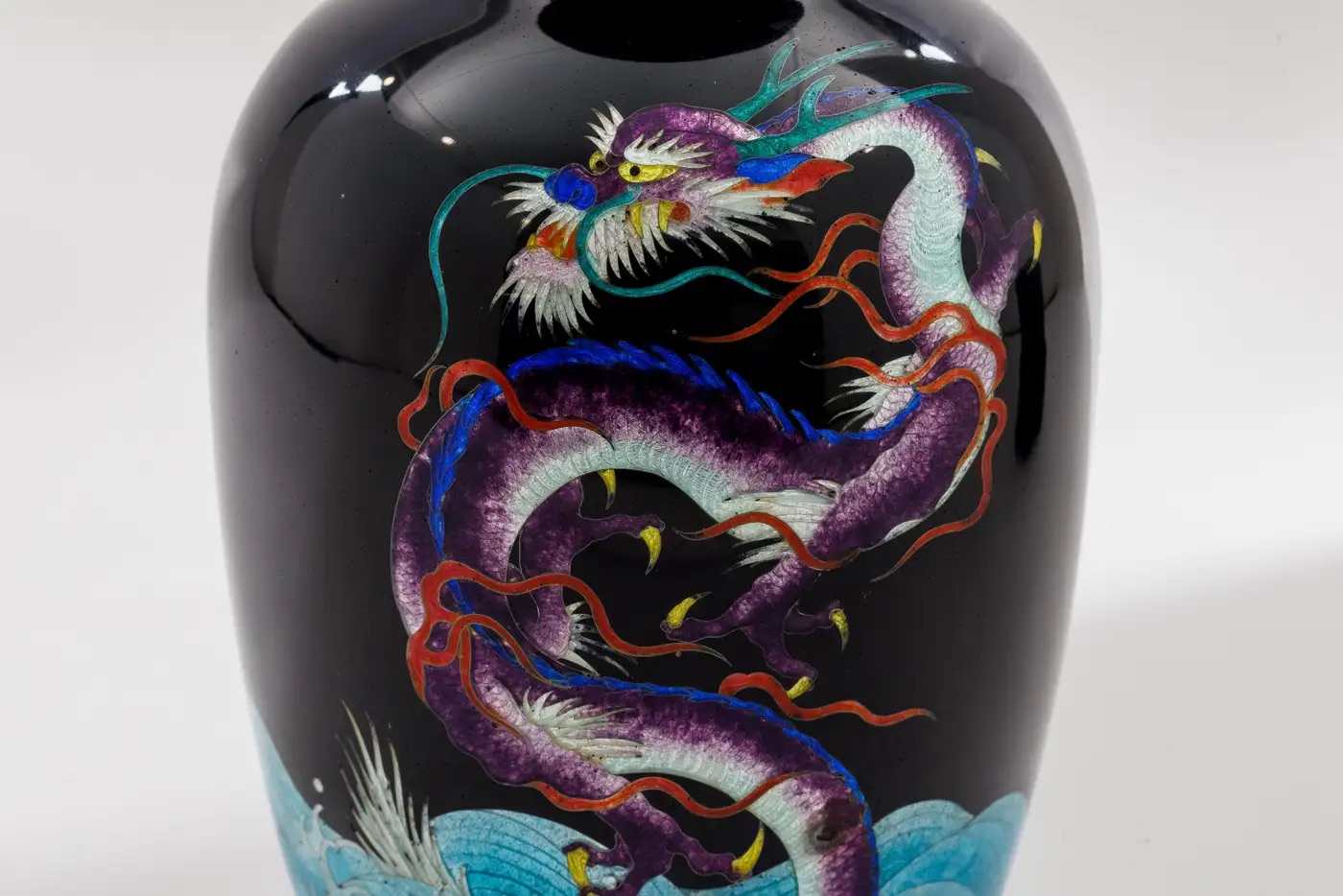
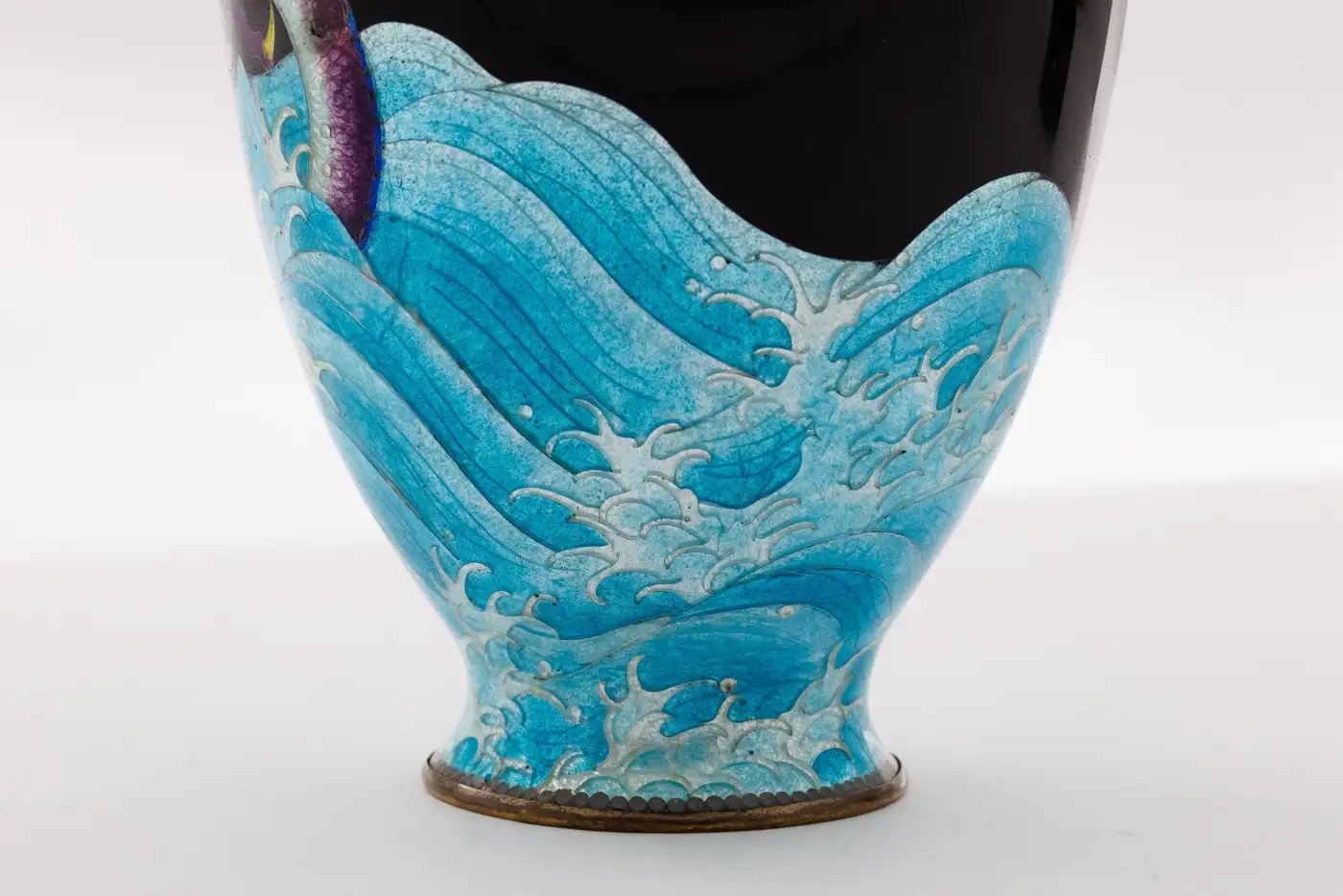
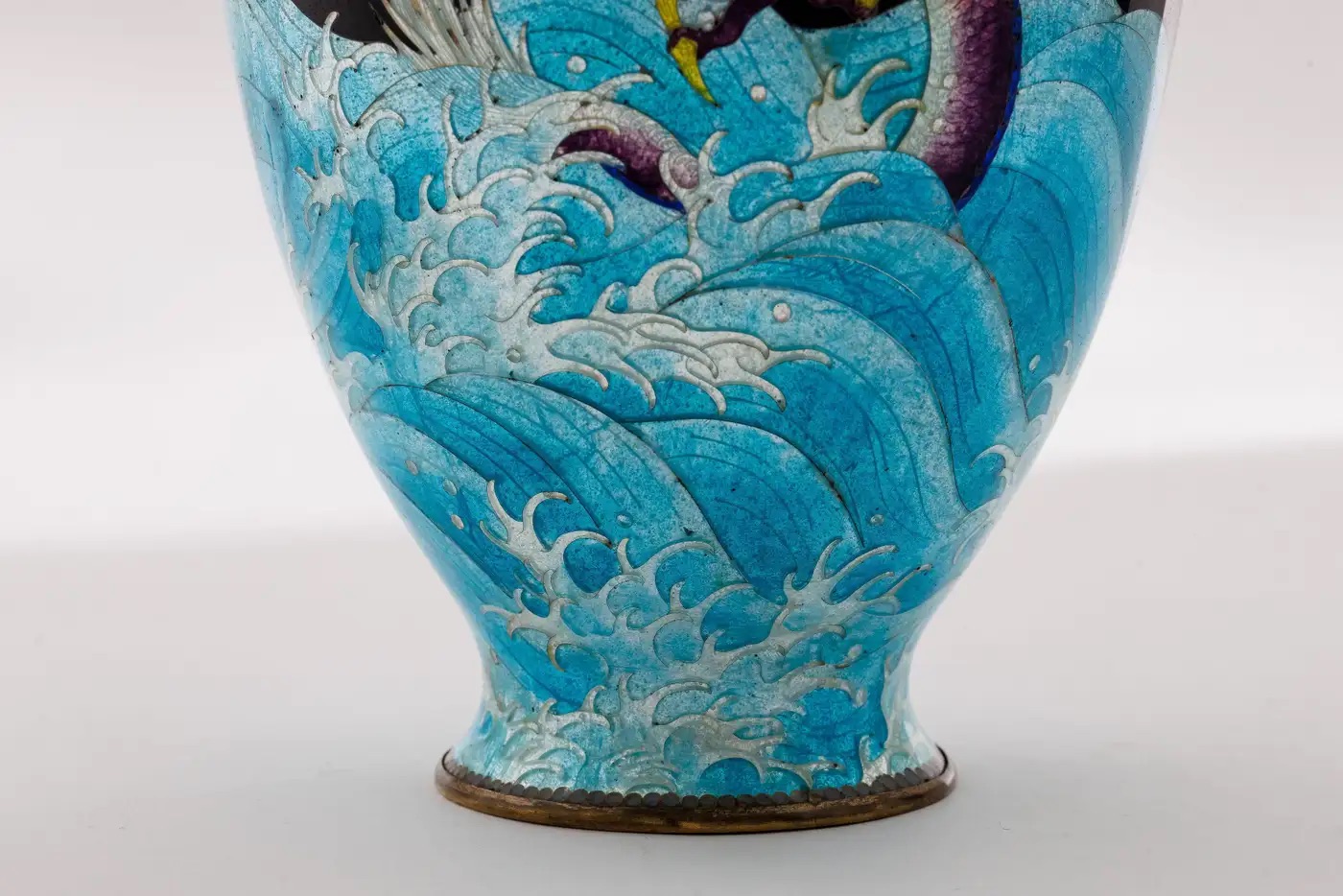
- The vase is executed in the highly specialized ginbari technique, combining translucent and opaque enamels over a silver foil ground. This method allows light to penetrate the enamel surface and reflect through the underlying foil, producing a remarkable internal luminosity that animates both color and form. The result is a surface of extraordinary depth and brilliance, a defining characteristic of the so-called Translucent School of cloisonné.
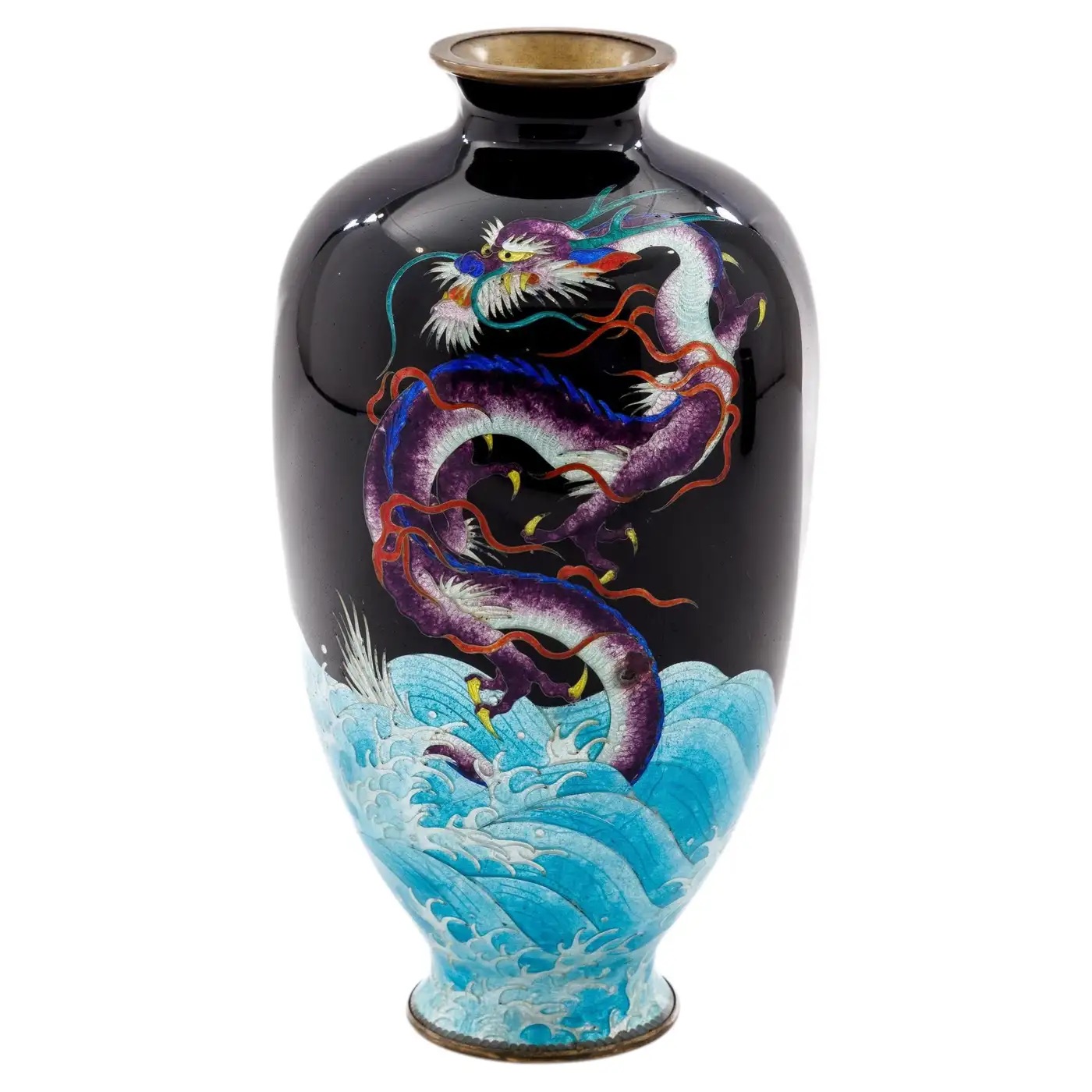
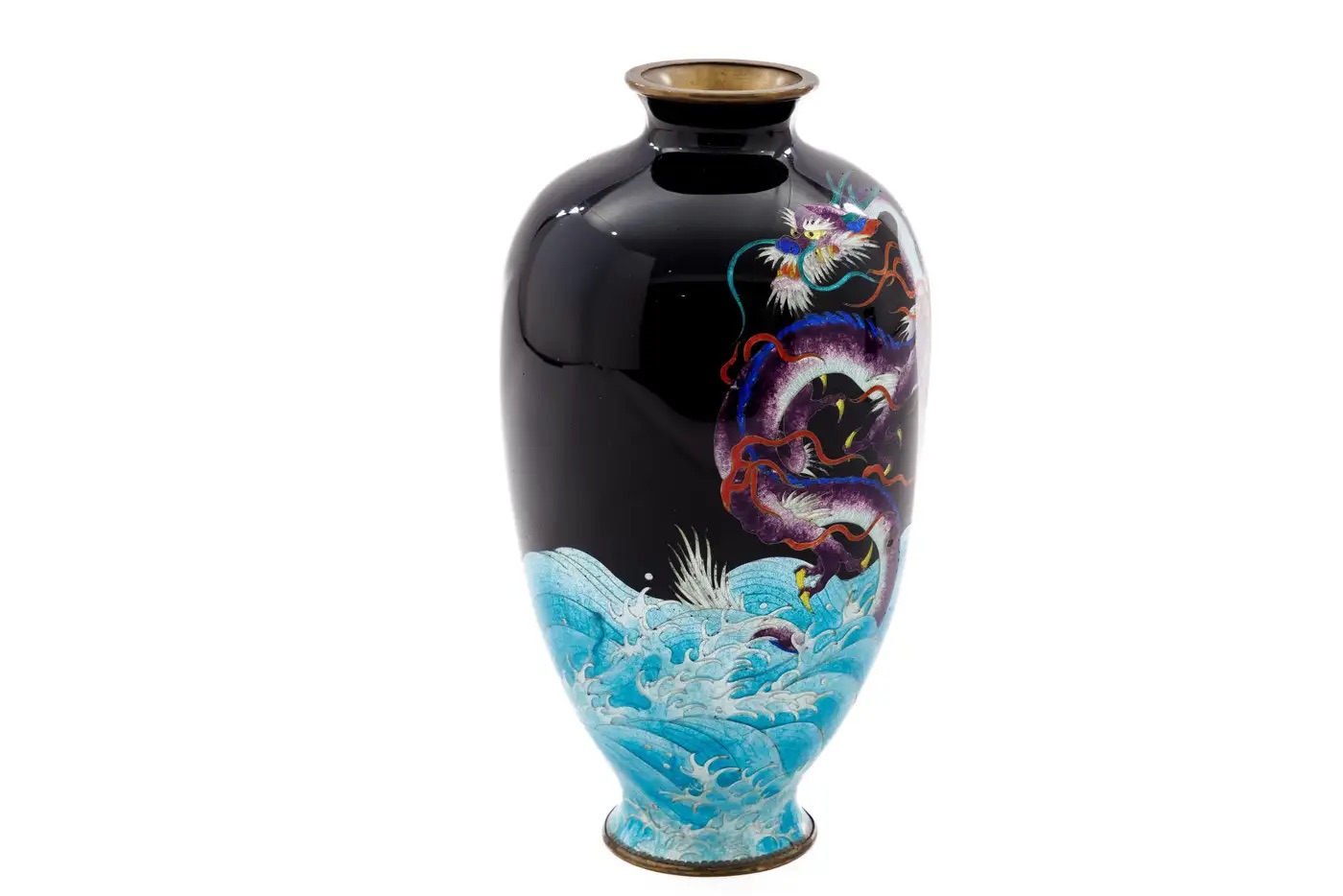
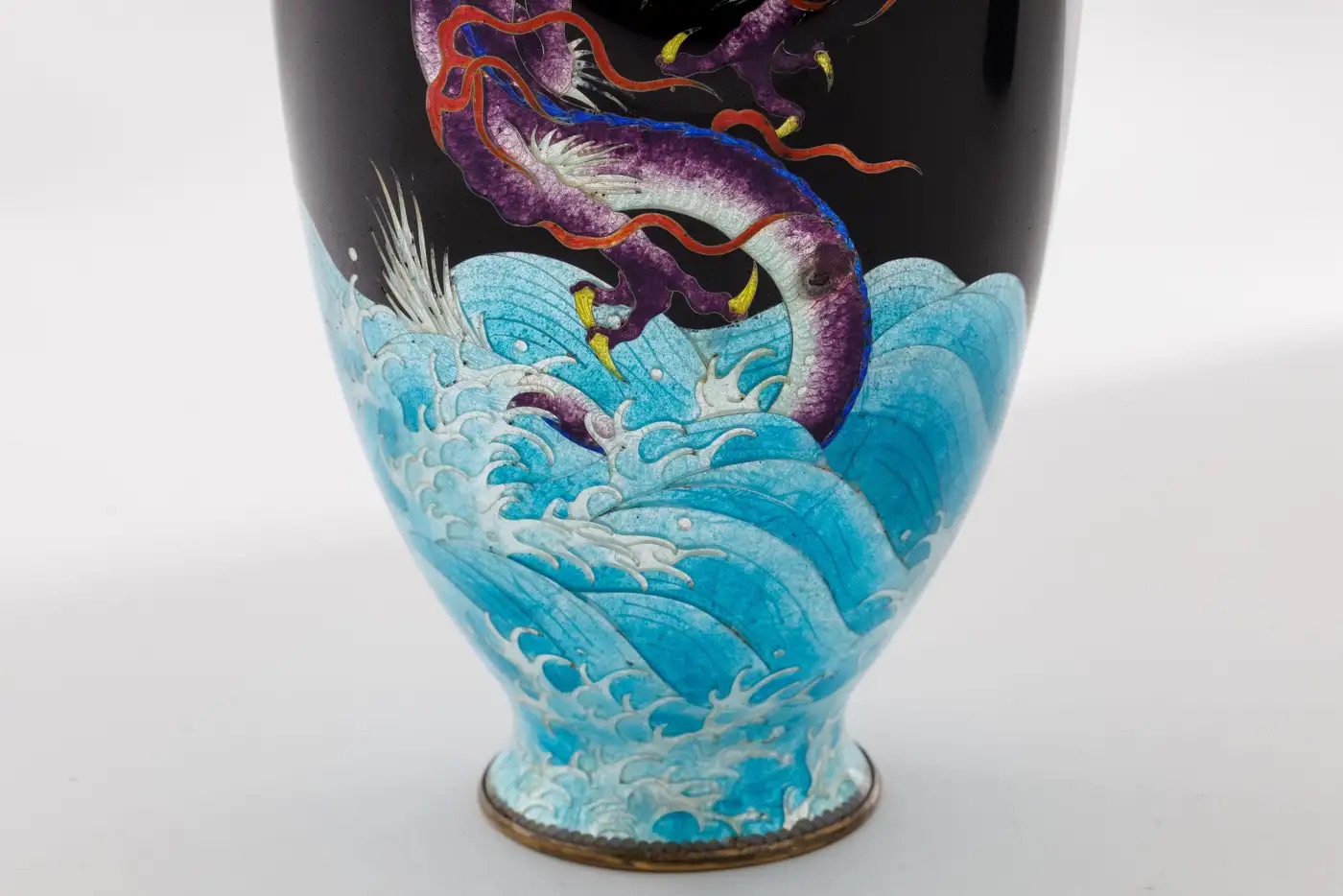
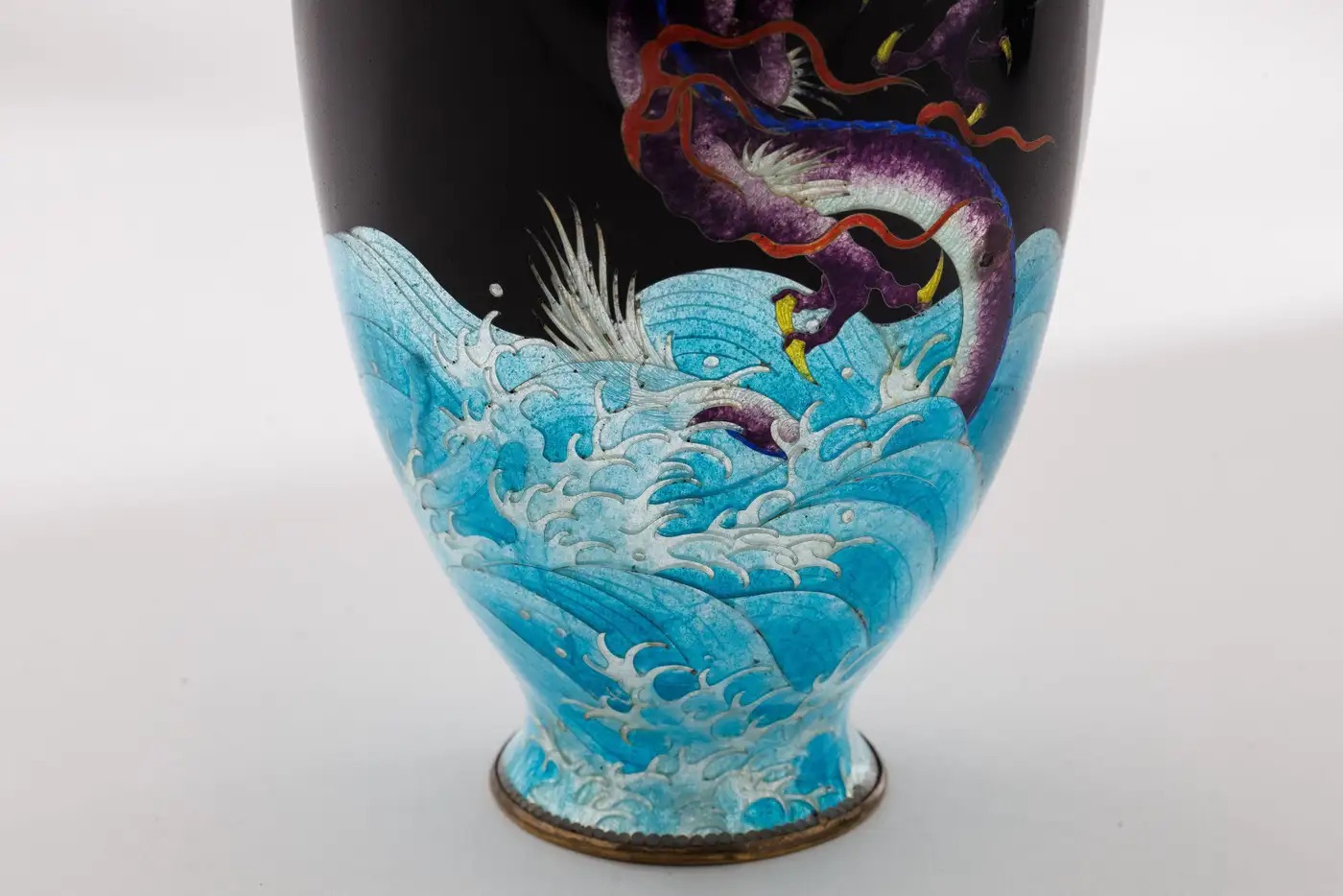
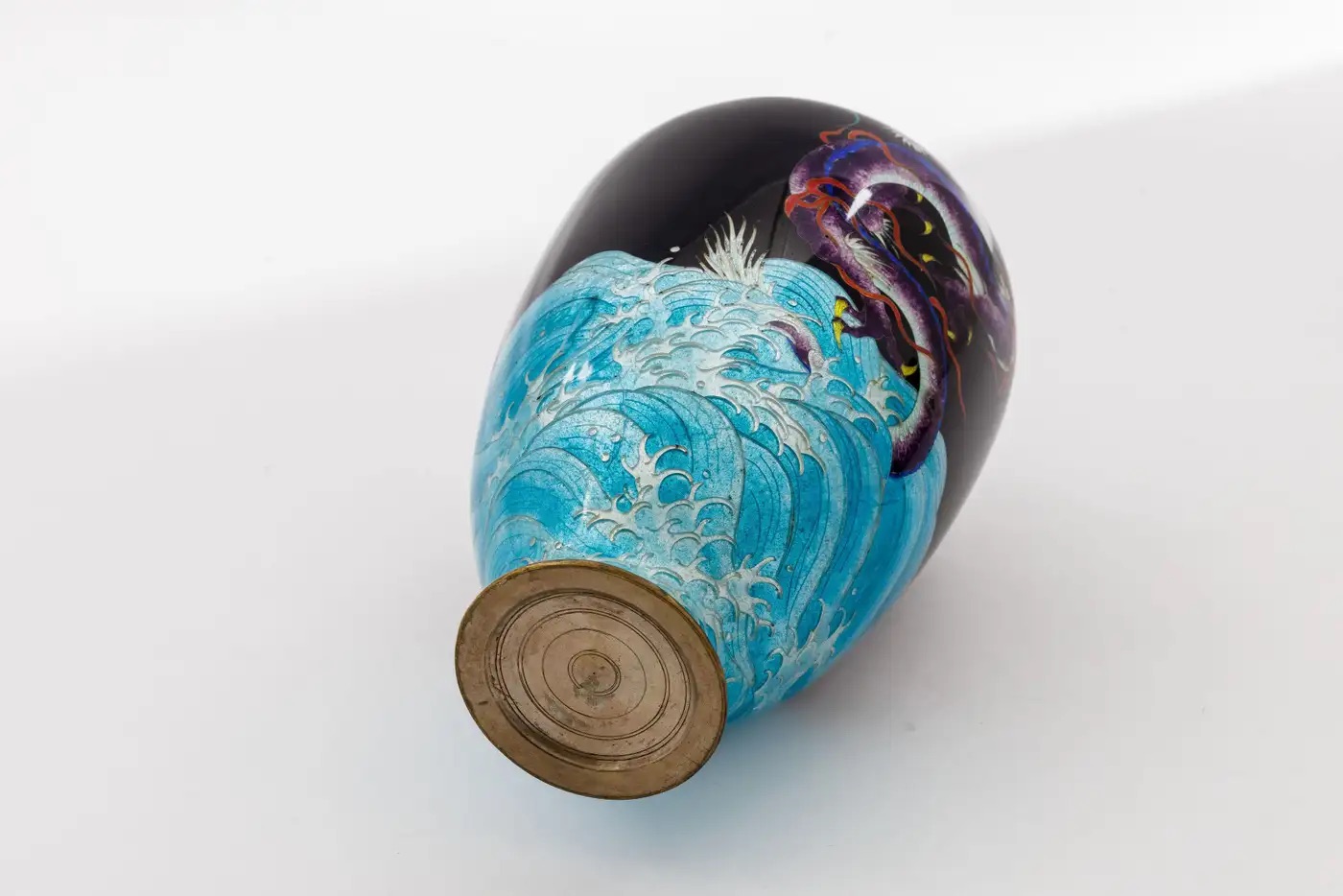
- The composition is dominated by a powerful and dynamic purple dragon emerging above cresting waves, rendered with exceptional movement and control. The dragon’s sinuous body is articulated in richly modulated translucent enamels, shifting from deep violet to lighter tones as light interacts across the surface—an effect that heightens both drama and dimensionality. This rare coloration distinguishes the present example from more commonly encountered dragon compositions.
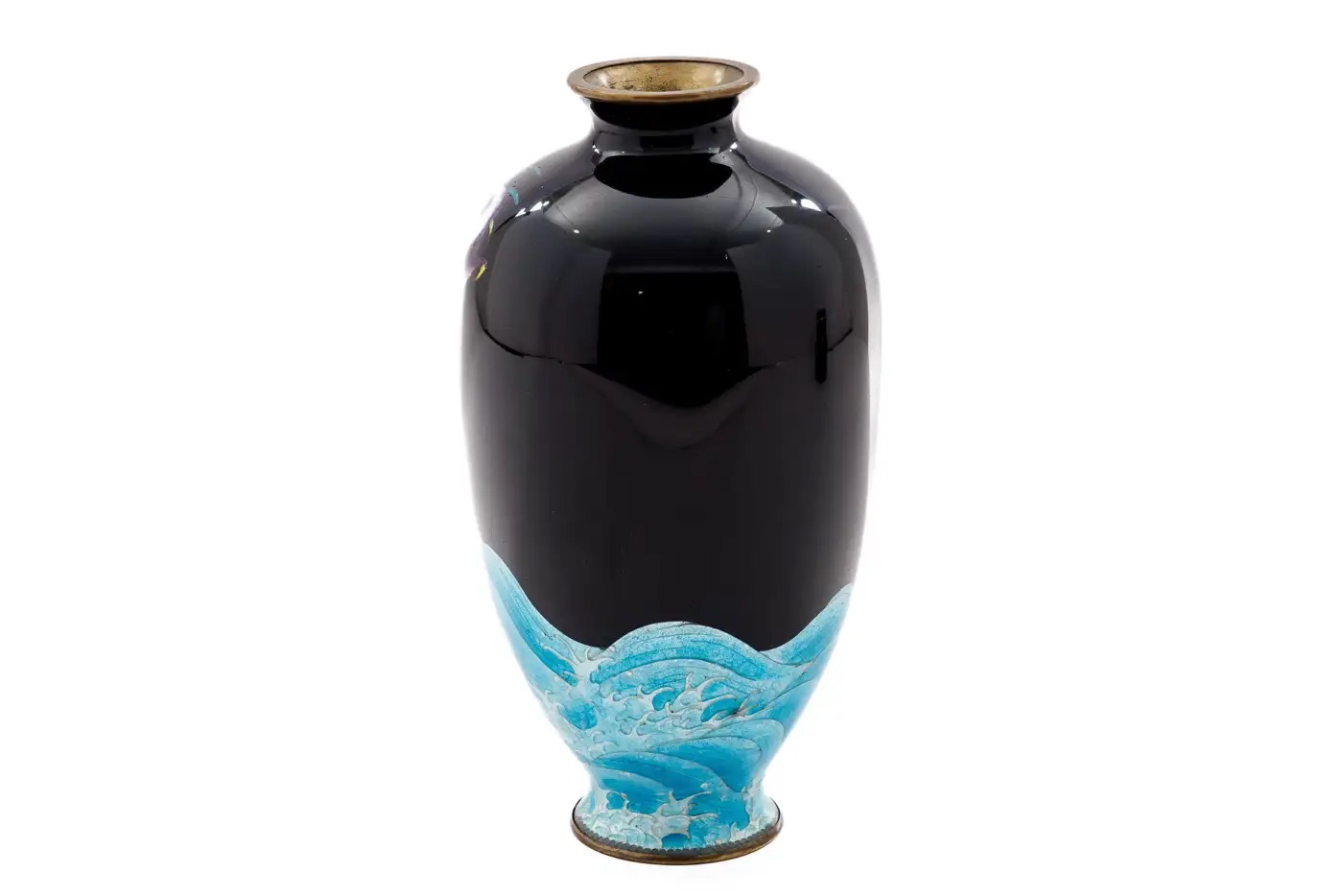
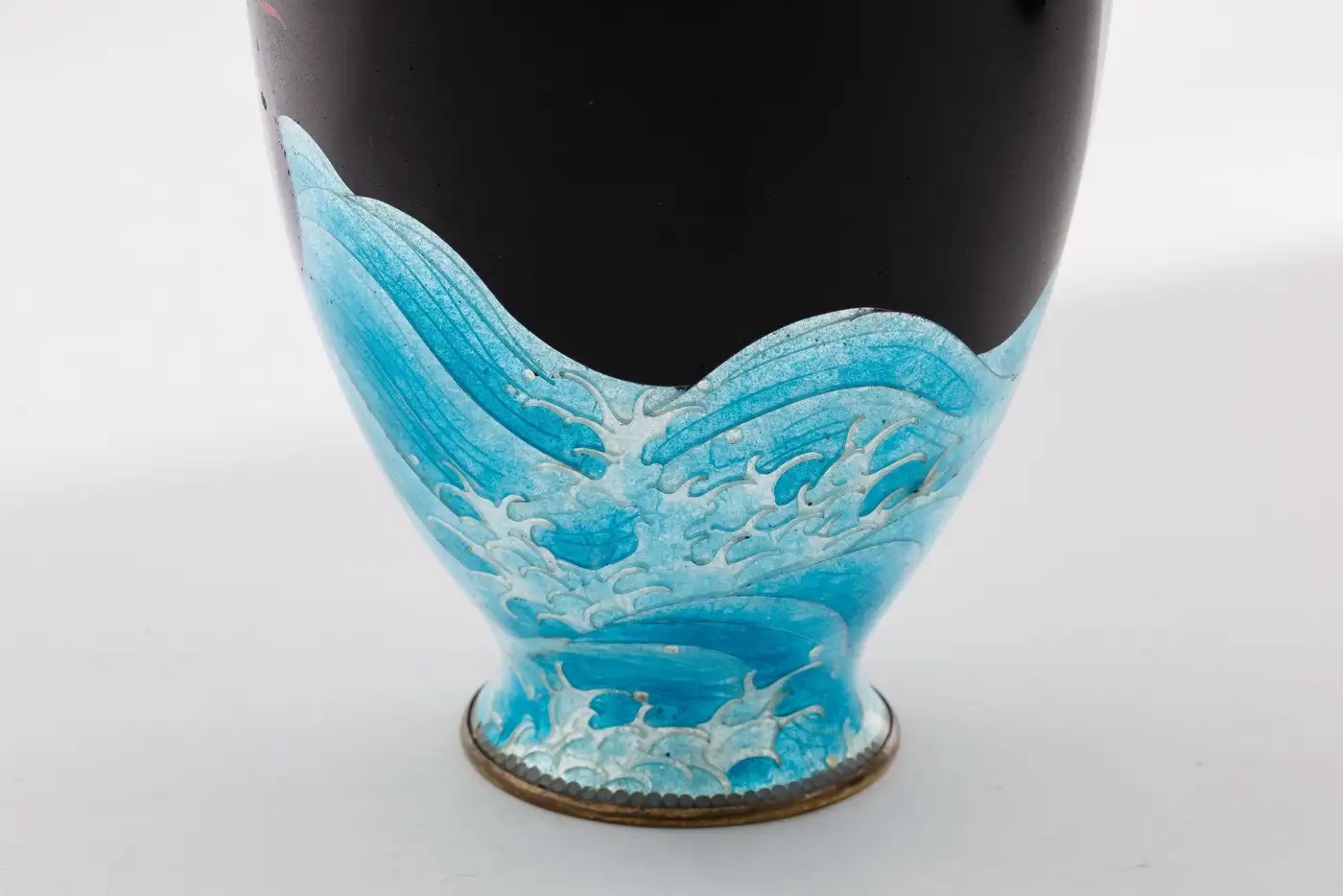
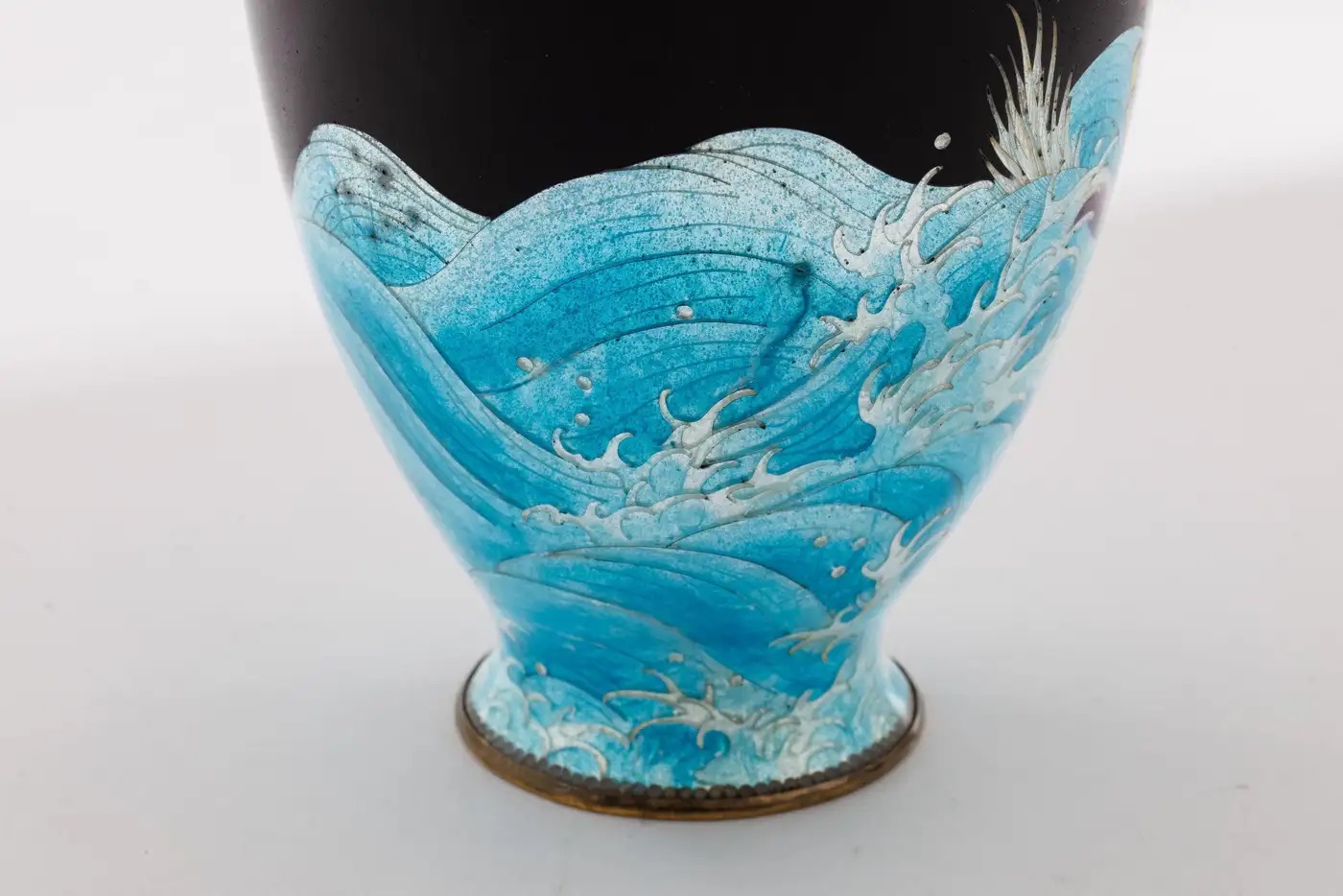
- Below, the waves are executed in vivid gradations of blue, their translucency enhancing a sense of depth and fluid motion. The contrast between the luminous lower register and the deep black ground above creates a striking visual tension, emphasizing the commanding presence of the dragon while showcasing Teitaro’s mastery of layered enamel effects.
- Kumeno Teitaro stands among the leading figures of Meiji period cloisonné, distinguished from contemporaries such as Hayashi Kodenji and Ando Jubei through his focus on light, atmosphere, and optical complexity rather than densely patterned surface ornamentation.
- His work achieved international acclaim, receiving top honors at major expositions including the Exposition Universelle 1889 (Grand Prix), the Louisiana Purchase Exposition 1904, and the Exposition Universelle 1905, as well as first prize at the Japanese National Exposition in Osaka in 1903—testament to his importance within the global decorative arts movement of the period.
- For a comparable example by the artist, see Christie’s, Sale 7316, The Japanese Aesthetic, Lot 377.
- A museum-quality work of considerable rarity and sophistication, this vase exemplifies the pinnacle of Meiji period cloisonné—uniting technical innovation, masterful execution, and a bold, luminous artistic vision.
- 8.5″ high x 4.5″ diameter
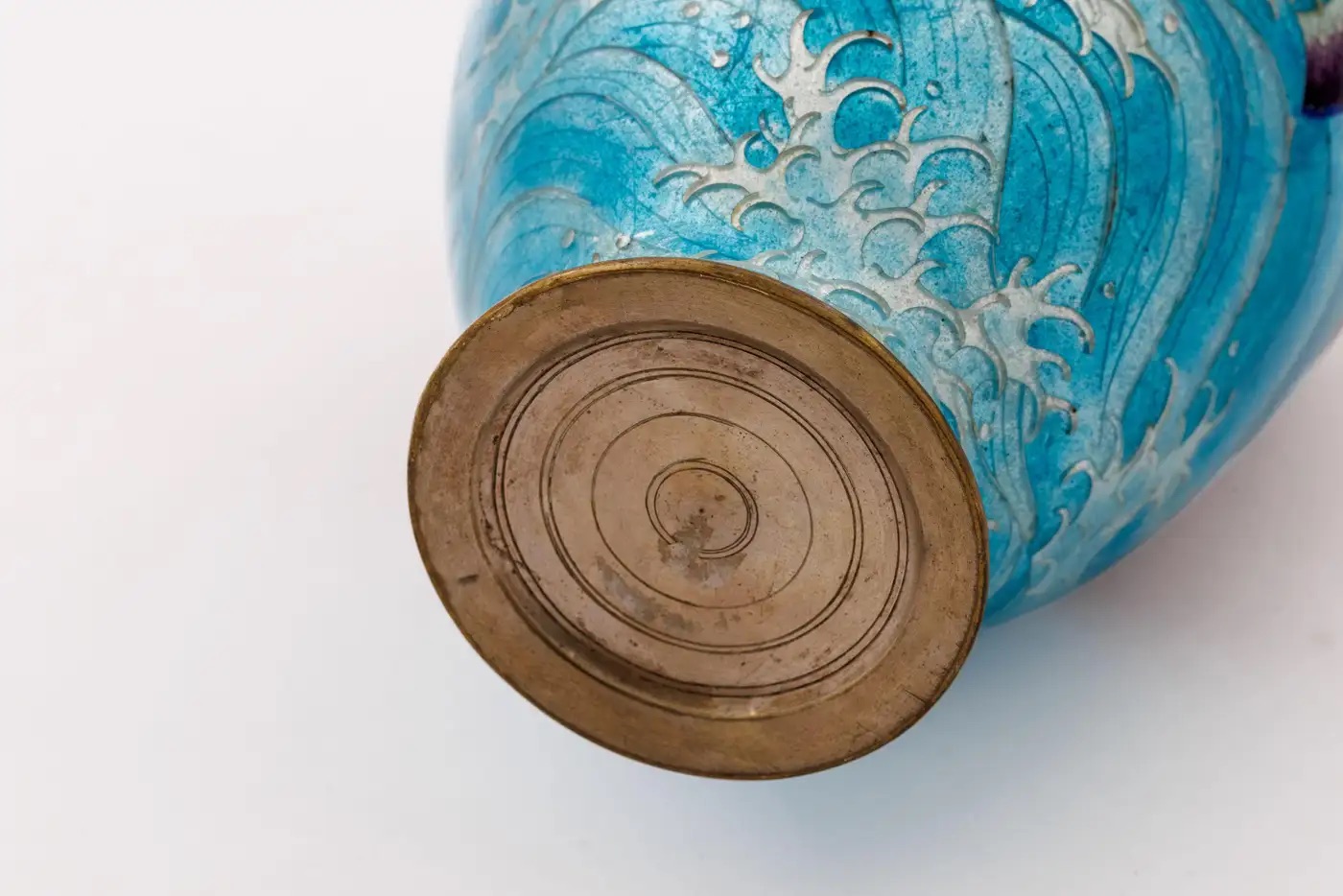
- Good condition. Chip to dragon tail.
- Period: 19th Century
- Place of Origin:Japan
- Style:Meiji
- Diameter: 4.5 in (11.43 cm)
- Height: 8.5 in (21.59 cm)
- Creator:Kumeno Teitaro (Maker)
- Date of Manufacture: 19th Century
- Materials & Techniques: Copper,Enamel