

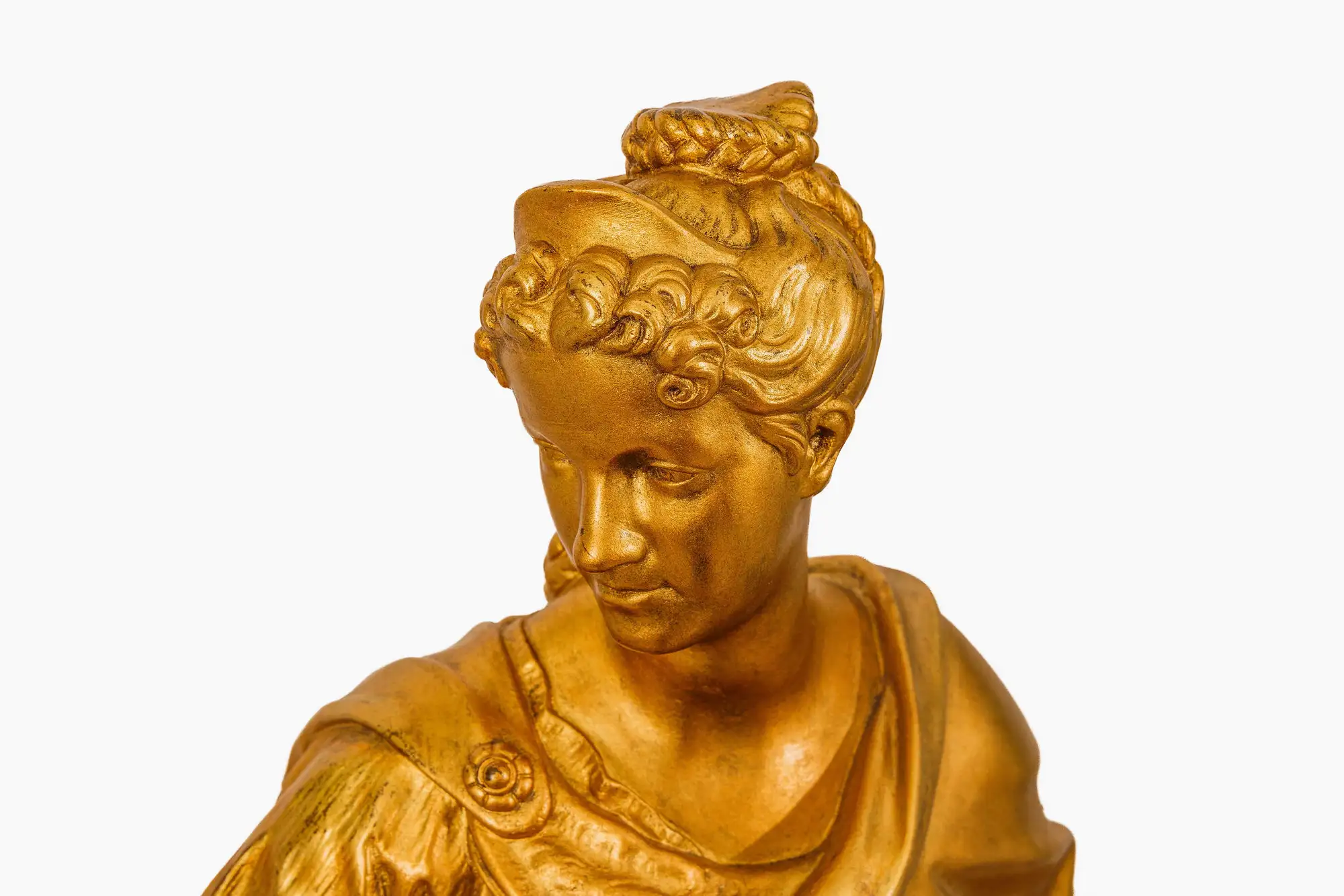
Monumental Barbedienne Ormolu, Onyx & Champlevé Enamel Figural Clock, 19th C.
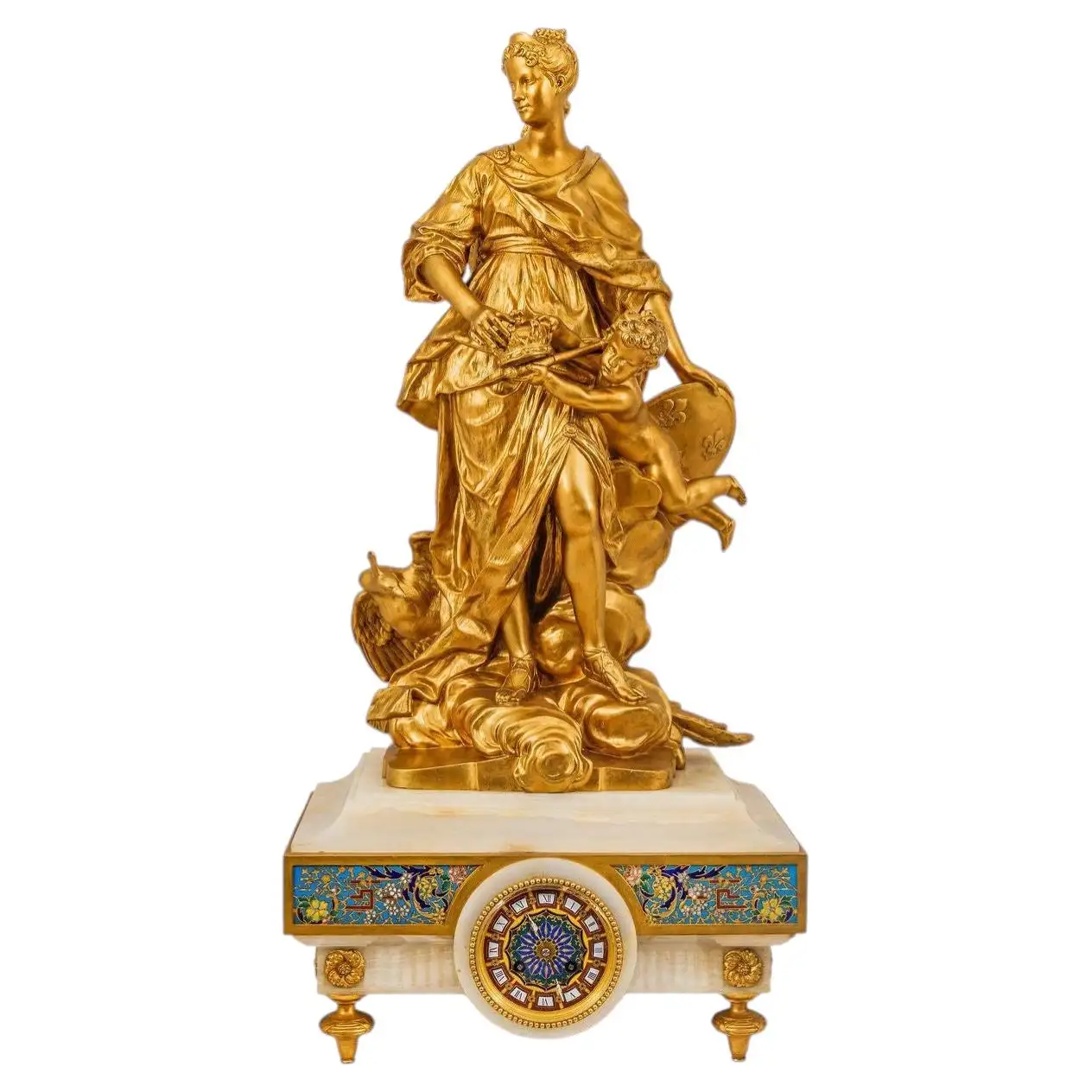
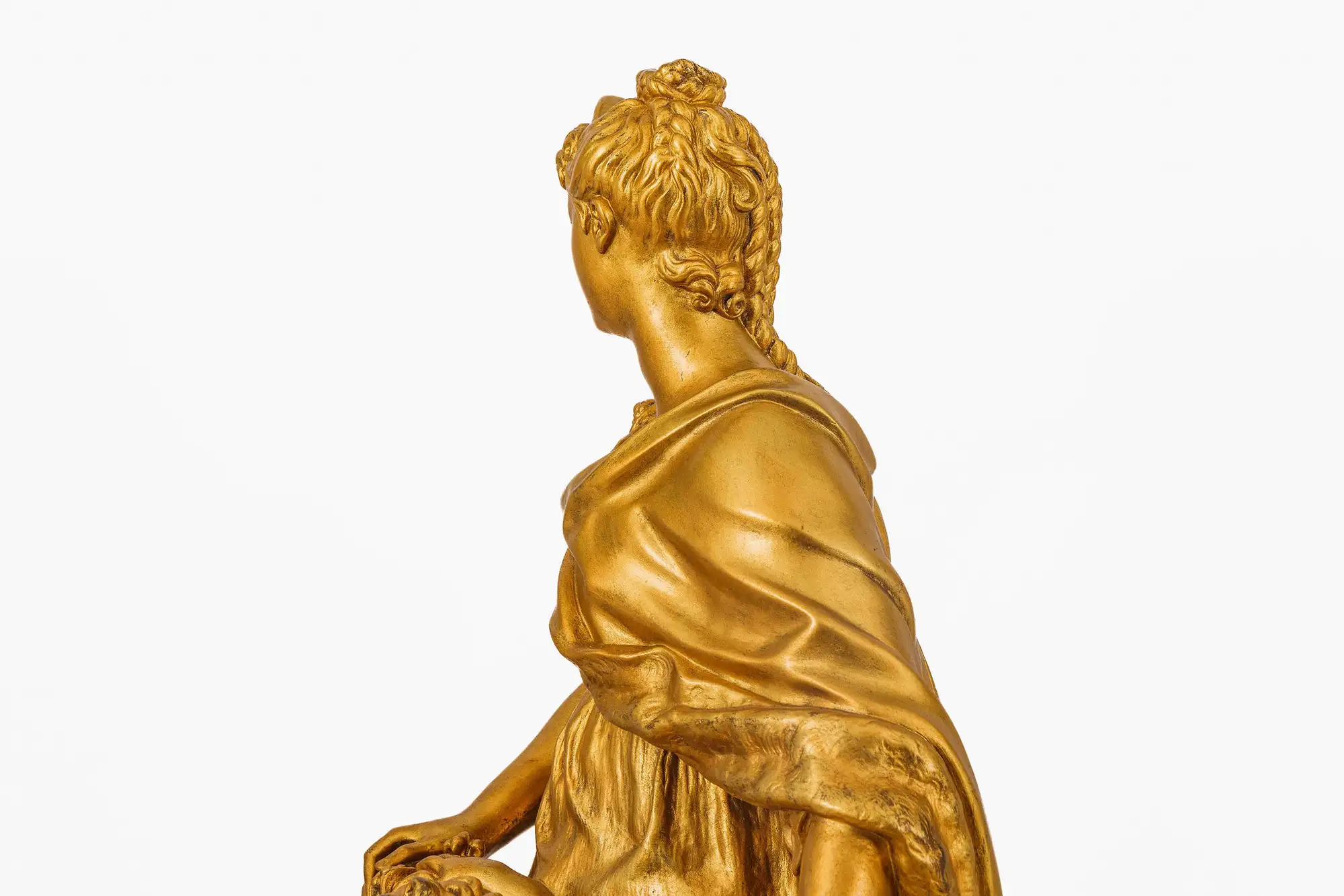
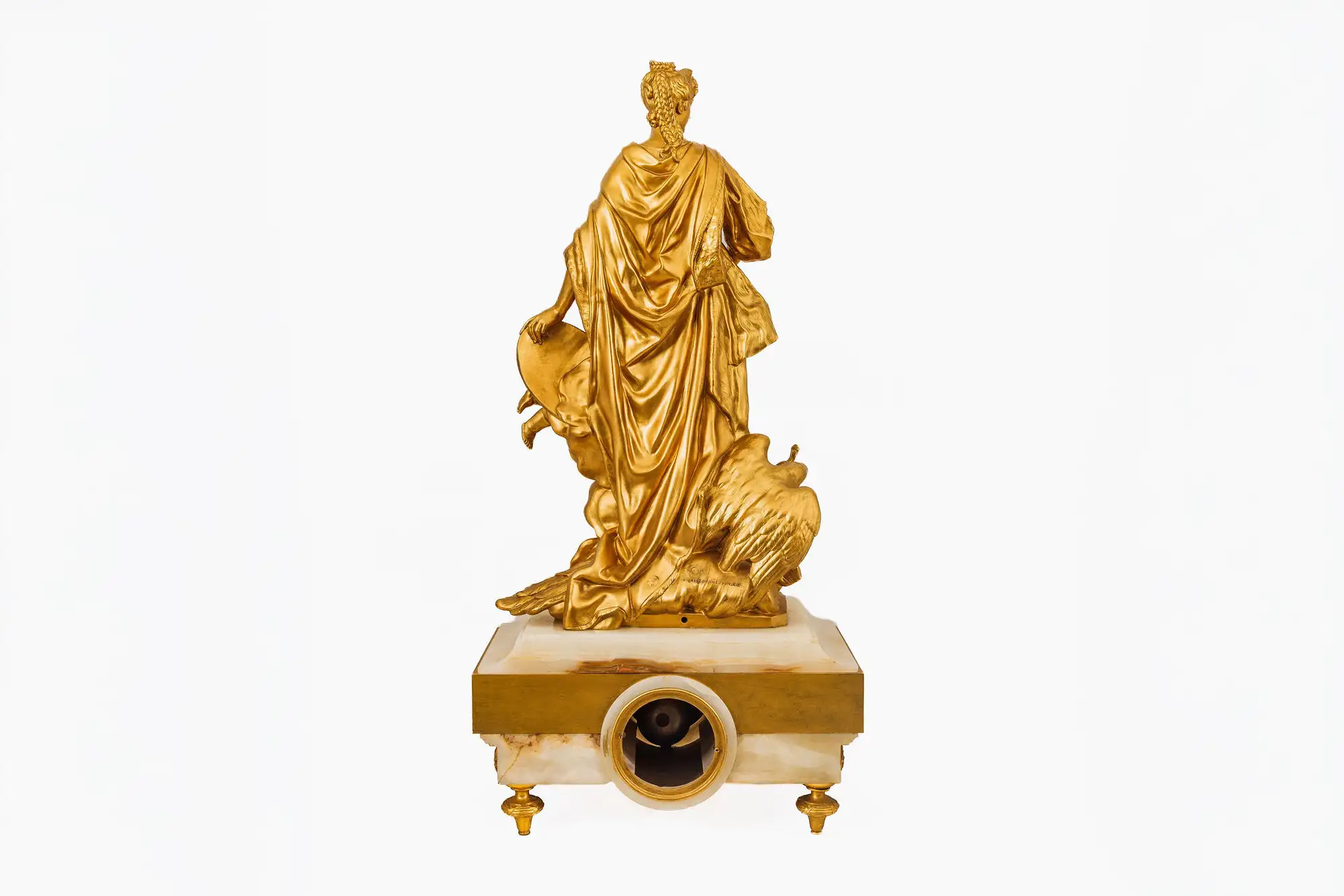
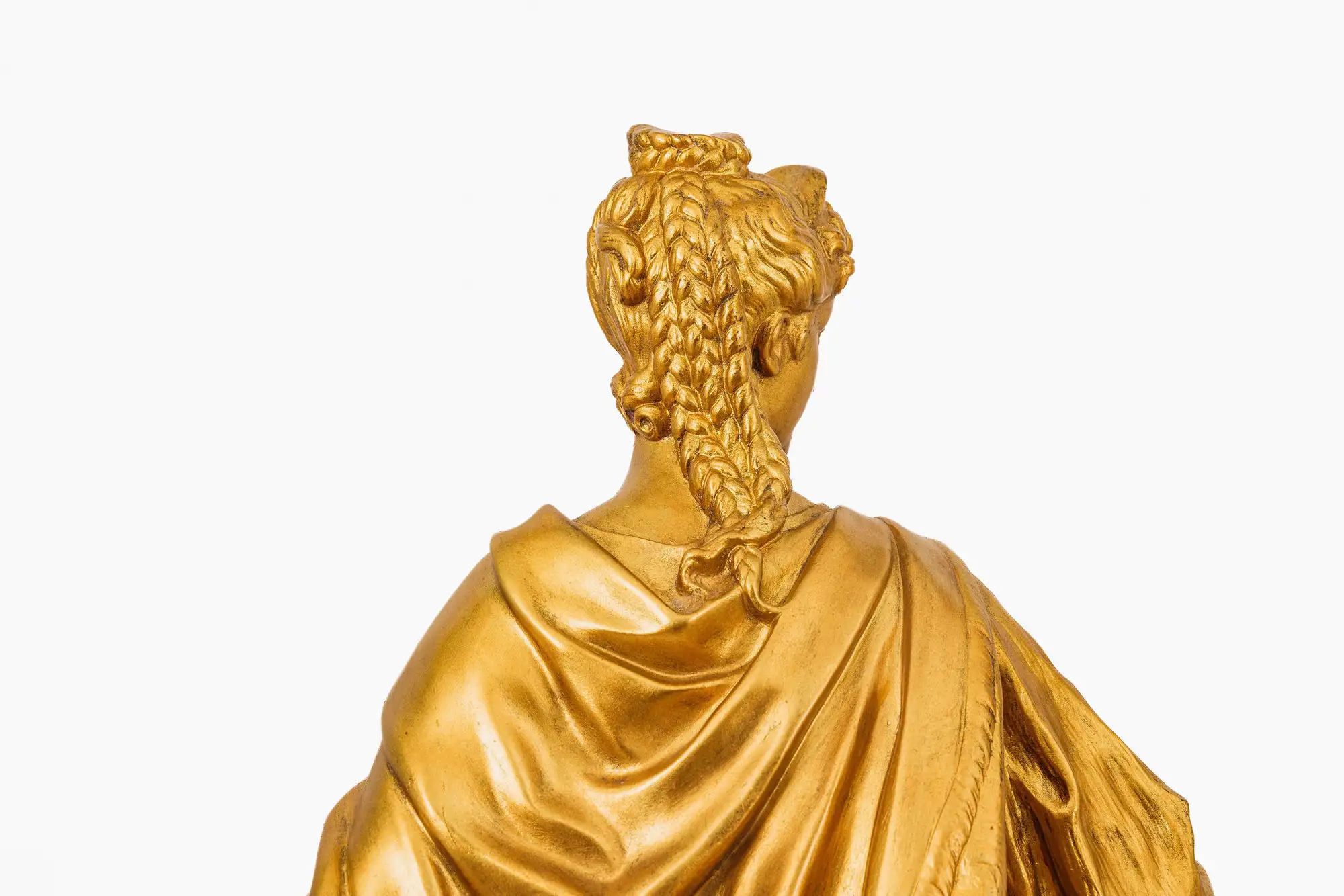
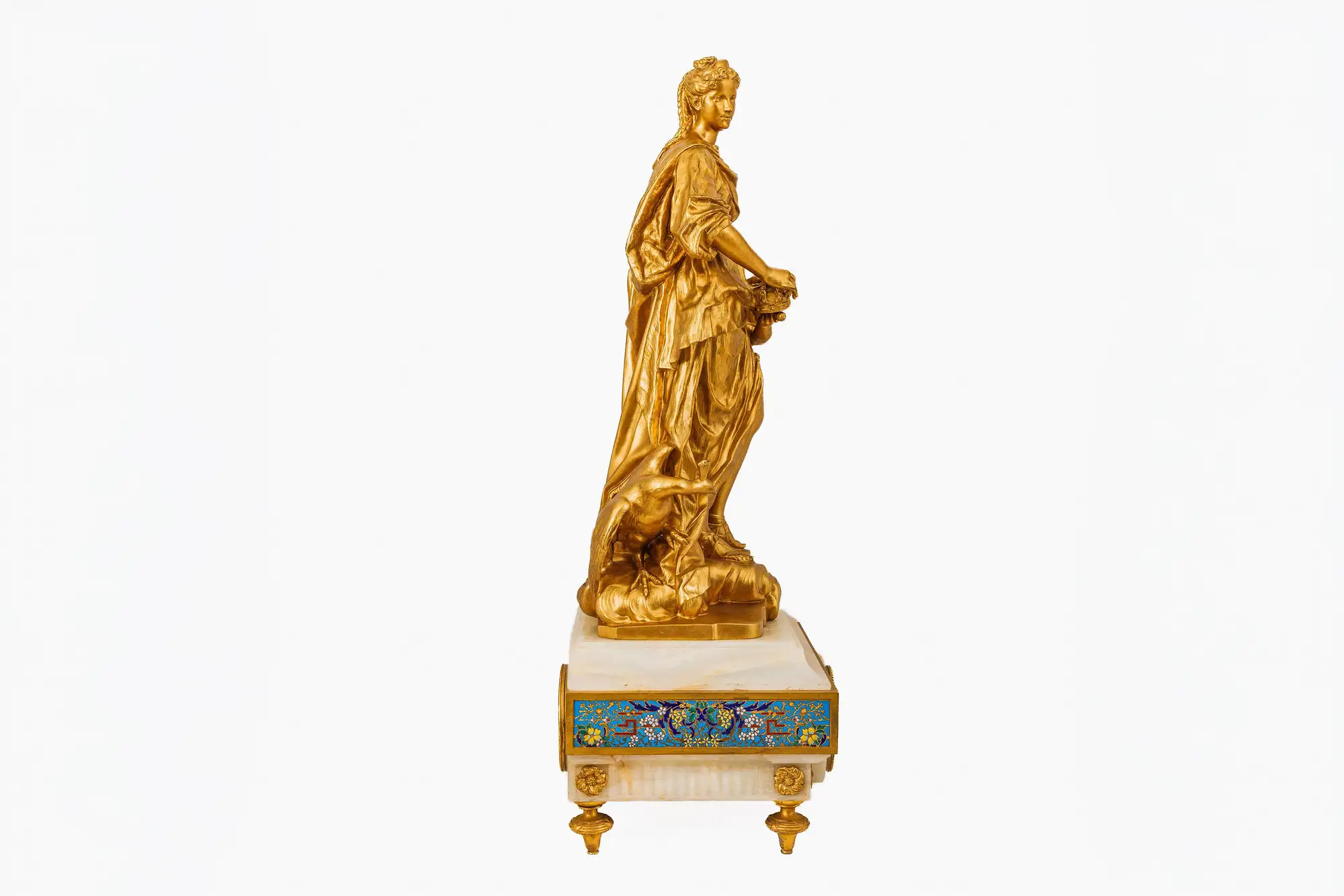
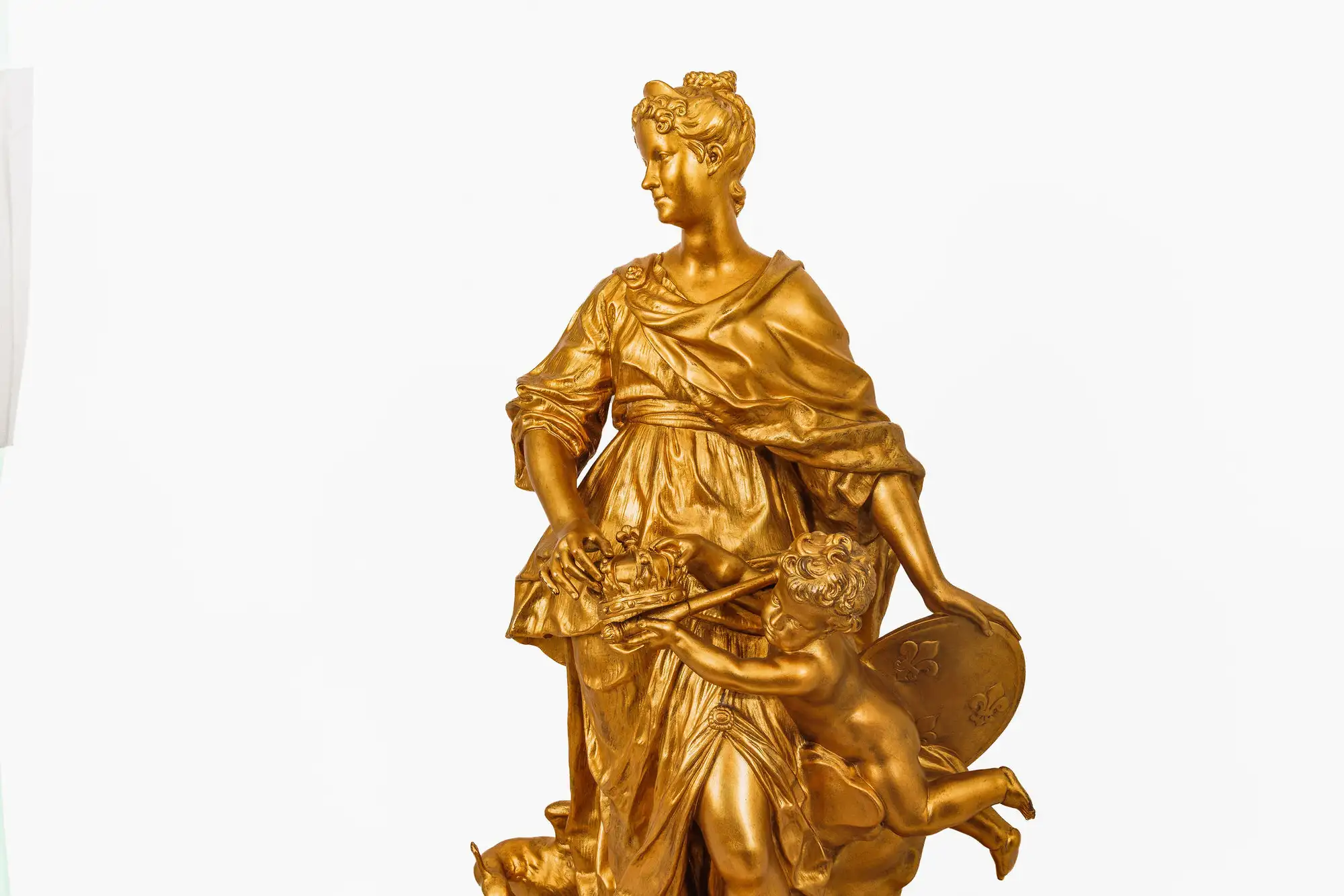
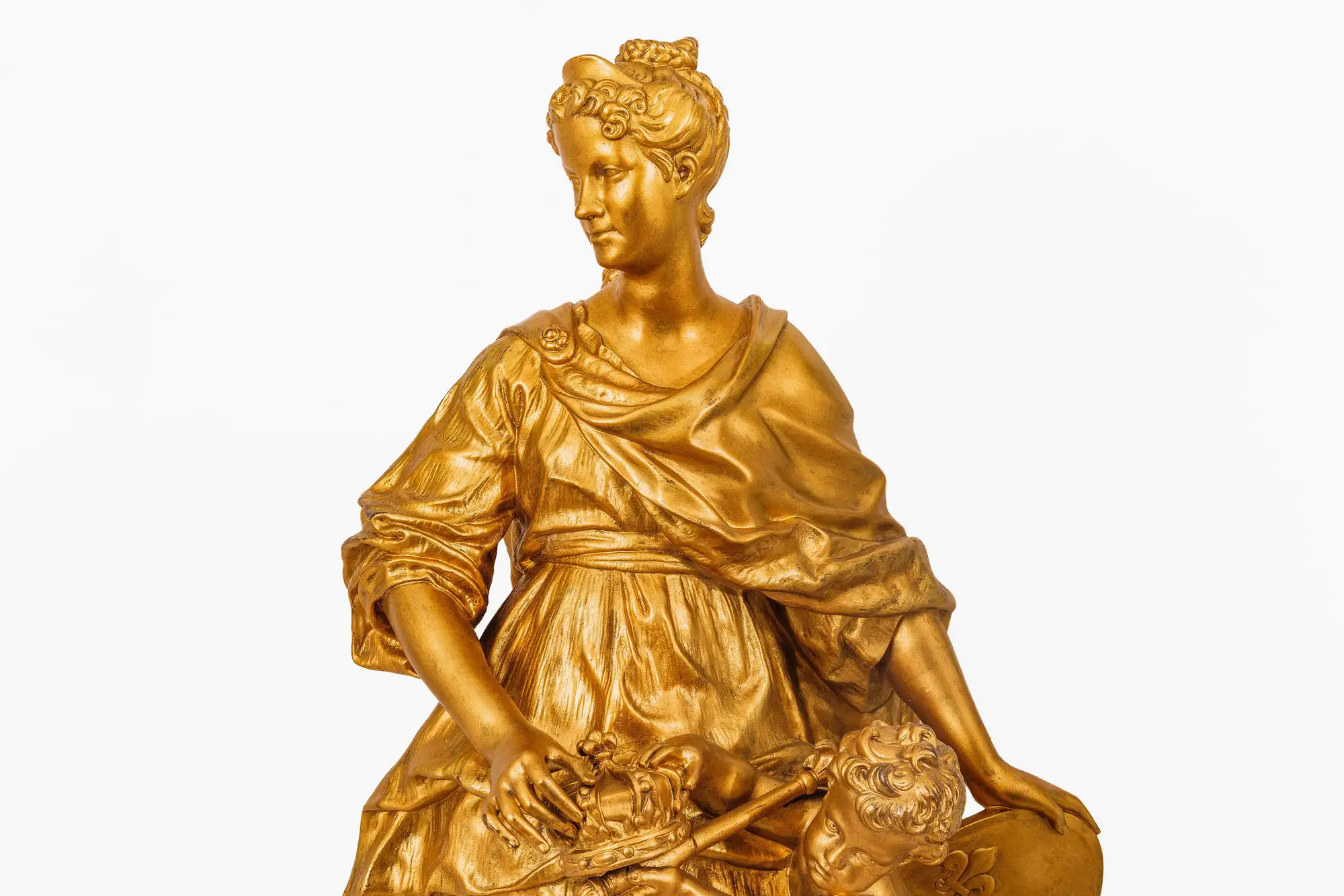
- An extraordinary and monumental French 19th-century ormolu, onyx, and champlevé enamel figural mantel clock by the celebrated Parisian bronzier Ferdinand Barbedienne surmounted by a magnificent gilt-bronze sculpture depicting Queen Marie Leszczyńska as Juno, after the celebrated model by Guillaume Coustou (1677–1746).
- A remarkable marriage of French sculptural artistry, exceptional bronze casting, and luxurious decorative craftsmanship, this imposing clock represents the grandeur and artistic ambition associated with the finest productions of the Barbedienne foundry.
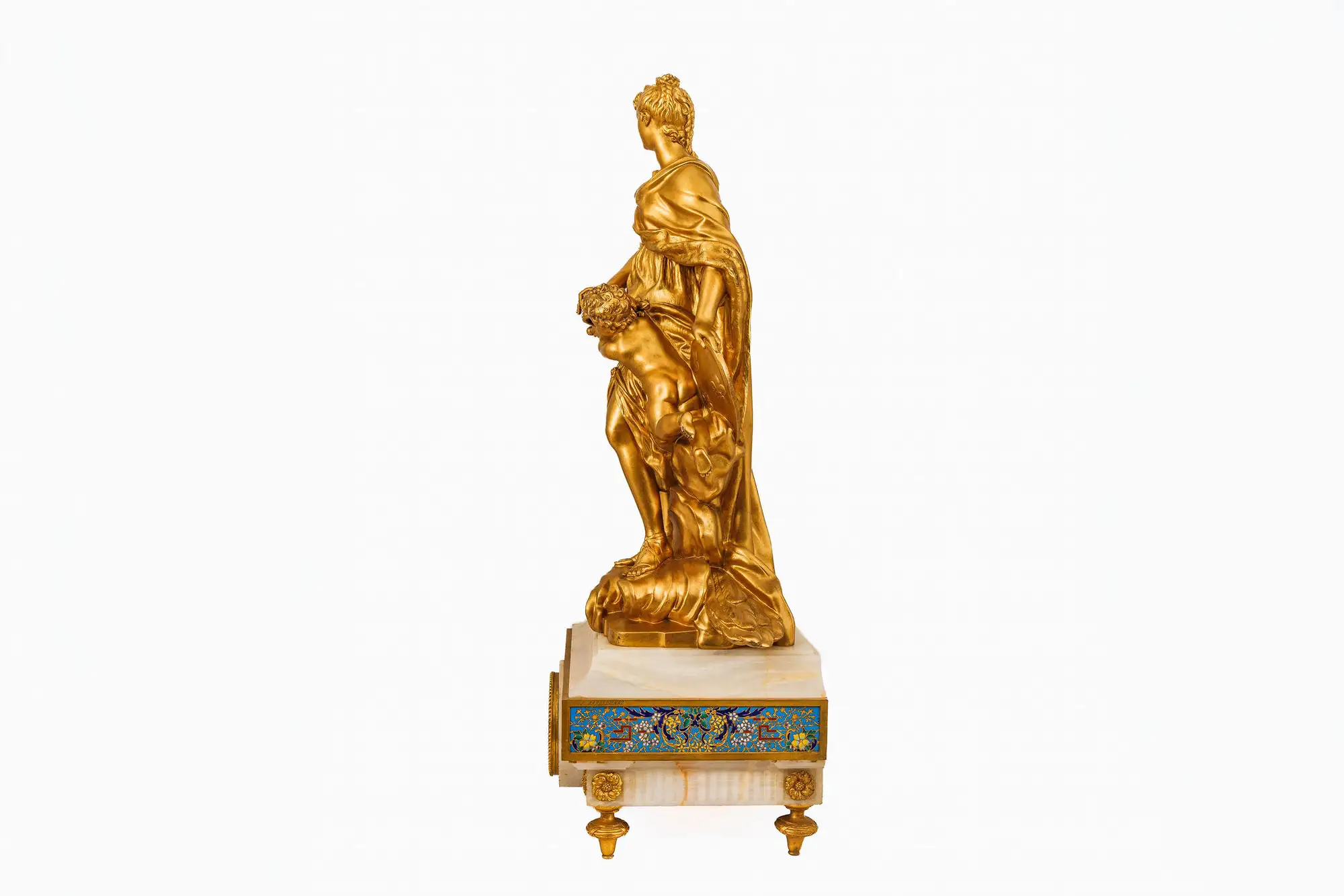
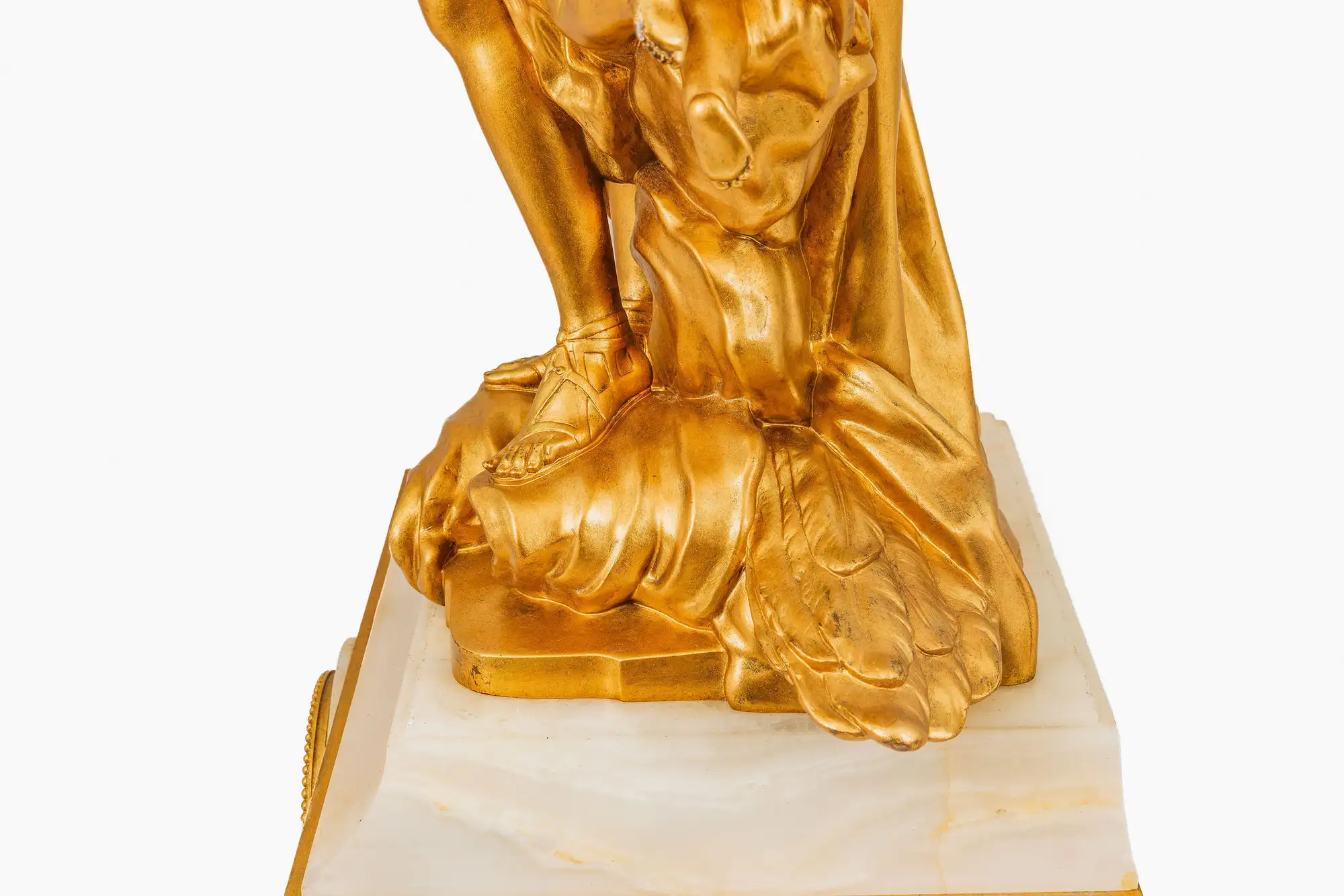
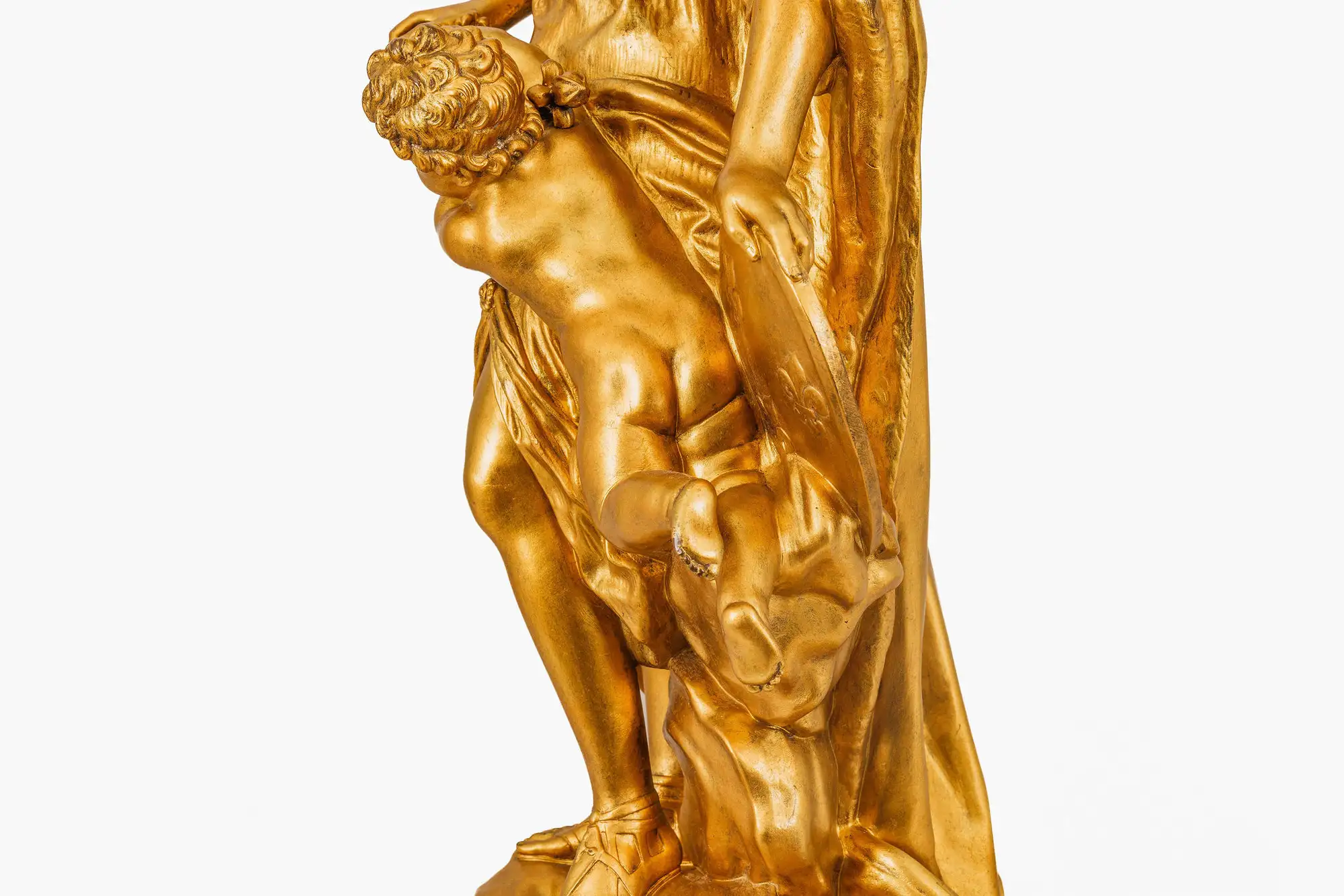
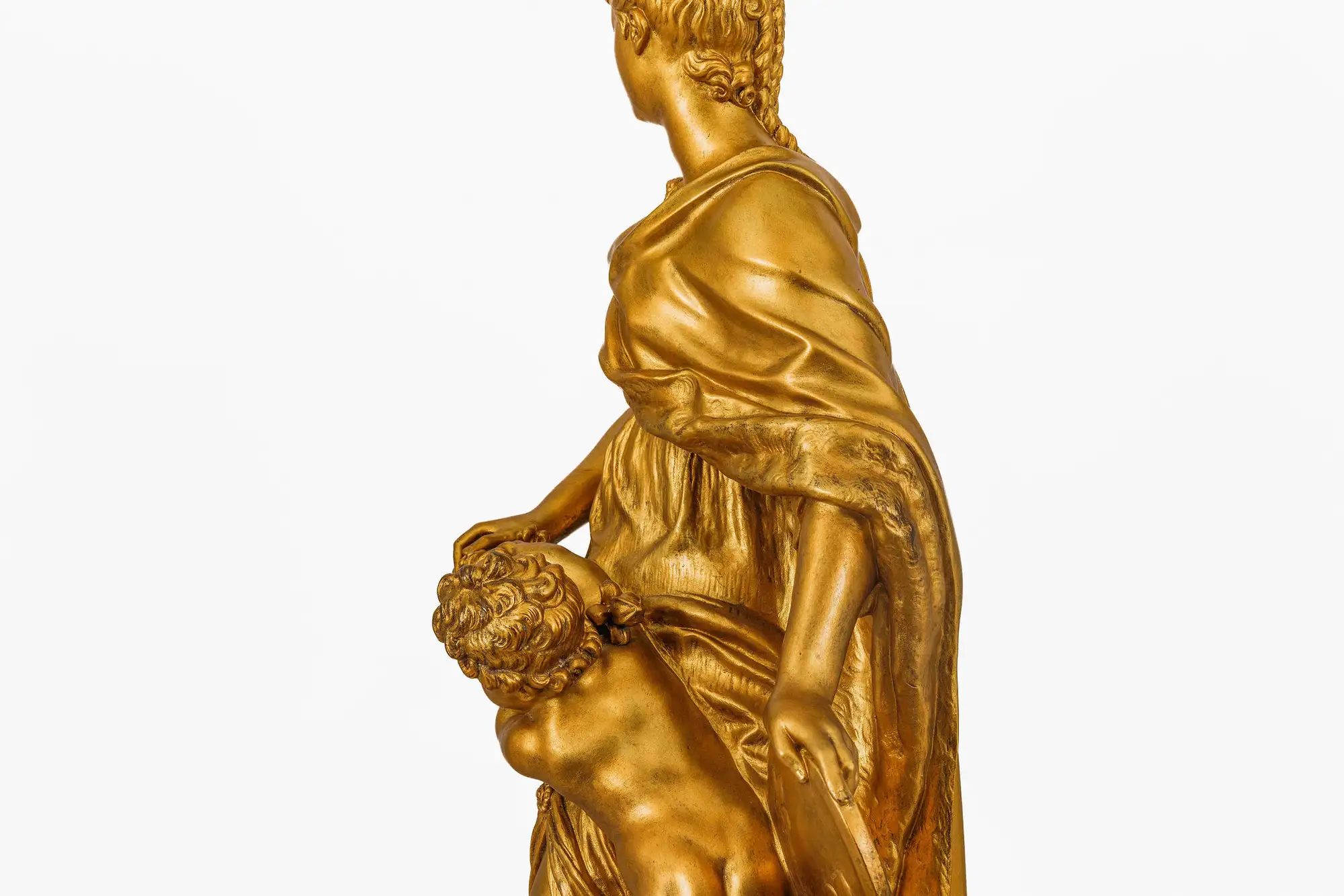
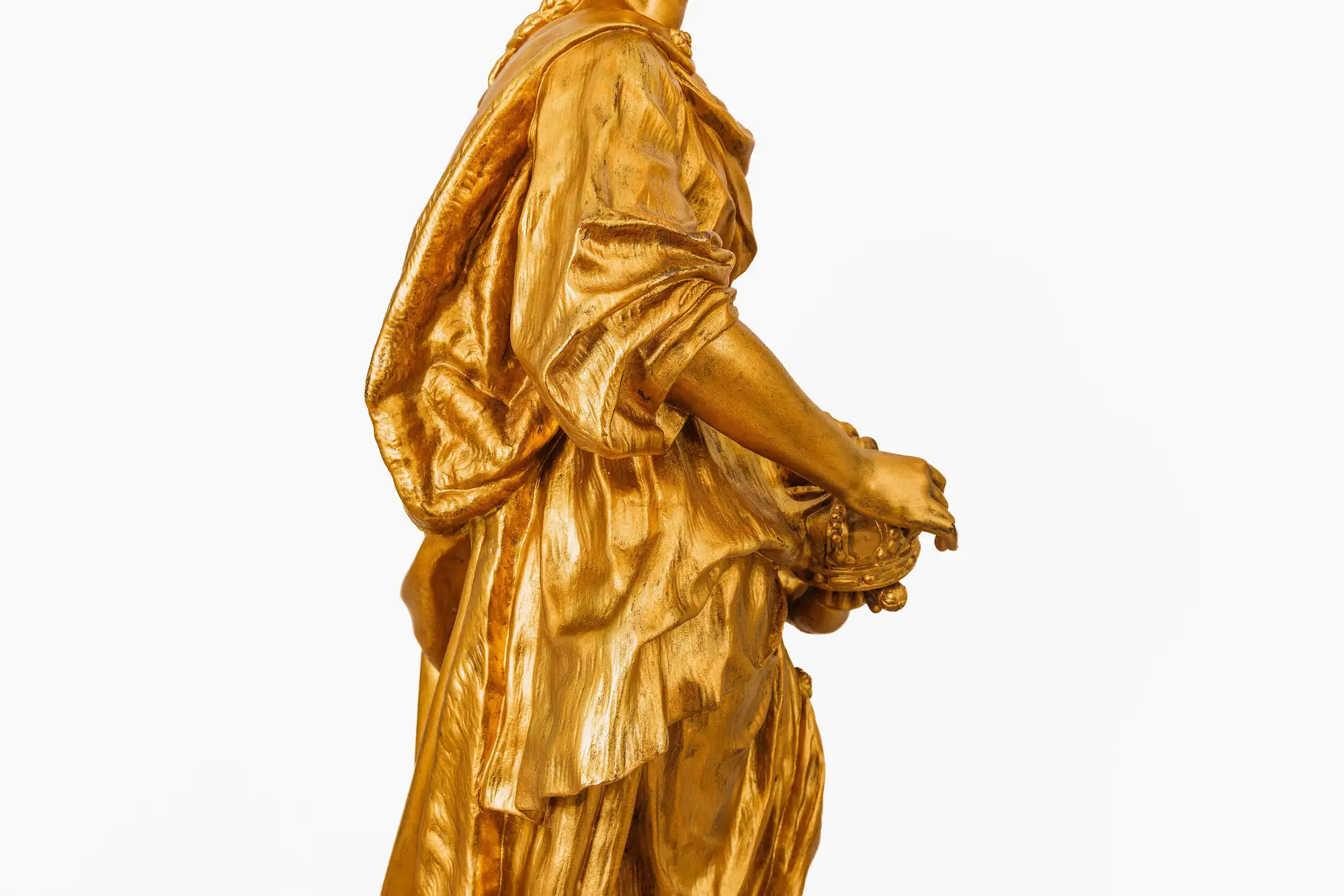
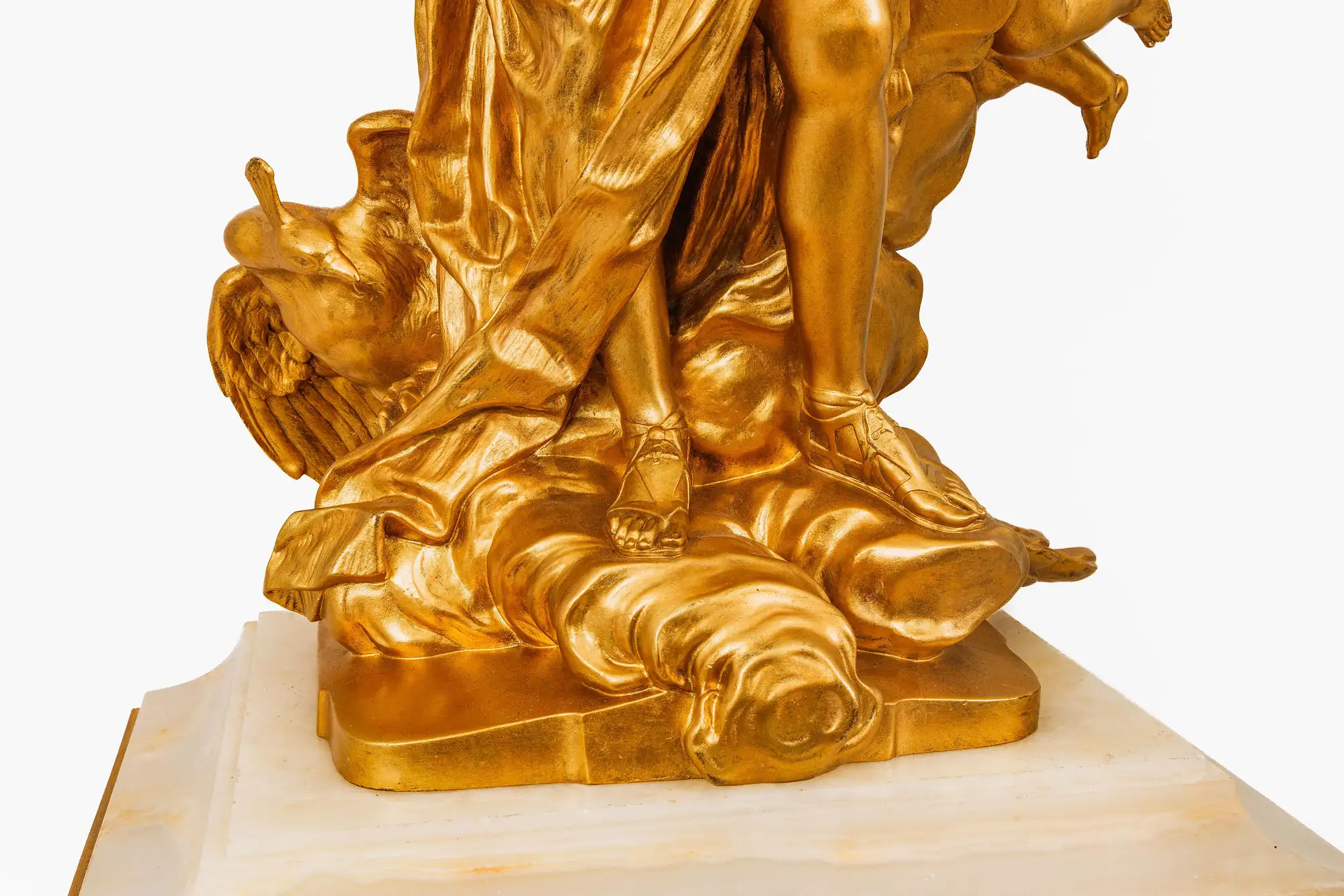
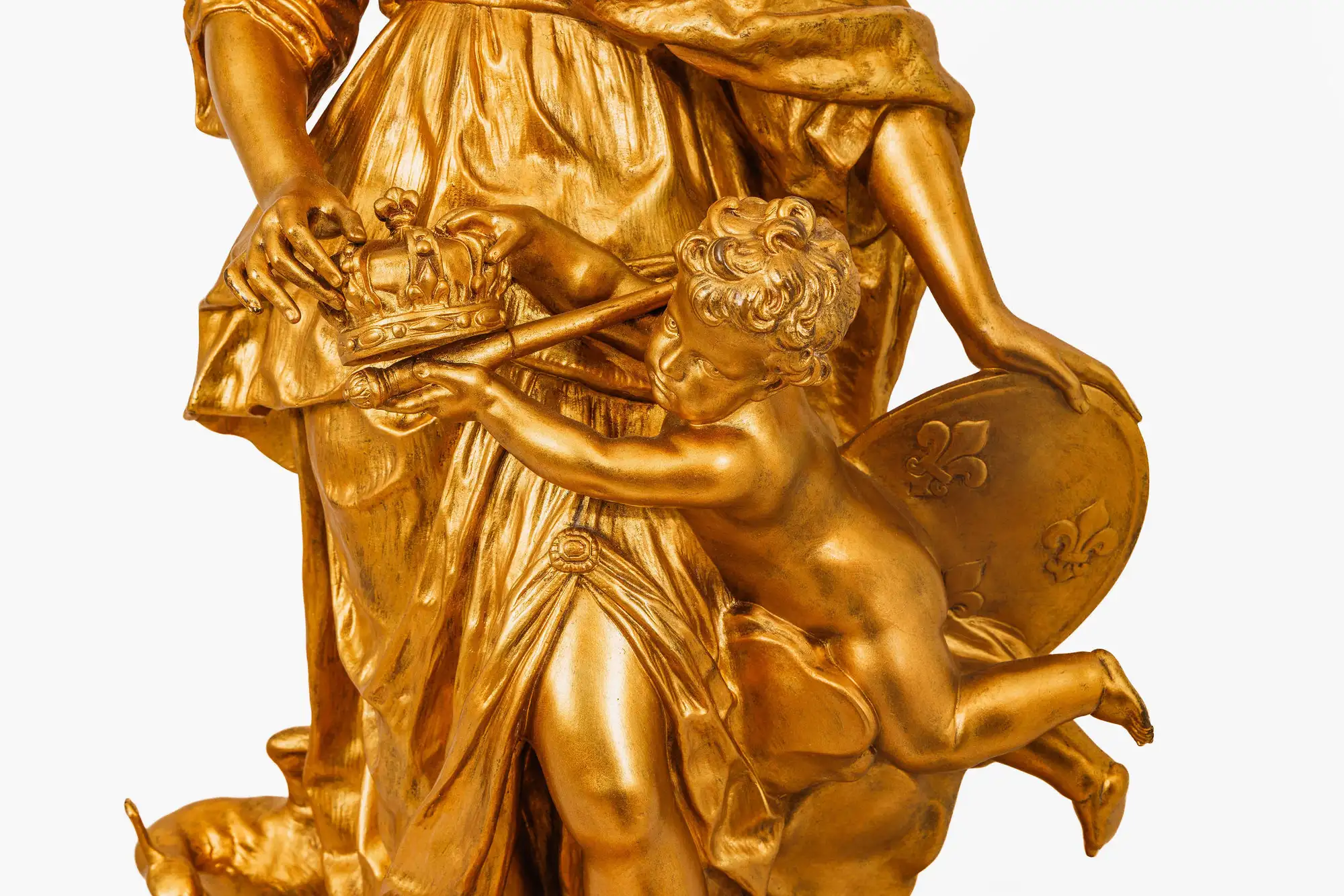
- The magnificent sculptural composition depicts the Queen of France in the guise of Juno, the Roman goddess and queen of the gods. Elegantly draped in classical robes, she is accompanied by a winged putto and a peacock, the traditional attribute of Juno. The composition is distinguished by its graceful movement, beautifully modeled anatomy, elaborate drapery, and exceptionally fine gilt-bronze finish.
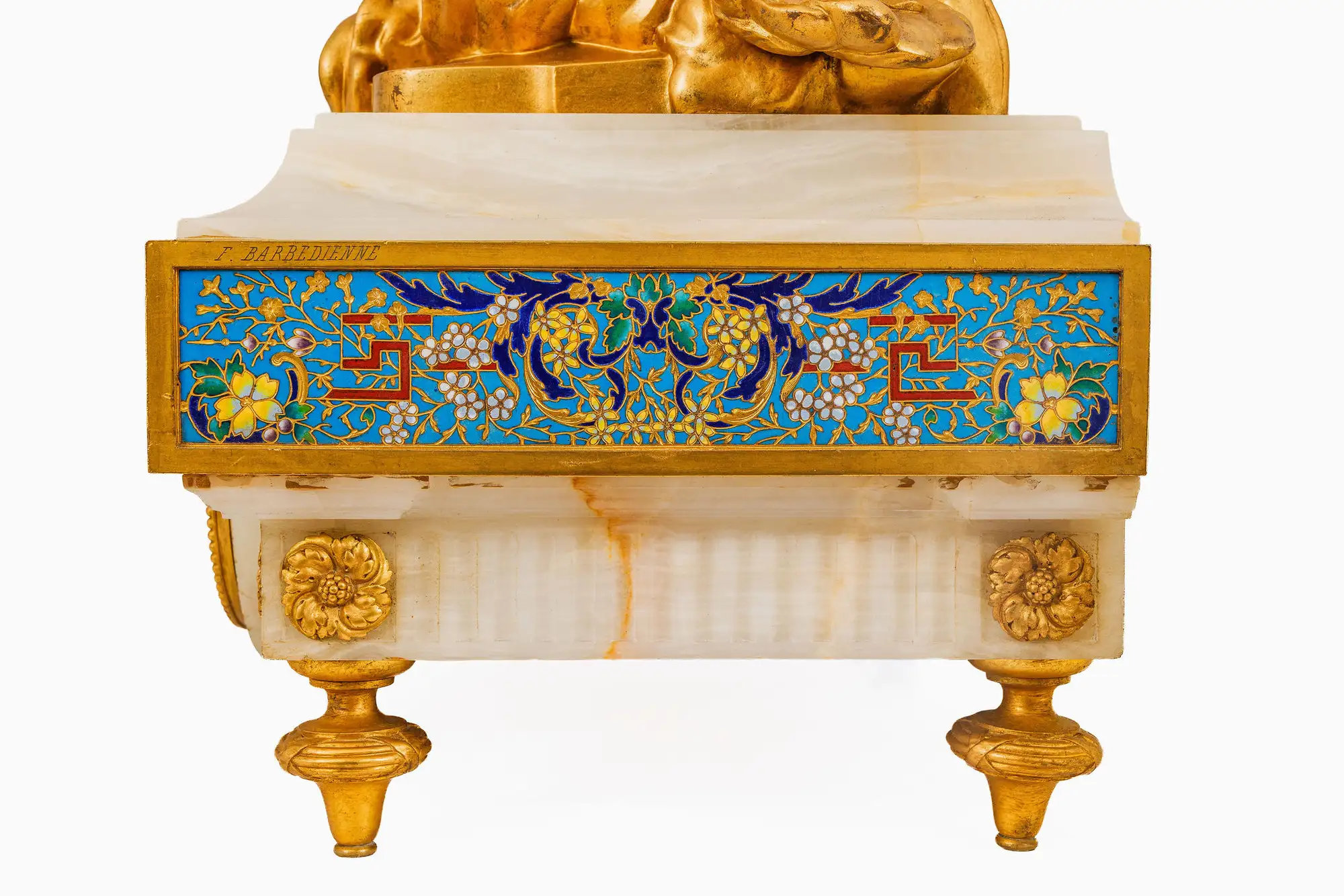
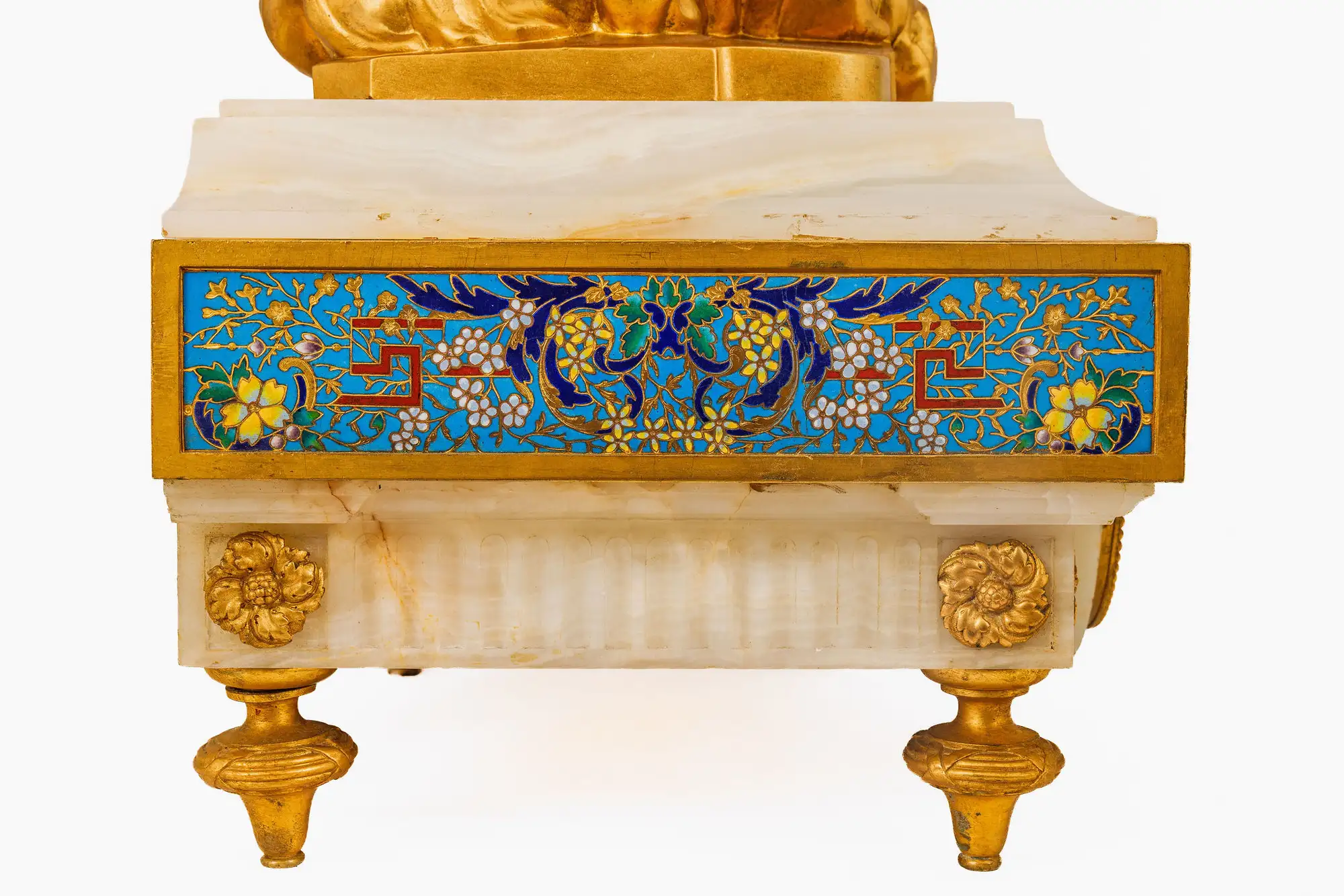
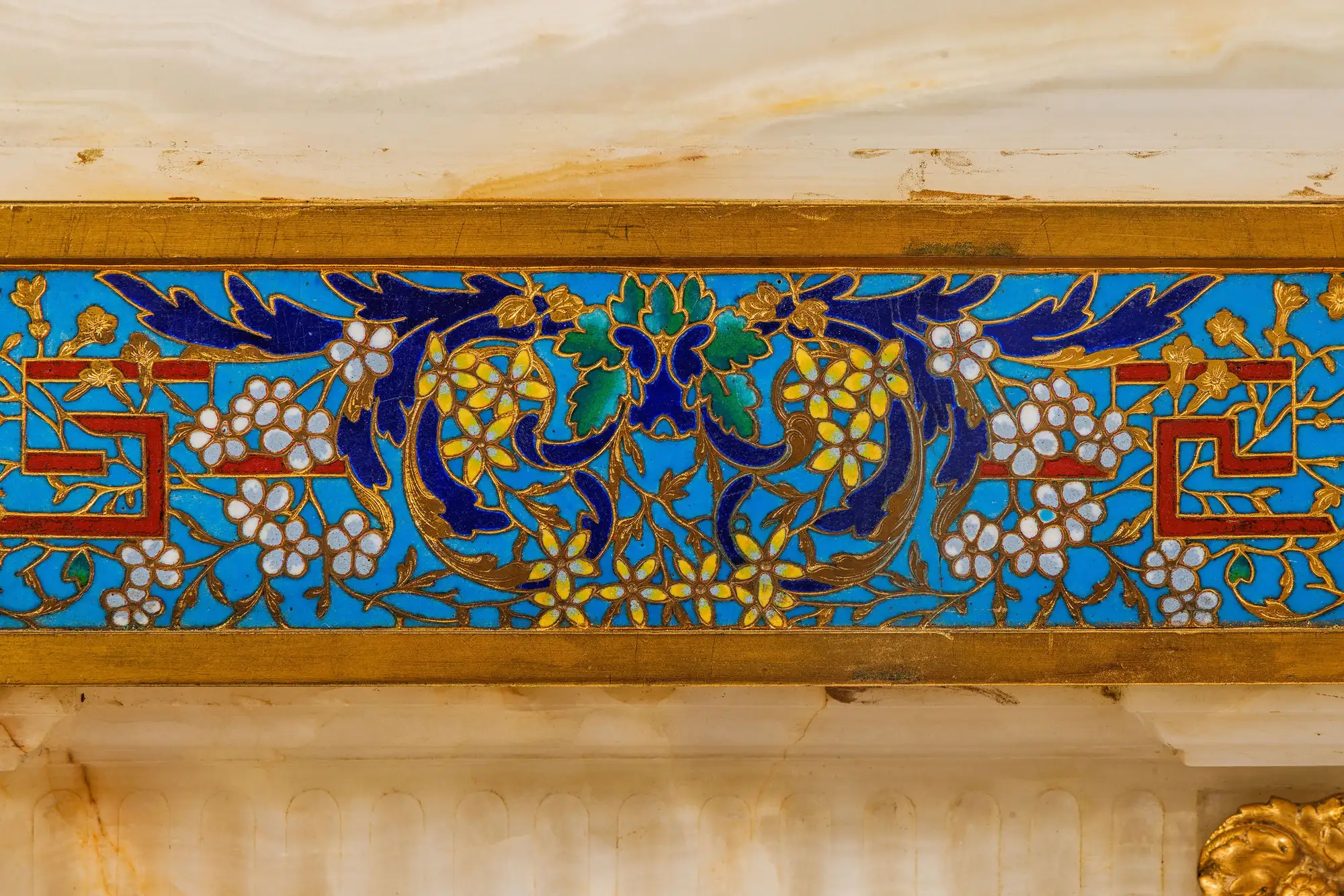
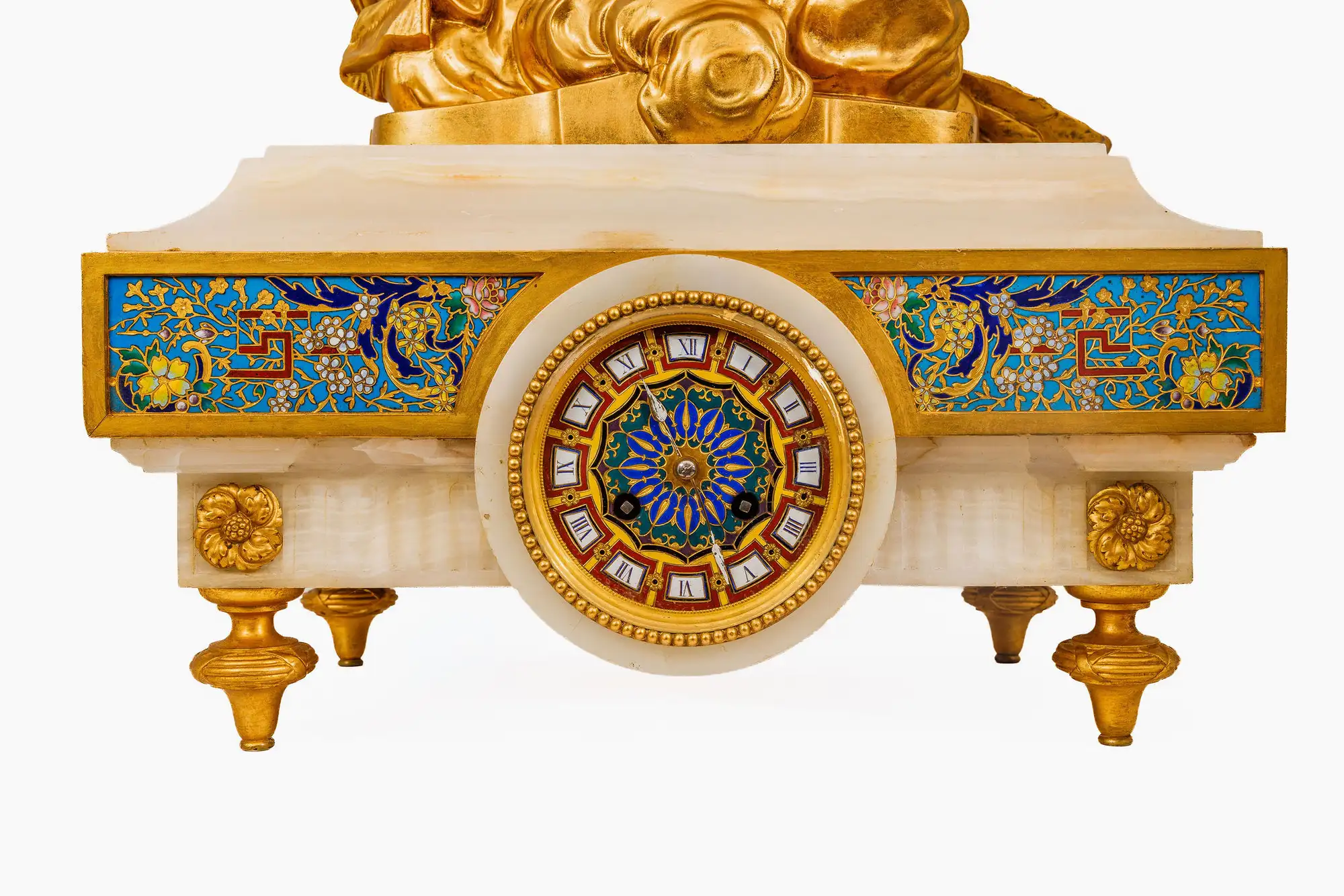
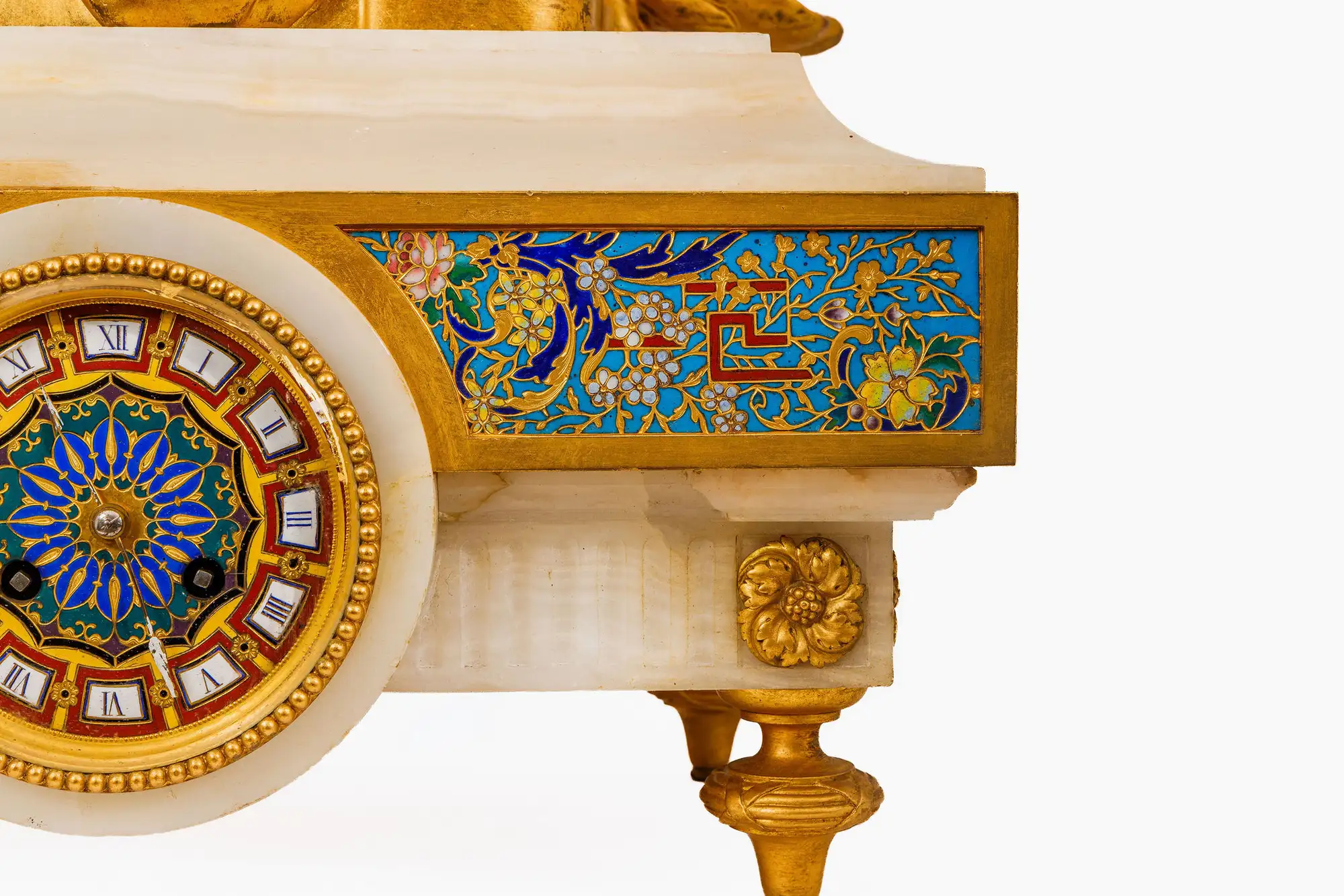
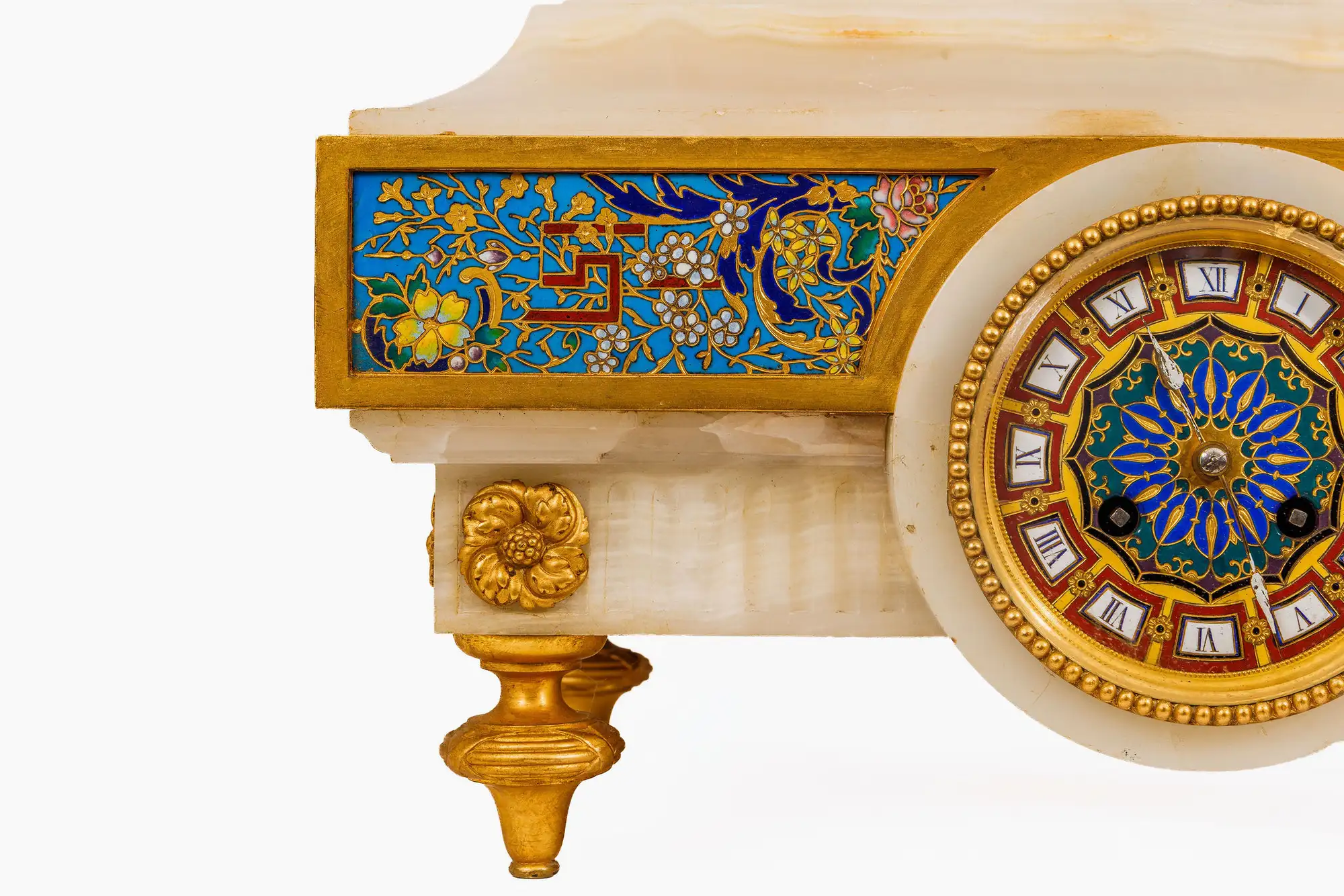
- The sculpture rests upon an architectural clock base fashioned from richly veined white onyx, embellished with exquisitely executed champlevé enamel panels displaying intricate floral and foliate decoration in vibrant shades of turquoise blue, cobalt, green, red, and gold.
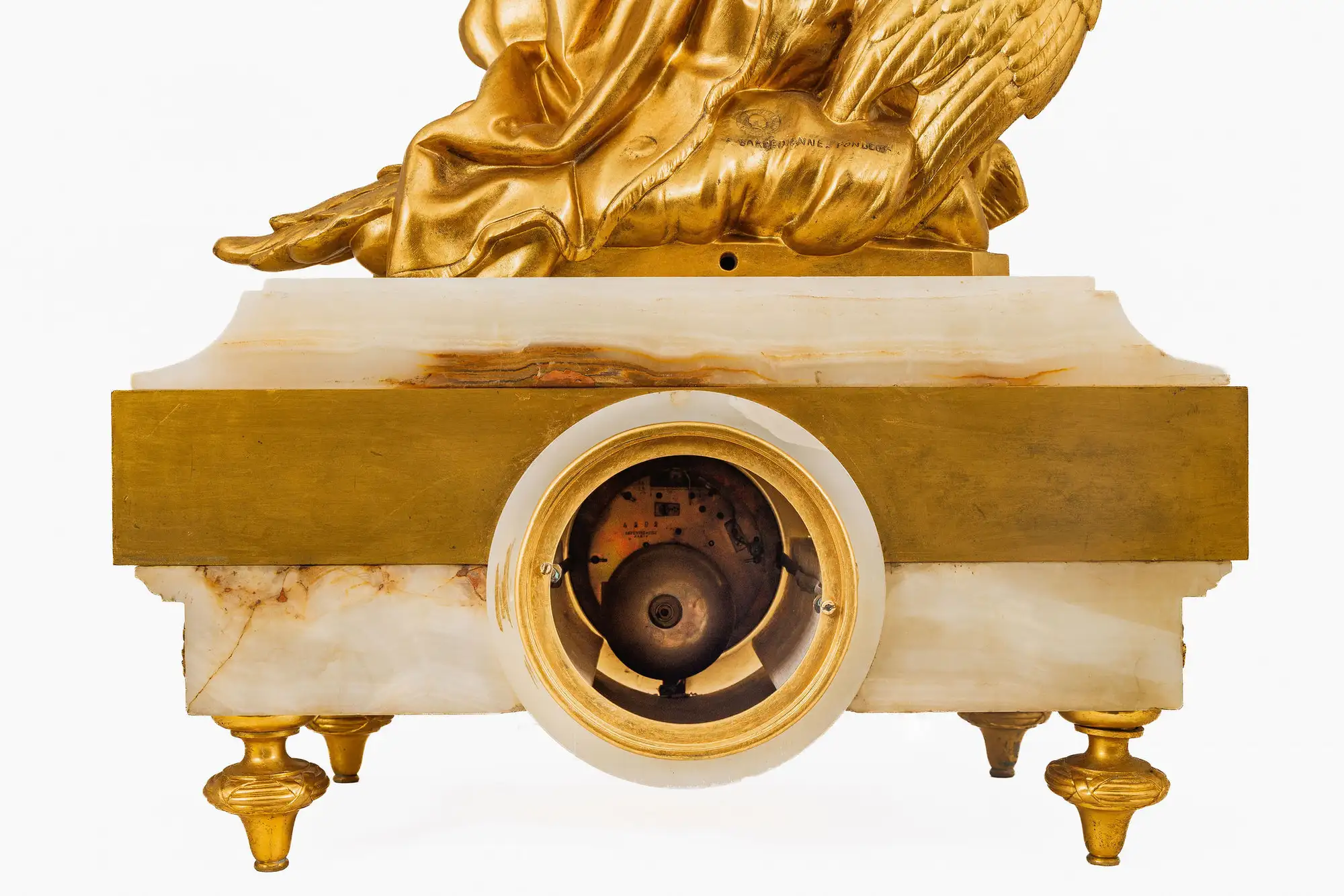
- The circular clock dial is beautifully integrated into the center of the base, surrounded by a richly ornamented gilt-bronze bezel and colorful enamel decoration. The composition is completed by finely cast gilt-bronze floral mounts and decorative feet.
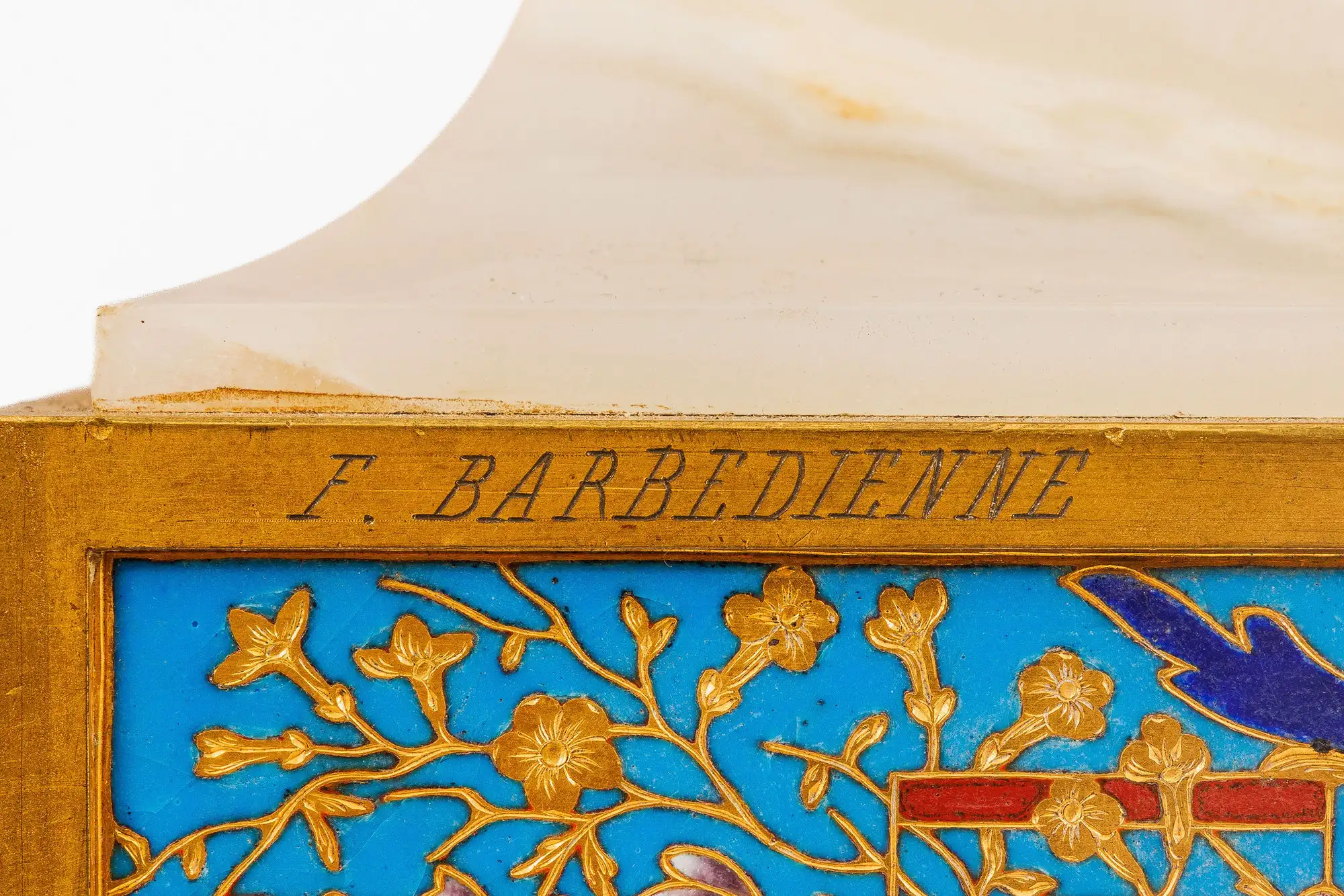
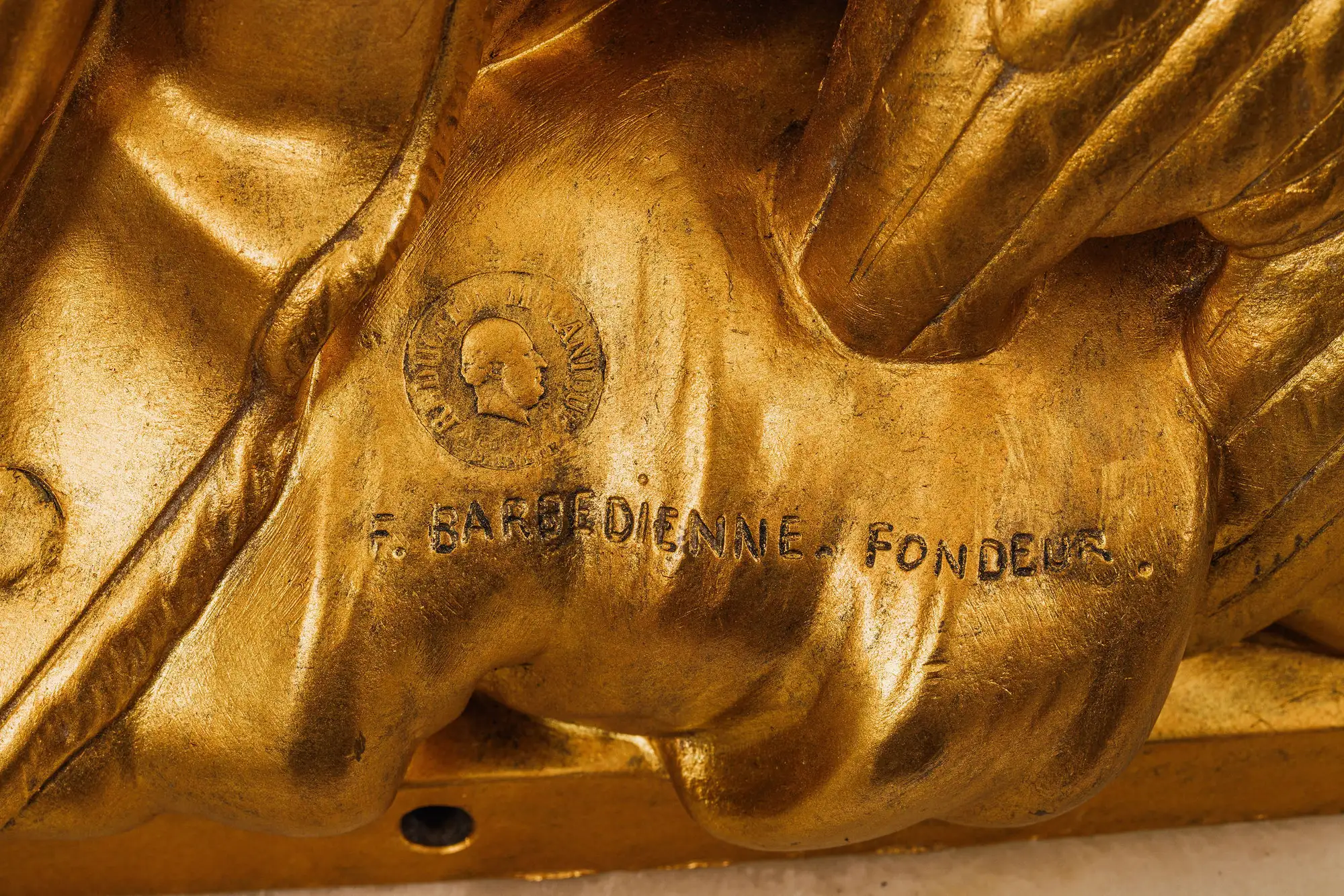
- The bronze sculpture bears the foundry signature "F. BARBEDIENNE FONDEUR," together with the foundry's circular mechanical reduction stamp. The clock base is additionally signed F. BARBEDIENNE.
- Ferdinand Barbedienne was among the most important and internationally celebrated French bronze founders of the 19th century. Establishing his renowned Parisian foundry in 1838 in partnership with Achille Collas, Barbedienne became synonymous with exceptional bronze casting, artistic innovation, and the highest standards of decorative craftsmanship.
- The foundry achieved international recognition for its magnificent reproductions of celebrated classical and Renaissance sculptures, as well as original works by leading contemporary artists. Its productions received numerous prestigious awards at the great international exhibitions of the 19th century.
- Barbedienne's exceptional bronzes and decorative objects are represented in important museum collections worldwide and remain highly sought after by collectors of fine 19th-century French decorative arts.
- The sculptural model derives from the celebrated representation of Marie Leszczyńska (1703–1768), Queen Consort of Louis XV, as Juno, attributed to the great French sculptor Guillaume Coustou the Elder.
- Coustou was one of the foremost sculptors of the French royal court, renowned for his monumental compositions and masterful interpretation of classical subjects. His celebrated works include the monumental *Horses of Marly*, among the masterpieces of 18th-century French sculpture.
- The representation of the French queen as Juno reflects the tradition of royal portraiture in mythological guise, associating the monarch with the dignity, majesty, and symbolic authority of classical antiquity.
- The combination of an imposing gilt-bronze sculptural group, richly figured onyx, and brilliantly colored champlevé enamel distinguishes this clock from more conventional examples of Barbedienne's production.
- Monumental in conception and exceptionally decorative, the work transcends its function as a timepiece, presenting itself as an important sculptural and architectural statement.
- 35" high x 17" wide x 11" deep
- Very good overall condition. The gilt-bronze sculptural group is removable and rests independently upon the onyx clock base without being permanently affixed. Two very small drill holes are present on the upper surface of the onyx base, entirely concealed when the sculpture is in position and not visible on display.
- As with all antique timepieces, the clock should be inspected and serviced by a qualified horologist as necessary. We do not guarantee the accuracy or reliability of timekeeping. Please inquire for additional information.
Period
1870-1879
Depth
11 in (27.94 cm)
Width
17 in (43.18 cm)
Height
35 in (88.9 cm)
Creator
Ferdinand Barbedienne (Maker)
Date of Manufacture
C. 1870
Materials & Techniques
Bronze,Enamel,Onyx,Ormolu
Condition
Good Wear consistent with age and use.
Price Range
◆
Price Range
◆ Under $5,000
◆ $5,000–$10,000
◆ $10,000–$25,000
◆ $25,000–$50,000
◆ $50,000–$100,000
◆ Over $100,000