

Kurt J. Matzdorf Monumental Judaica Modernist Brass Torah Stand, New York c 1970
- An exceptional and monumental American modernist brass Torah stand by Kurt J. Matzdorf (1922–2008), the distinguished German-born American master metalsmith, sculptor, and pioneering figure in twentieth-century Jewish ceremonial art. New York, circa 1970–1980.
- Provenance: Temple B'nai Or, Morristown, New Jersey.
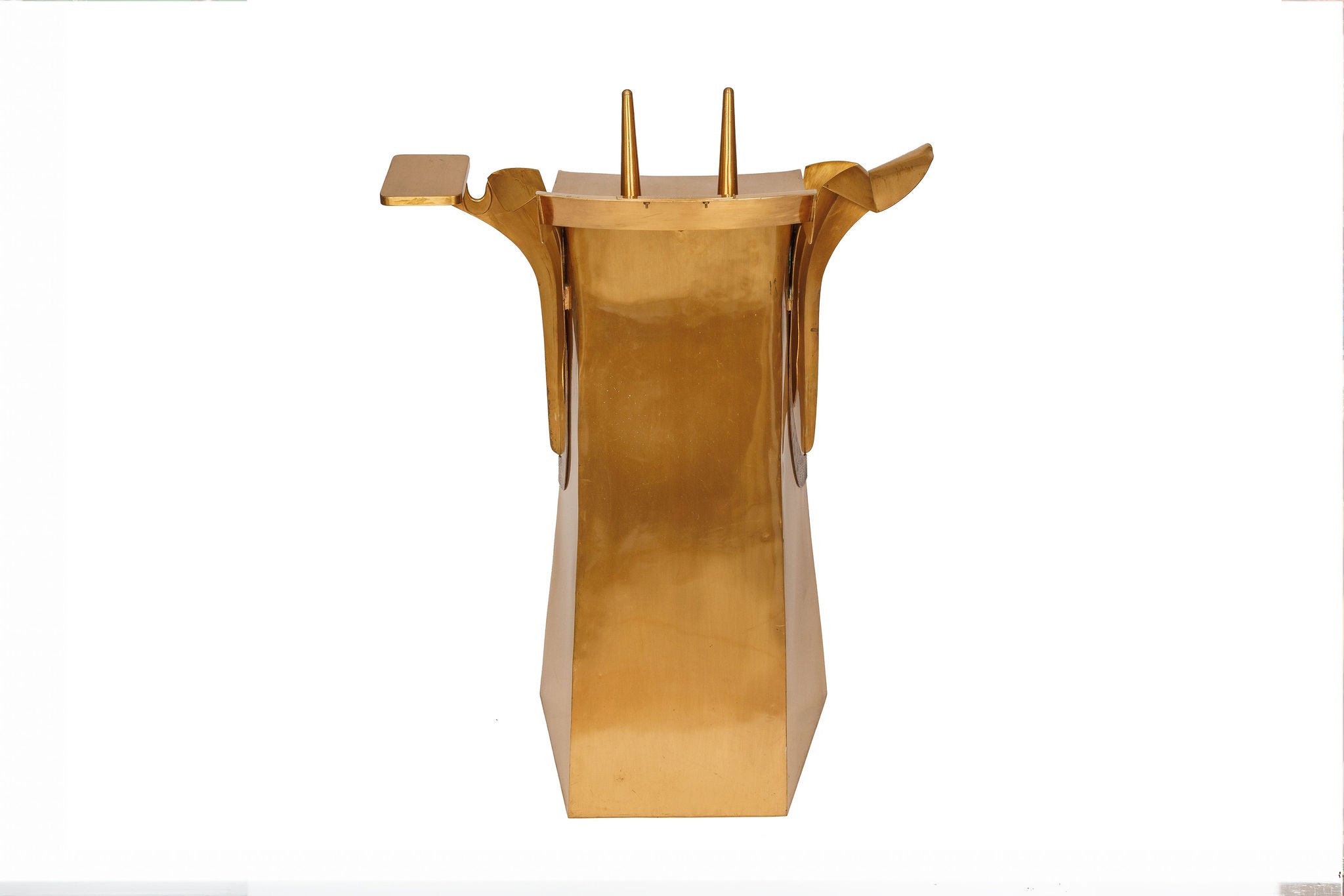
- A remarkable synthesis of modernist sculpture, architectural design, and Jewish religious tradition, this extraordinary handcrafted Torah stand exemplifies Matzdorf's innovative approach to ceremonial metalwork, transforming a functional synagogue furnishing into a powerful and sophisticated sculptural statement.
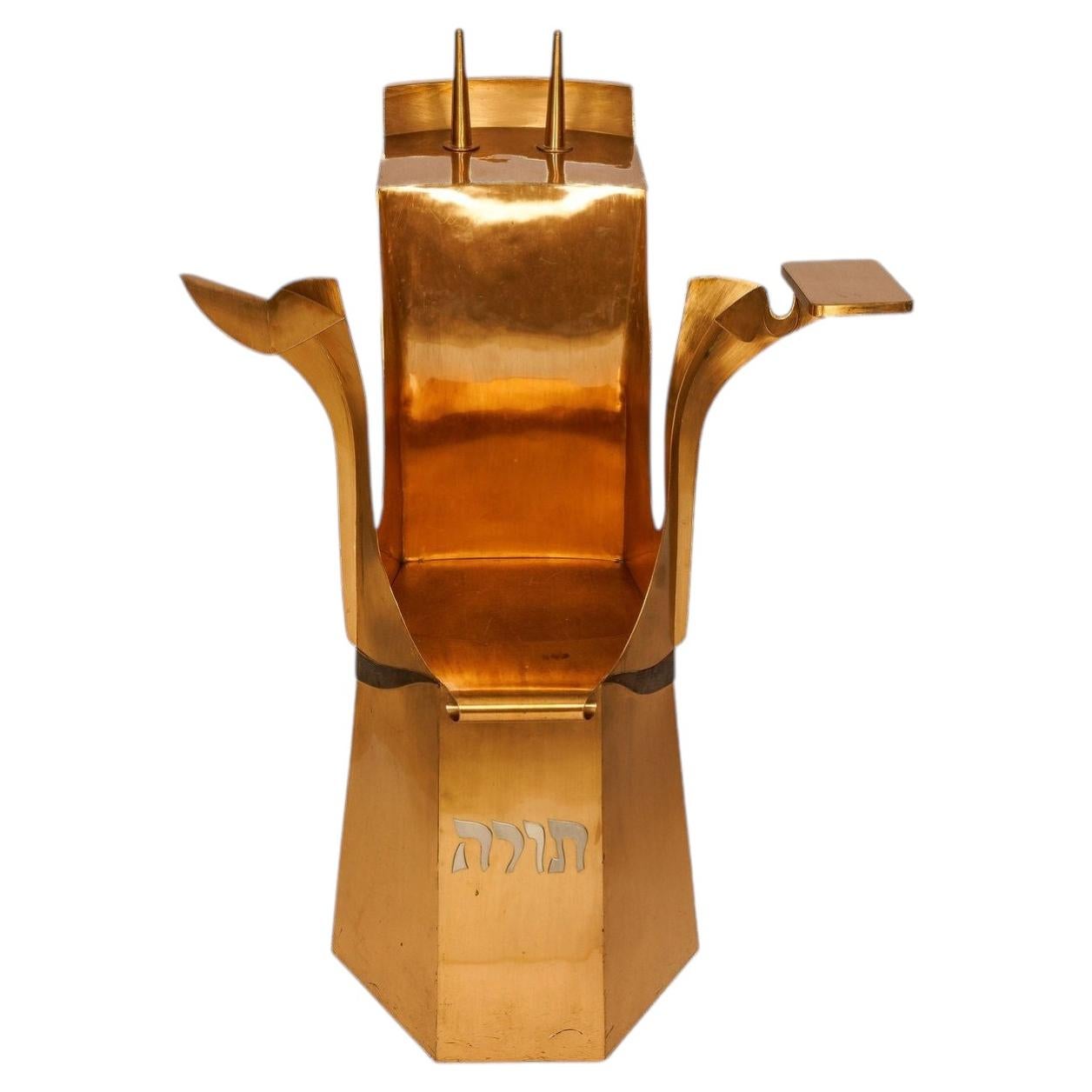
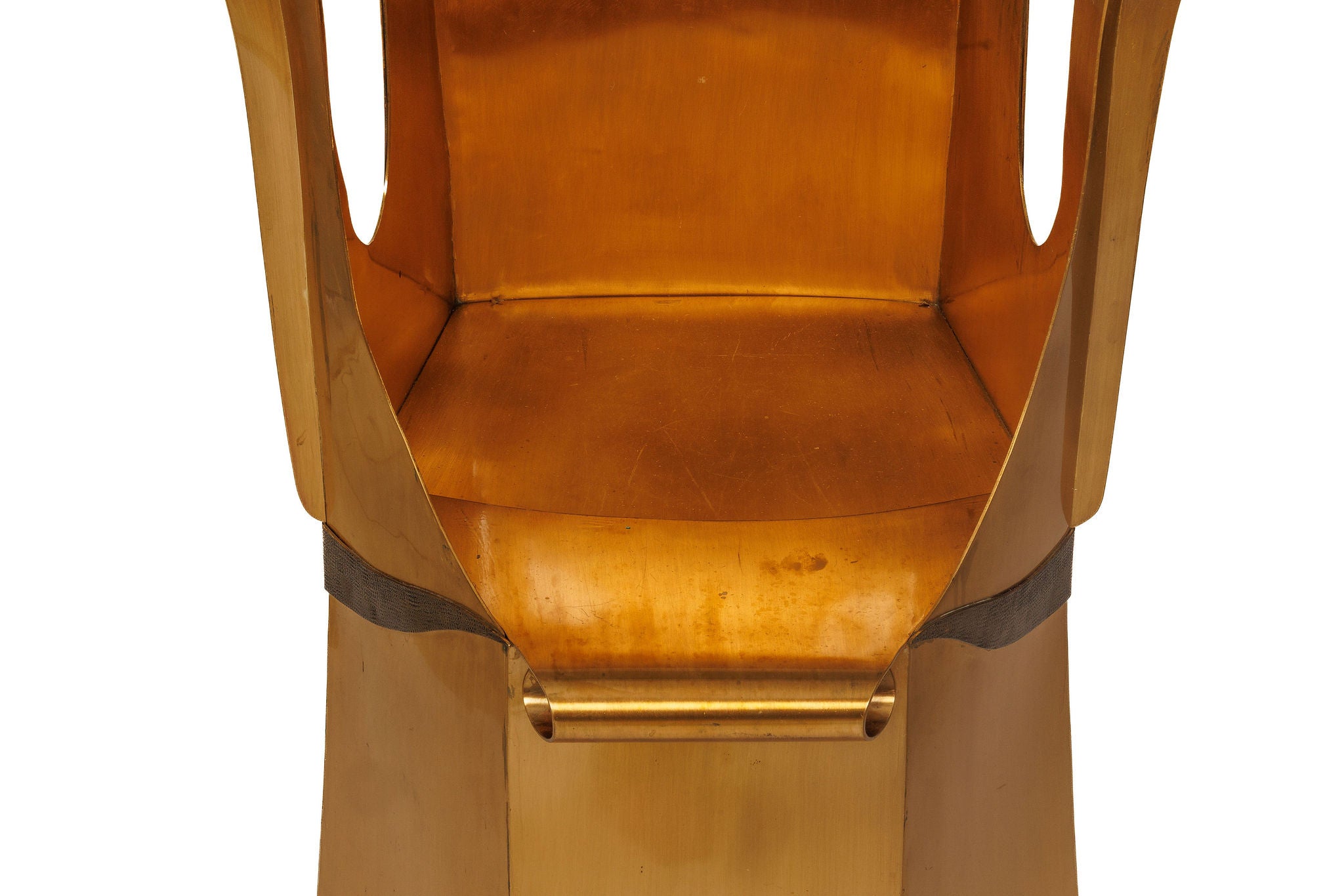
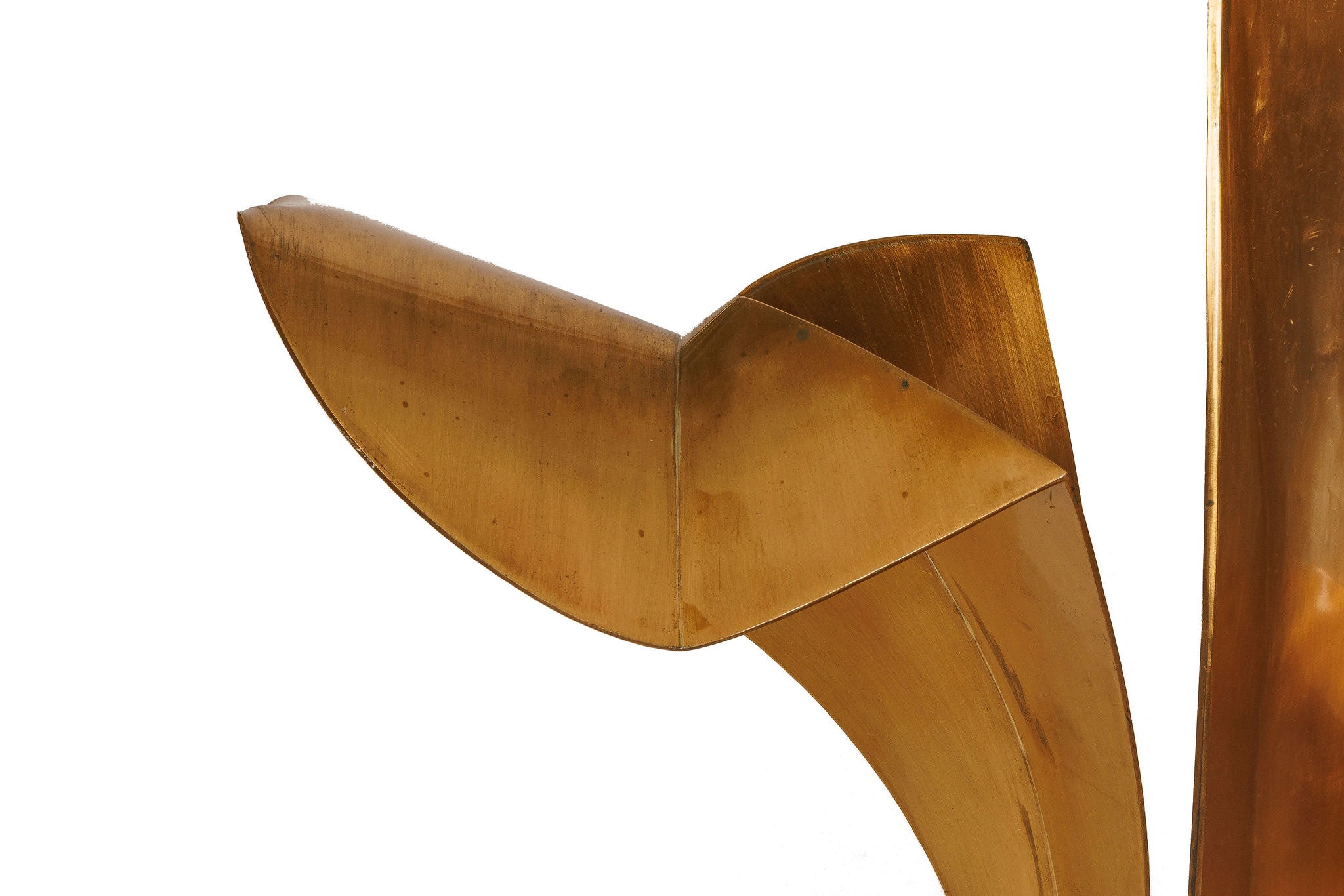
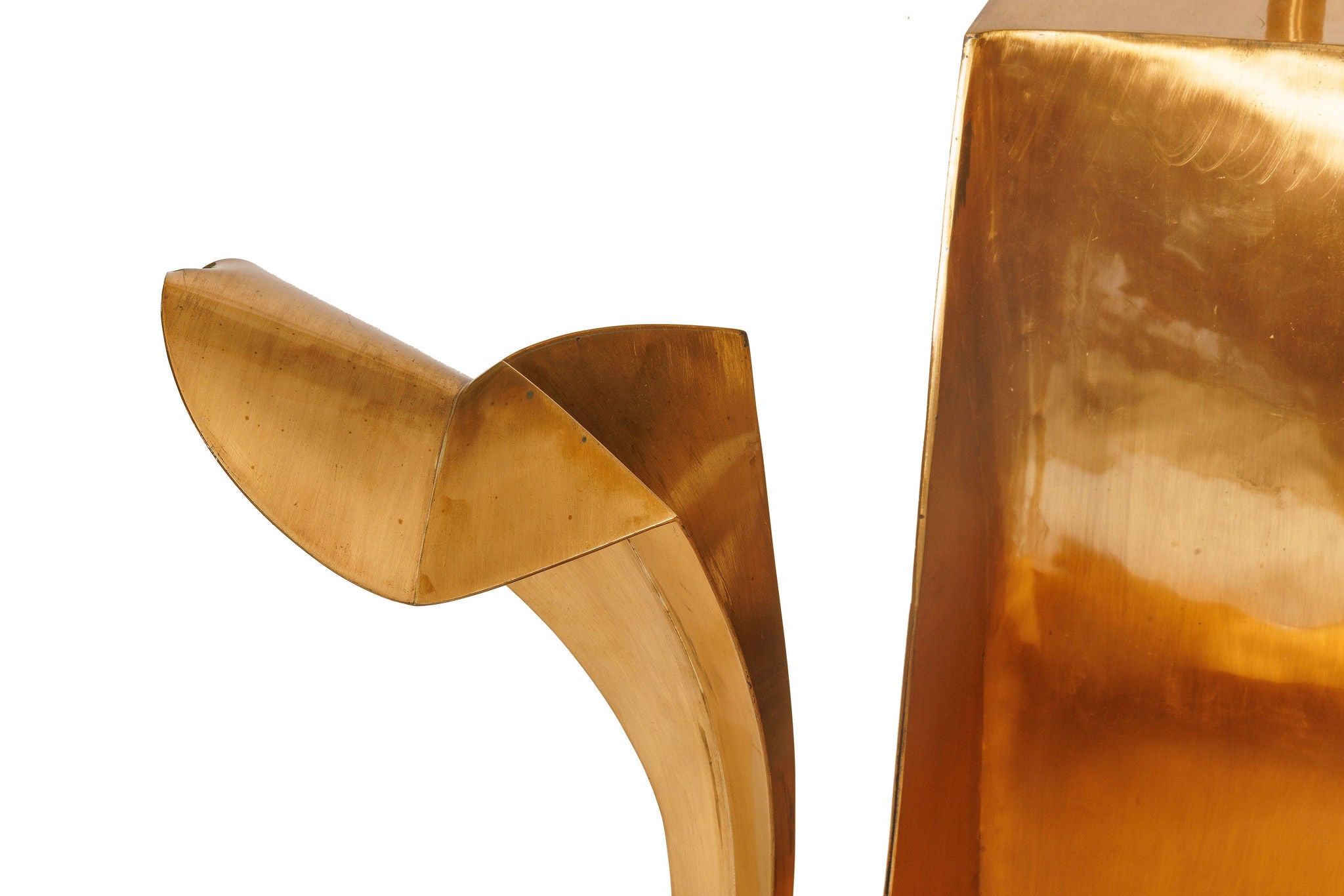
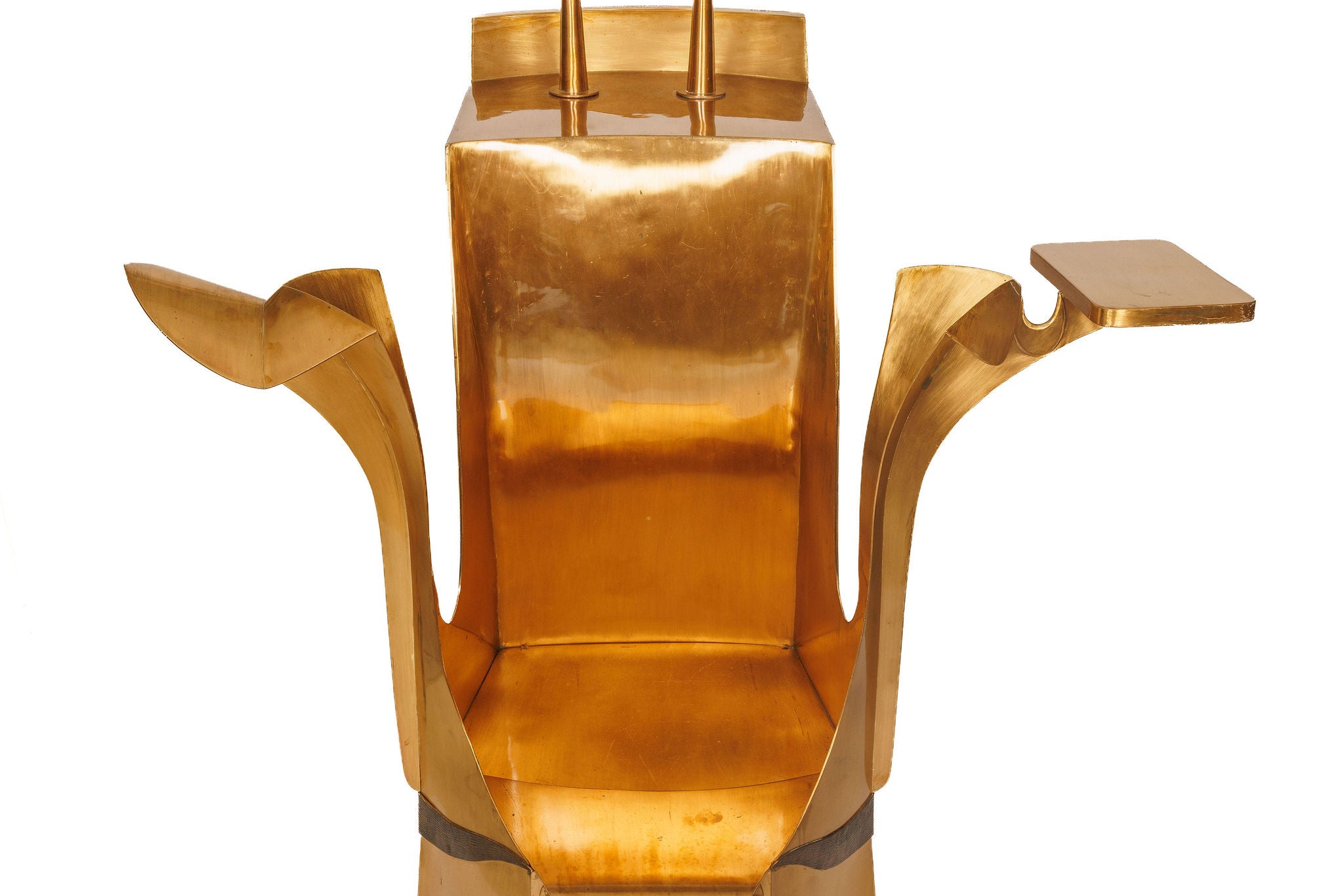
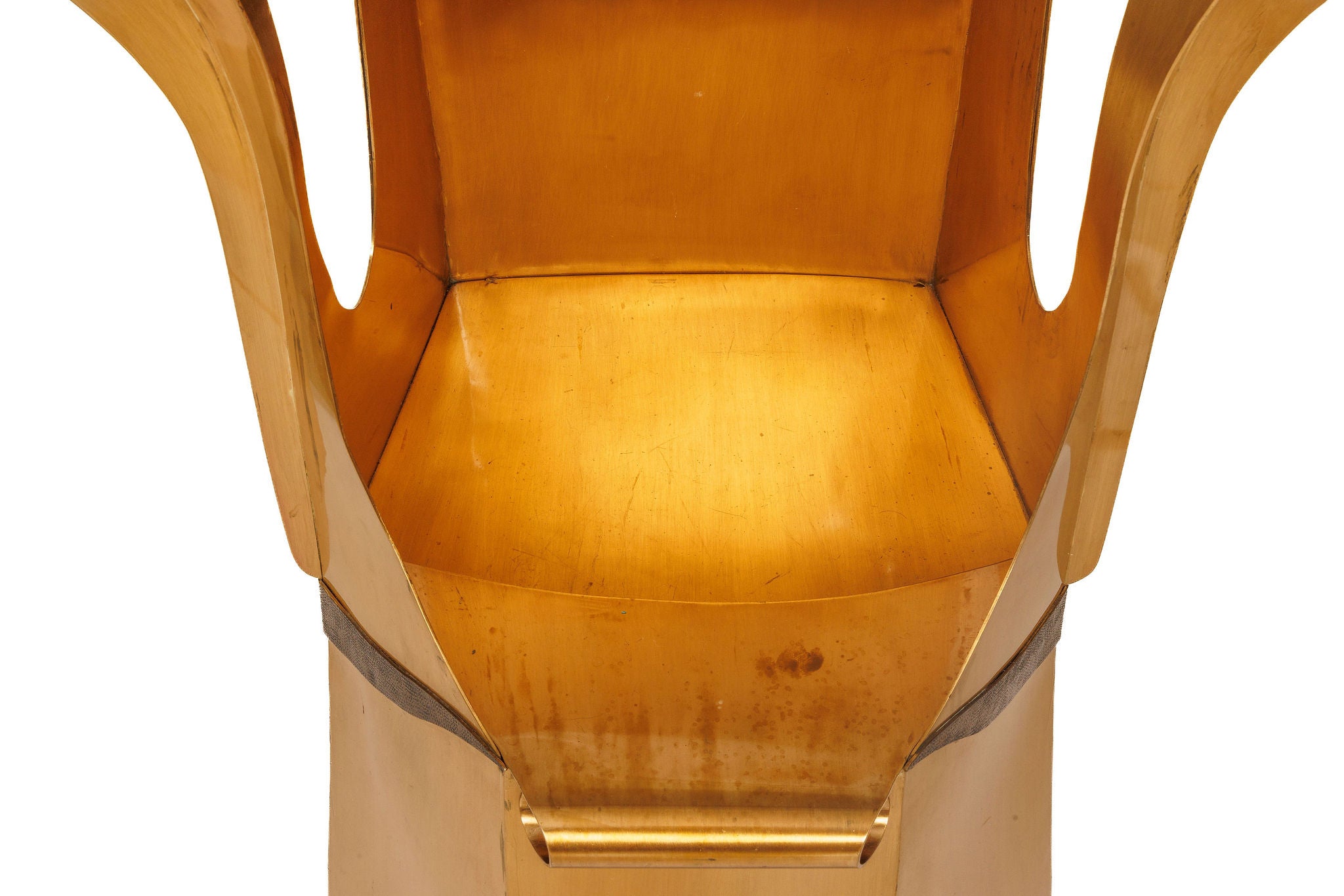
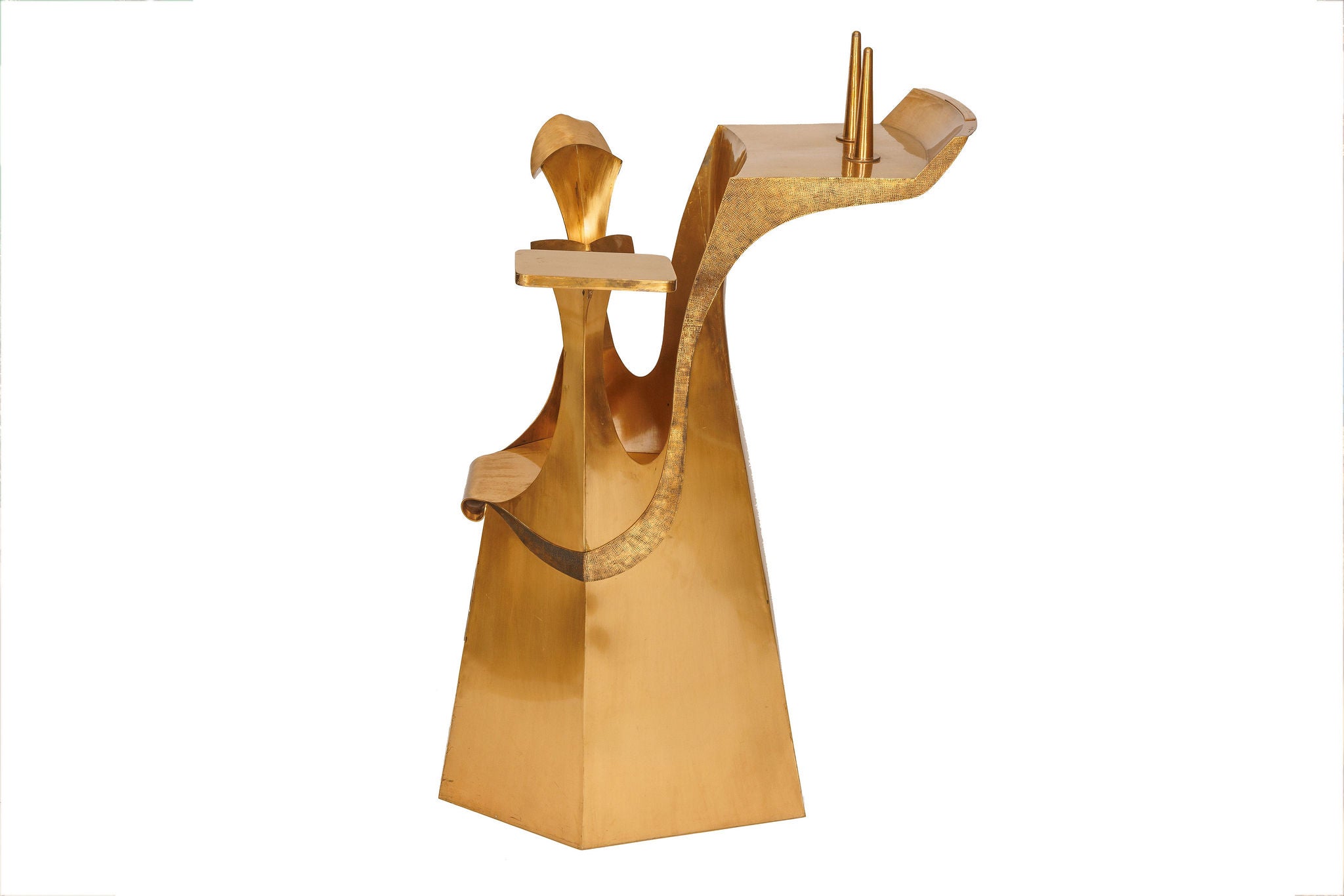
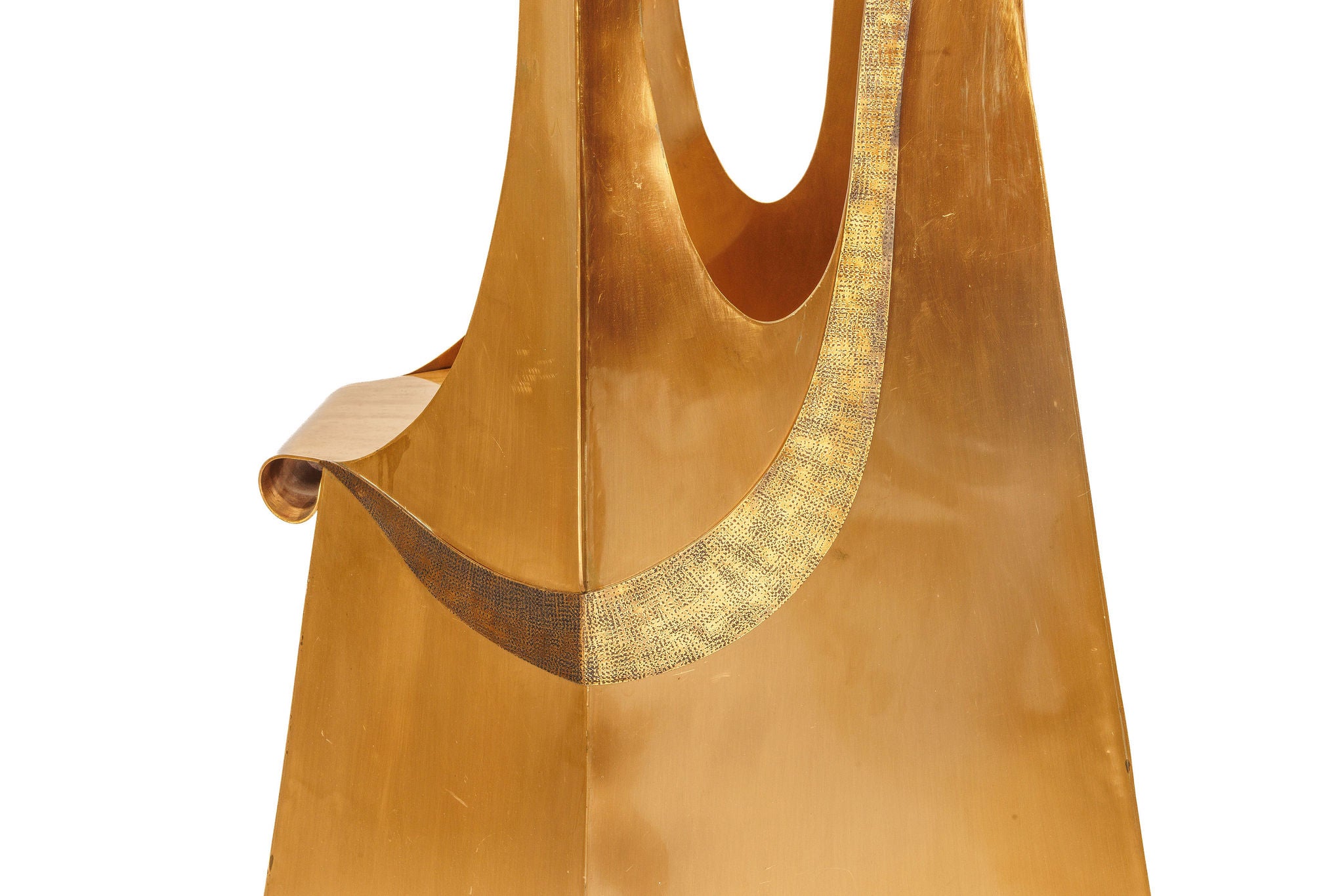
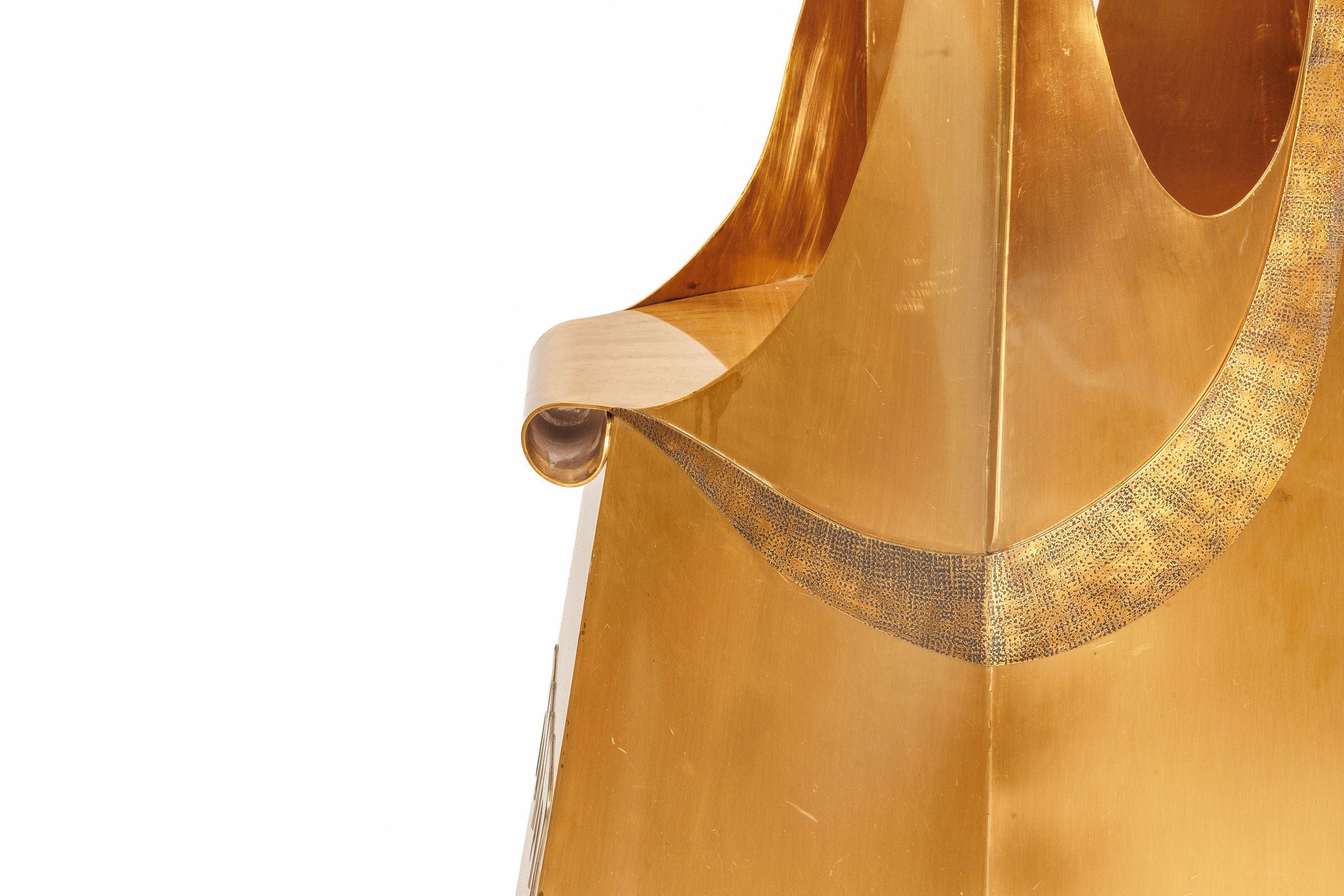
- Executed in beautifully finished golden brass, the monumental stand displays a striking architectural composition distinguished by its dramatic geometric construction, gracefully sweeping supports, elegantly folded metal surfaces, and sophisticated interplay of angular and curvilinear forms.
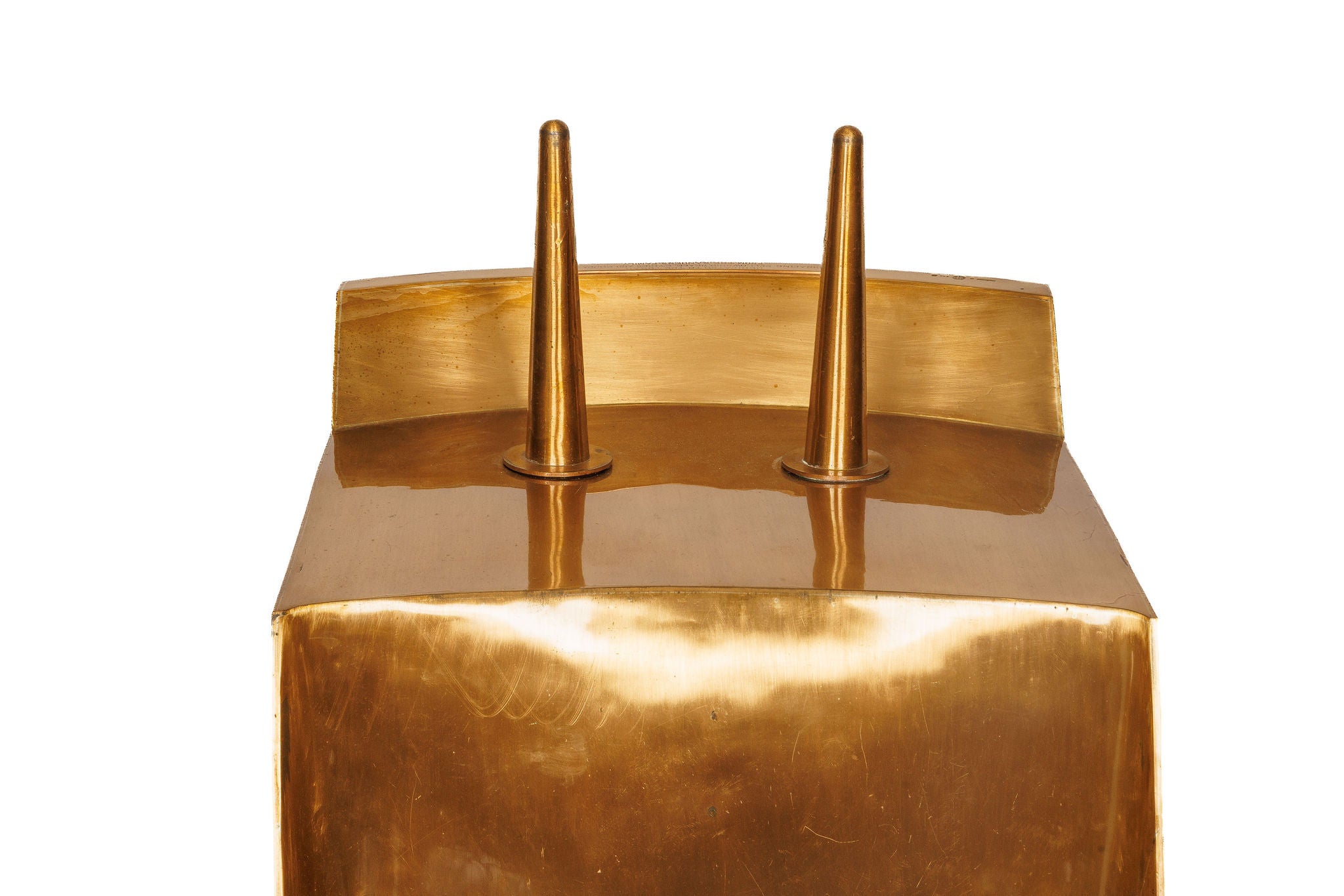
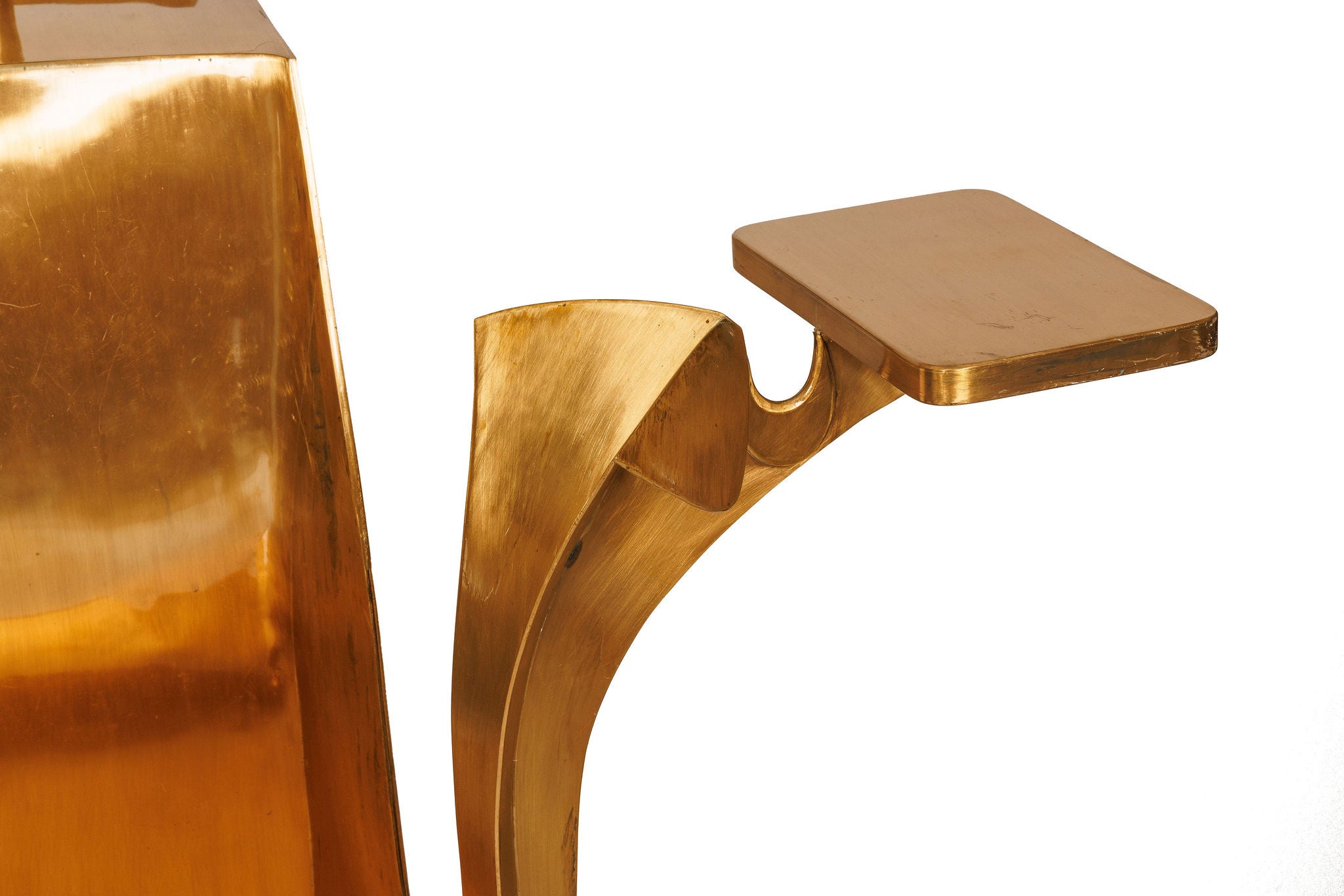
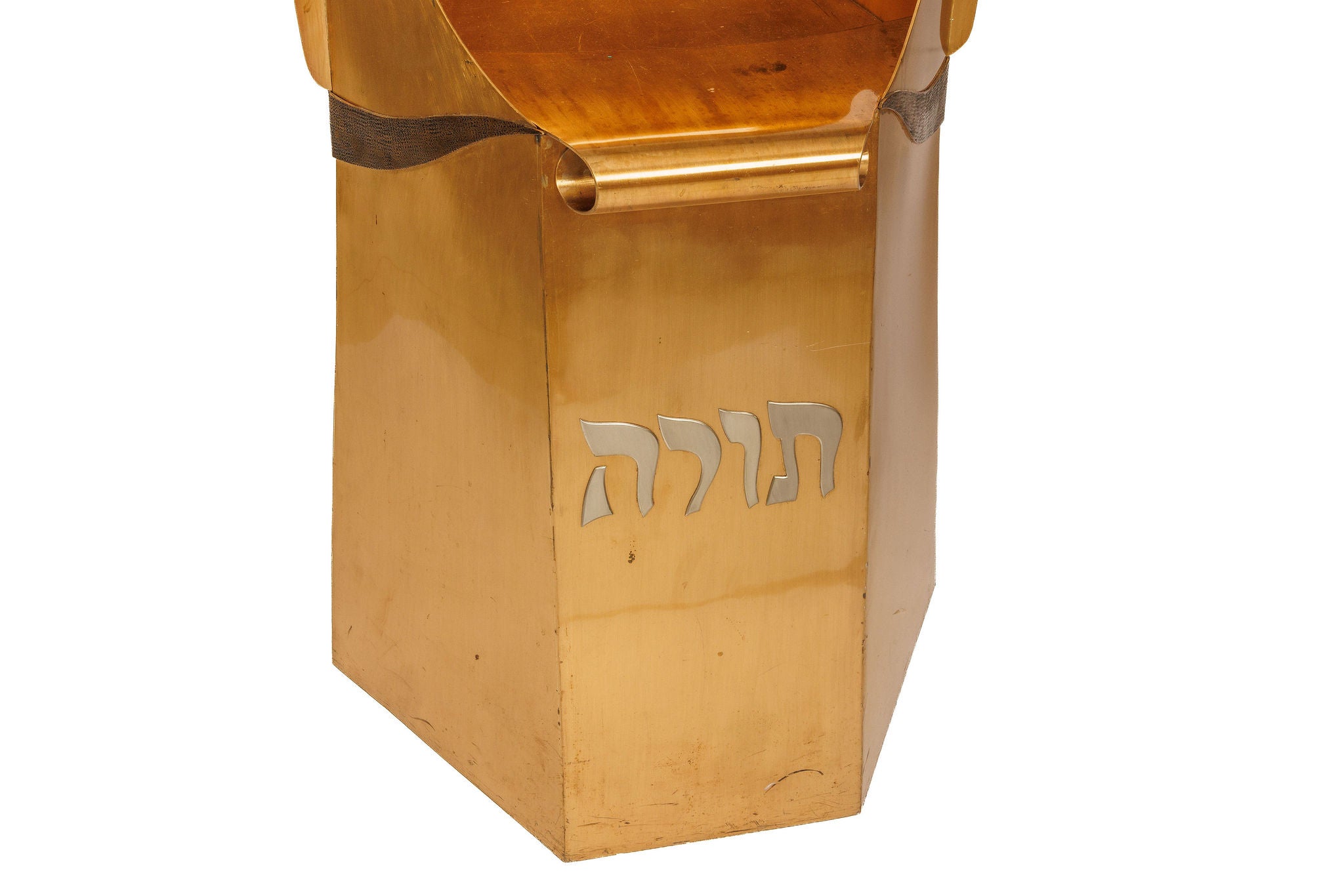
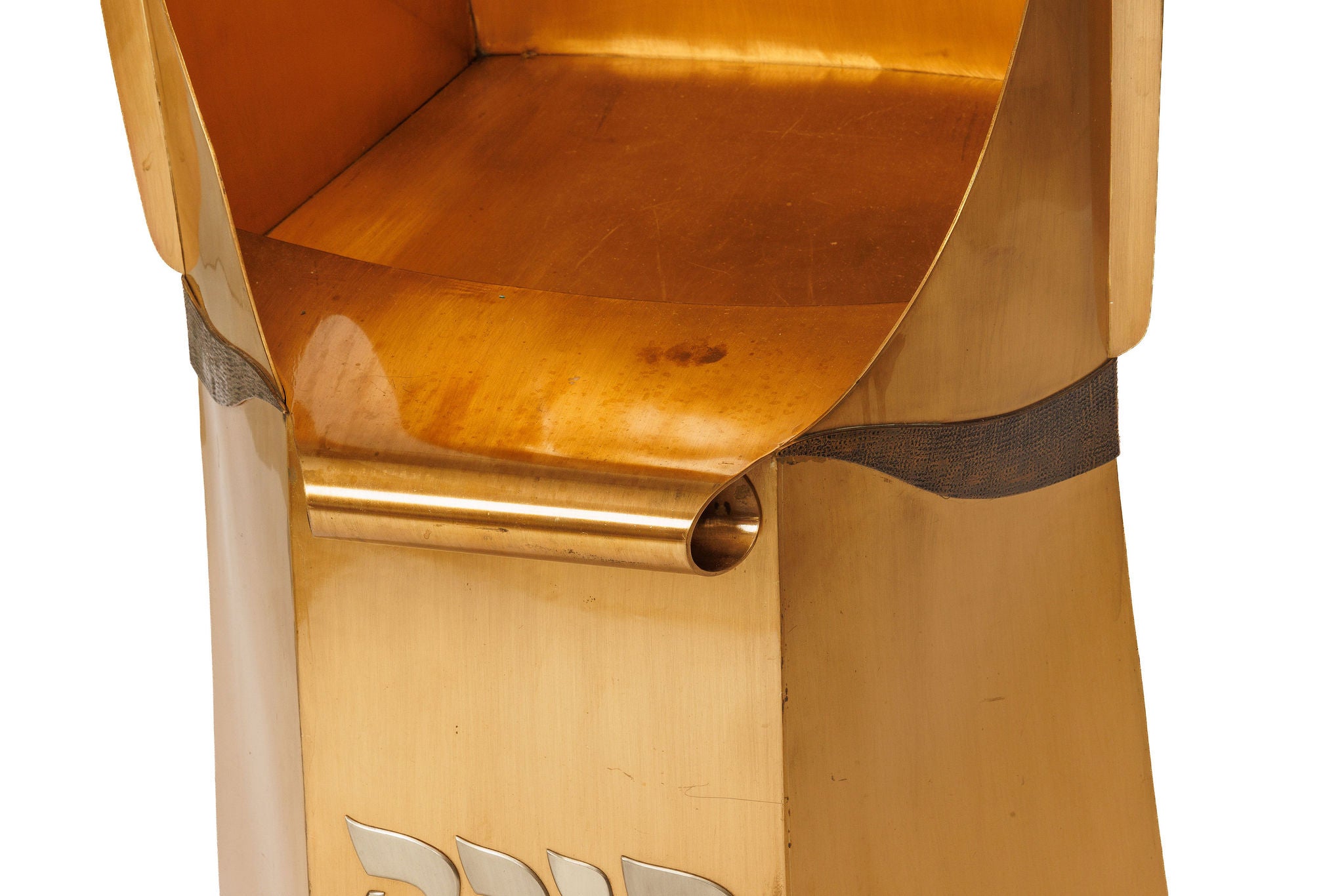
- The tall, faceted pedestal rises into a deeply recessed central cradle, framed by sculptural arms extending outward in dramatic, almost abstract configurations. Two slender, tapered uprights emerge from the upper section, introducing a further vertical architectural element. Particularly noteworthy is the asymmetrical treatment of the projecting supports, including a rectangular platform on one side and an elegantly folded, ribbon-like brass element on the other.
- The design embodies the spirit of postwar American modernism, with its emphasis on pure geometric forms, sculptural expression, material integrity, and the elimination of unnecessary ornamentation. Its striking silhouette recalls the experimental vocabulary of mid-century architectural sculpture and the American studio craft movement, while remaining deeply rooted in Jewish ceremonial tradition.
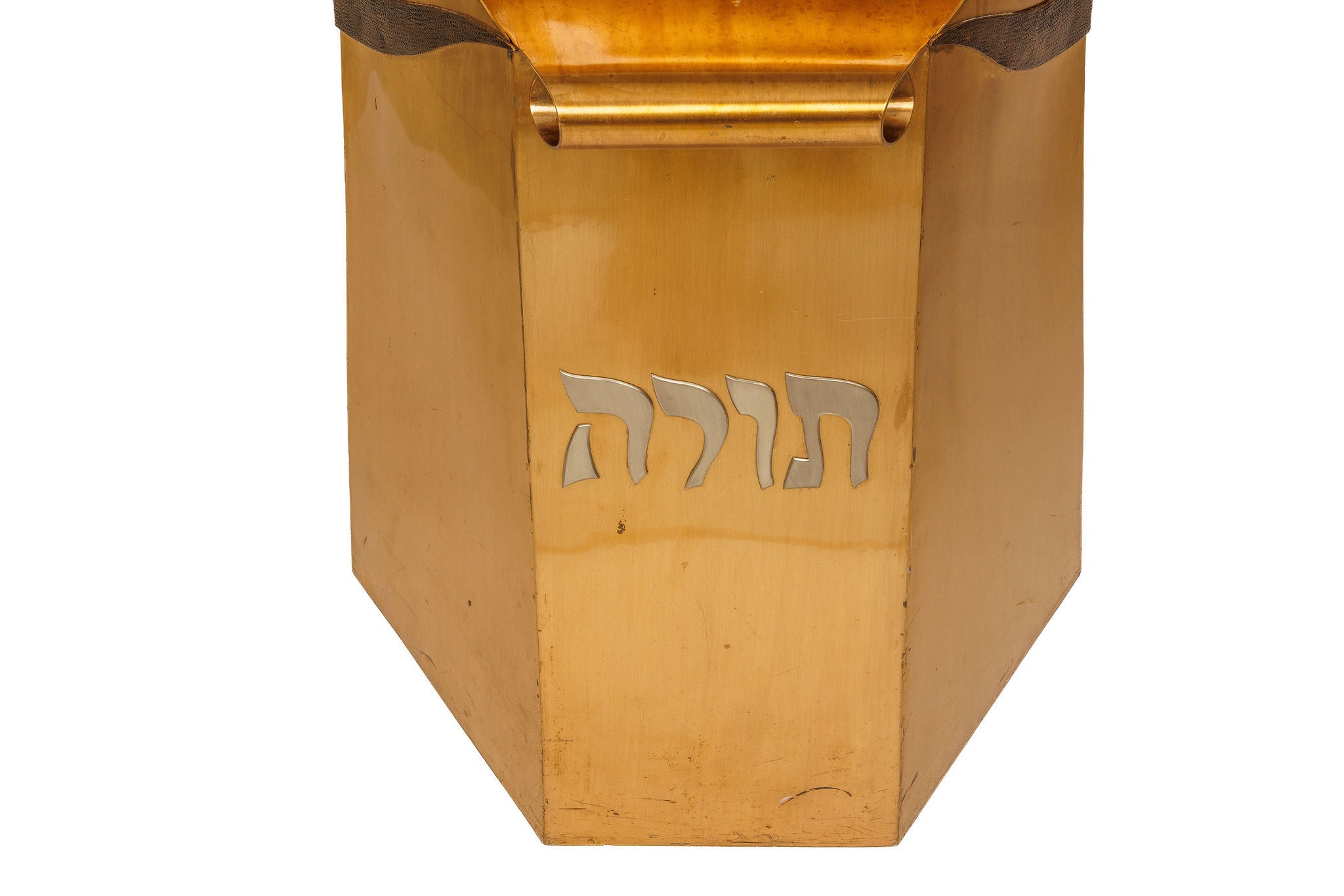
- The front of the pedestal bears the Hebrew inscription "Torah" (תורה), executed in contrasting silver-toned metal, providing a restrained yet powerful religious focal point.
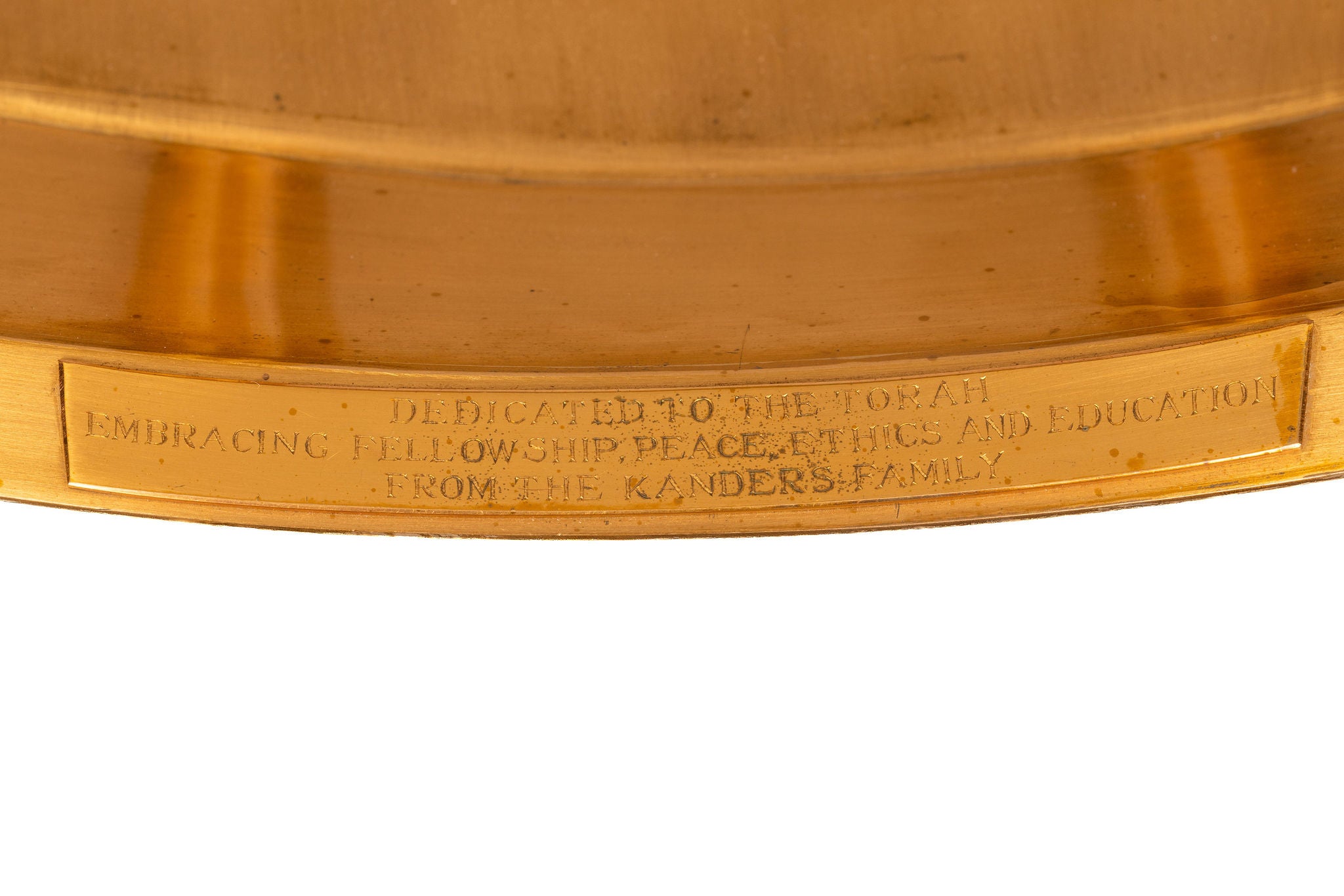
- An original engraved dedication plaque reads:
- "DEDICATED TO THE TORAH EMBRACING FELLOWSHIP, PEACE, ETHICS AND EDUCATION FROM THE KANDERS FAMILY."
- This inscription provides an important historical connection to the object's original synagogue setting and identifies the family responsible for its dedication.
- Maker's Marks and the Society of North American Goldsmiths:
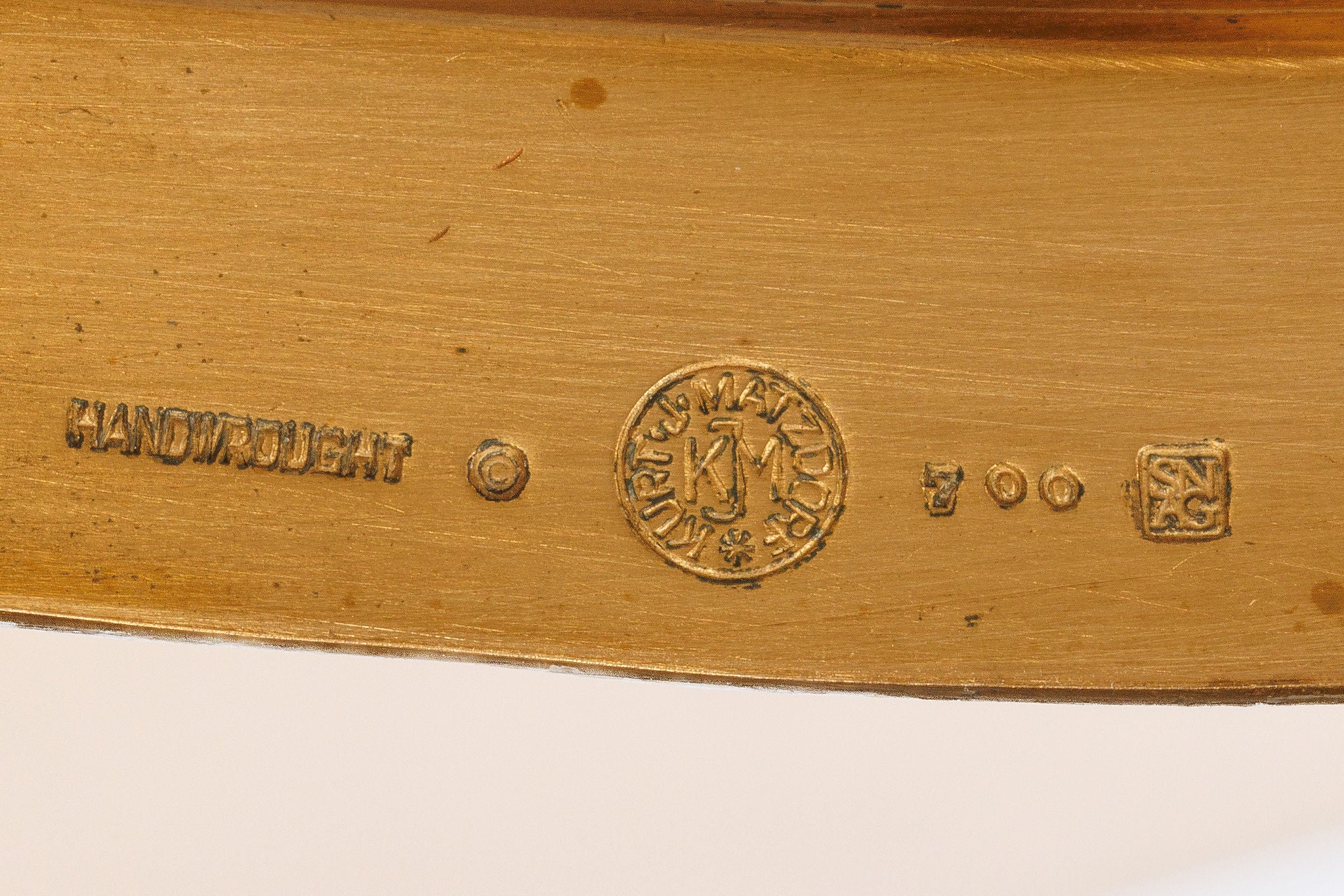
- The stand bears Kurt J. Matzdorf's distinctive circular KM maker's mark, together with the stamped designation HANDWROUGHT and the square SNAG mark, referencing the Society of North American Goldsmiths.
- Matzdorf was among the founding figures of the Society of North American Goldsmiths, established in 1969, and was subsequently honored with the organization's prestigious Lifetime Achievement Award in 2006.
- Of particular scholarly interest, this combination of marks is documented on other important examples of Matzdorf's ceremonial metalwork, including a Torah crown and Torah pointer in the collection of the Jewish Museum Berlin.
- Kurt J. Matzdorf (1922–2008):
- Kurt J. Matzdorf occupies an important position in the development of modern American metalsmithing and contemporary Jewish ceremonial art.
- Born in Stadtoldendorf, Germany, in 1922, Matzdorf escaped Nazi persecution through the Kindertransport to England in 1939. He subsequently studied sculpture in London before emigrating to the United States in 1949, where he pursued advanced studies in metalsmithing at the University of Iowa.
- His artistic career developed during a transformative period in American decorative arts, when traditional craftsmanship increasingly intersected with modern sculpture, architectural experimentation, and abstract design.
- In 1957, Matzdorf established the metals program at the State University of New York at New Paltz, where he taught until 1985. As a professor, artist, and influential educator, he helped shape generations of American metalsmiths and contributed significantly to the recognition of studio metalwork as an independent artistic discipline.
- Matzdorf became particularly celebrated for his contemporary interpretations of traditional Jewish ceremonial objects. His creations included Torah ornaments, menorahs, ritual silver, and substantial ceremonial commissions for Jewish congregations.
- Rather than reproducing historic European Judaica designs, Matzdorf developed an original modernist vocabulary that retained the spiritual and symbolic significance of traditional ceremonial objects while introducing bold sculptural forms and unconventional compositions.
- His work is particularly distinguished by its ability to reconcile sacred function with the artistic innovations of the twentieth century.
- In recognition of his extraordinary contributions to American studio metalwork, Matzdorf was elected a Fellow of the American Craft Council in 1992 and received the Society of North American Goldsmiths Lifetime Achievement Award in 2006.
- Museum Collections and Institutional Recognition:
- Works by Kurt J. Matzdorf are represented in important museum collections, including the Jewish Museum Berlin, Germany, and the Museum of Fine Arts, Houston, Texas.
- The Jewish Museum Berlin preserves significant examples of his modernist Torah ornaments, including a Torah crown and pointer bearing the artist's distinctive marks.
- Matzdorf's work has also been associated with major international institutions, including the Victoria and Albert Museum, London, as documented in biographical materials published by the State University of New York at New Paltz.
- His institutional recognition reflects his importance within the broader history of modern decorative arts, American studio metalsmithing, and contemporary Jewish ceremonial design.
- Artistic and Historical Significance:
- This monumental Torah stand is particularly compelling for its ambitious scale, extraordinary sculptural conception, and documented association with Temple B'nai Or in Morristown, New Jersey.
- Unlike the smaller ritual objects more commonly associated with Judaica collecting, the present work possesses the commanding presence of an independent modernist sculpture. Its carefully orchestrated combination of polished surfaces, folded planes, sweeping curves, and angular geometry creates a sophisticated dialogue between sacred tradition and contemporary artistic expression.
- The object exemplifies a defining development in twentieth-century Jewish ceremonial design: the reinterpretation of historic religious forms through the visual language of modern architecture and sculpture.
- Its imposing proportions, architectural silhouette, original Kanders family dedicatory inscription, and clearly documented maker's marks distinguish it as a substantial example of Matzdorf's artistic practice.
- An exceptional work of American modernist Judaica, equally significant as a ceremonial object, a sculptural achievement, and an expression of the postwar American studio craft movement.
- Very good condition. Minor marks, areas of patination, and wear consistent with age and ceremonial use. The brass retains an attractive golden finish. Please refer to the photographs for additional condition details.
Period
1970-1979
Depth
31 in (78.74 cm)
Width
34 in (86.36 cm)
Height
50 in (127 cm)
Date of Manufacture
C. 1970
Materials & Techniques
Brass
Condition
GoodWear consistent with age and use.
Price Range
◆
Price Range
◆ Under $5,000
◆ $5,000–$10,000
◆ $10,000–$25,000
◆ $25,000–$50,000
◆ $50,000–$100,000
◆ Over $100,000