
Important 19th Century Carved Marble Madonna and Child, Mater Amabilis
- Exceptional 19th-Century Carved Marble Relief of the Madonna and Child, Mater Amabilis
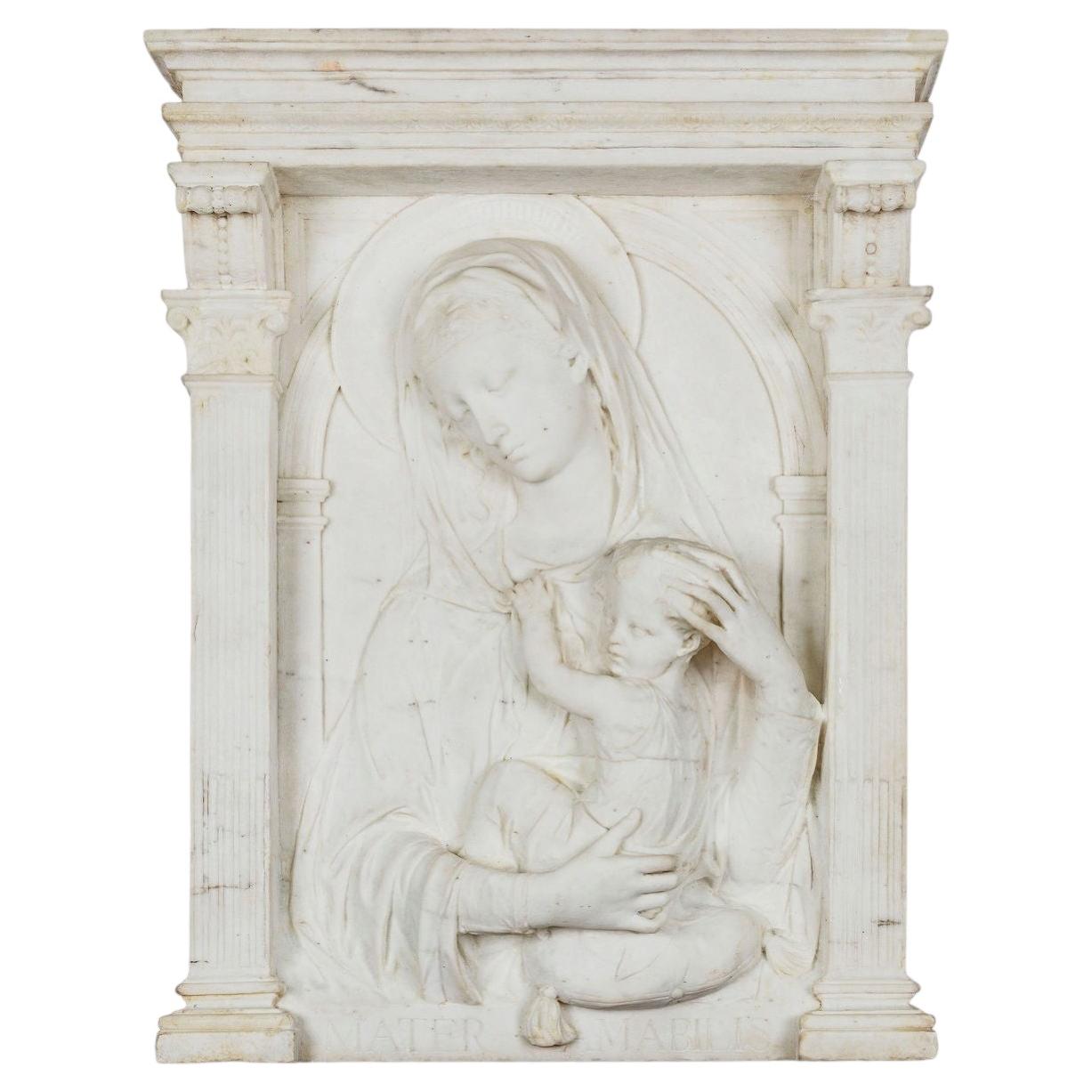
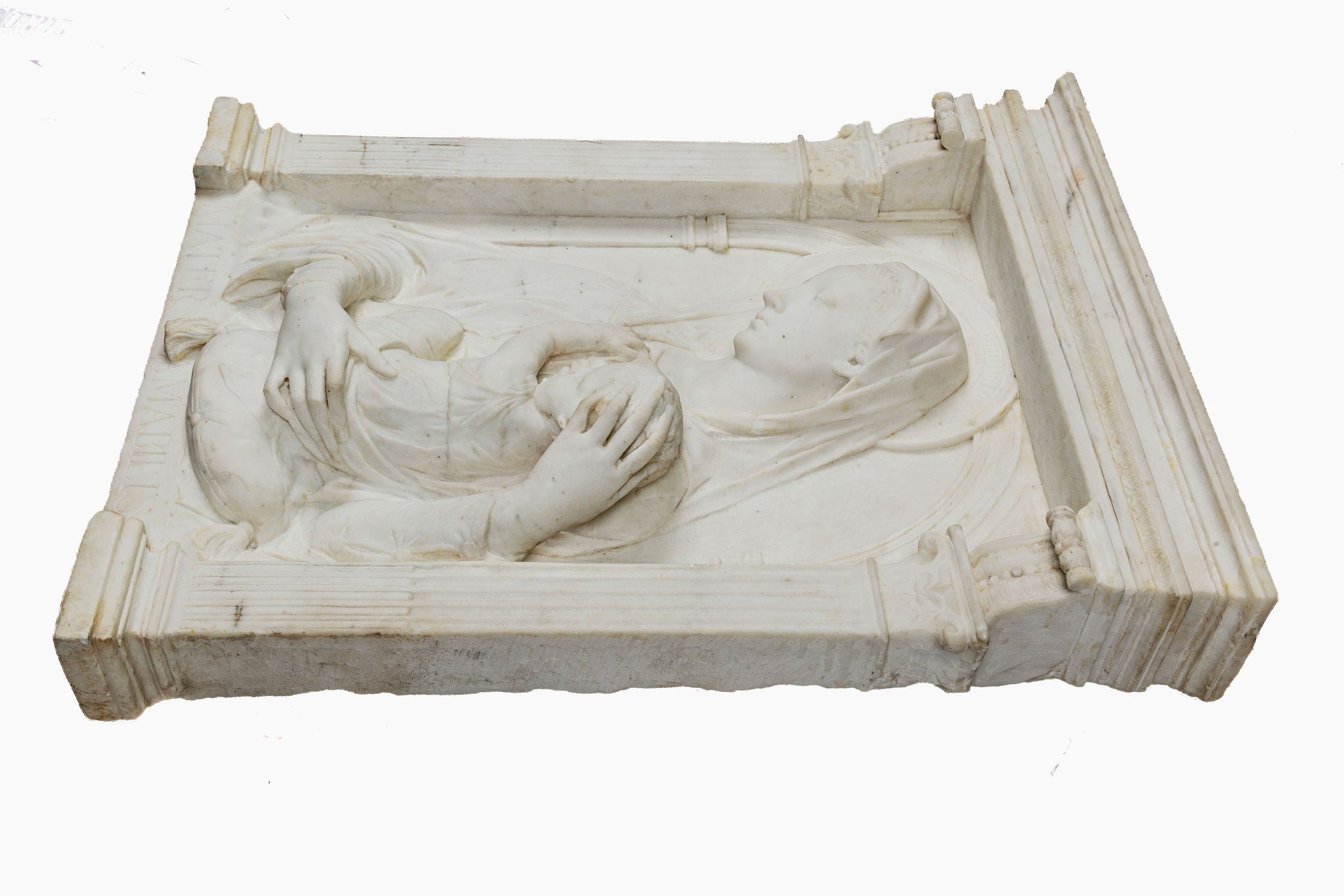
- An exceptional and important 19th-century carved white marble relief depicting the Madonna and Child, entitled "Mater Amabilis" (The Loving Mother), a profoundly moving representation of maternal tenderness and divine love, executed with extraordinary refinement and artistic sensitivity.
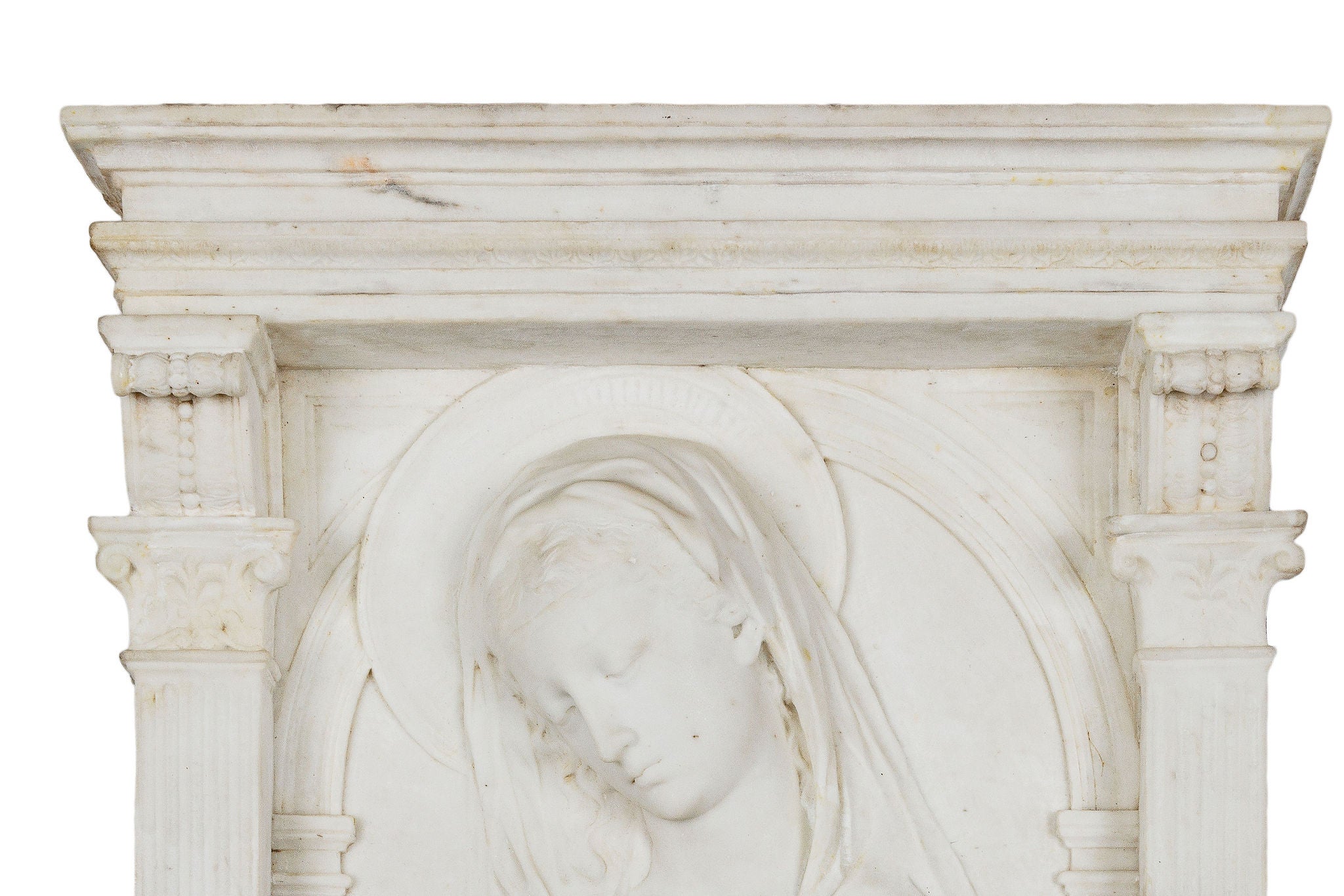
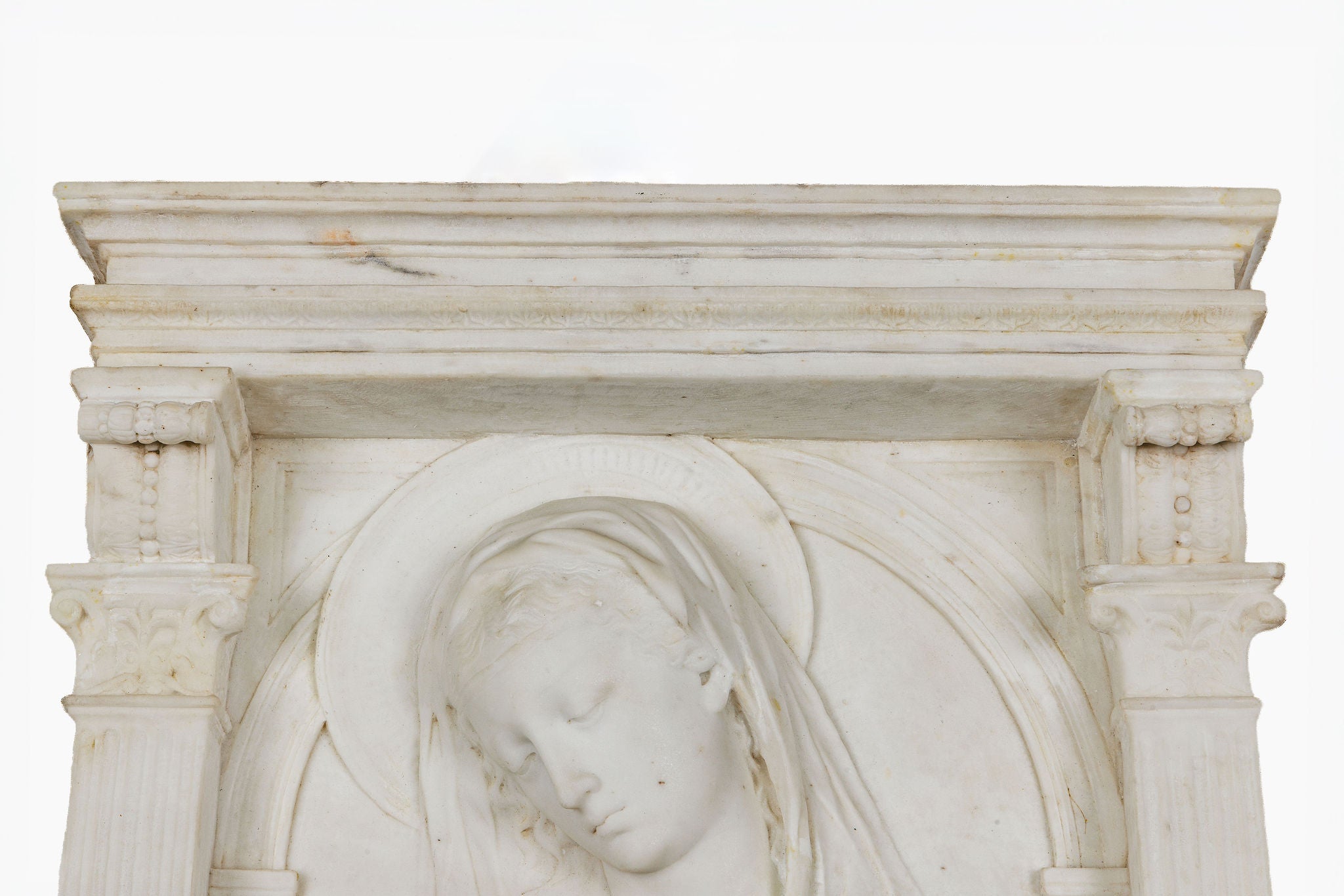
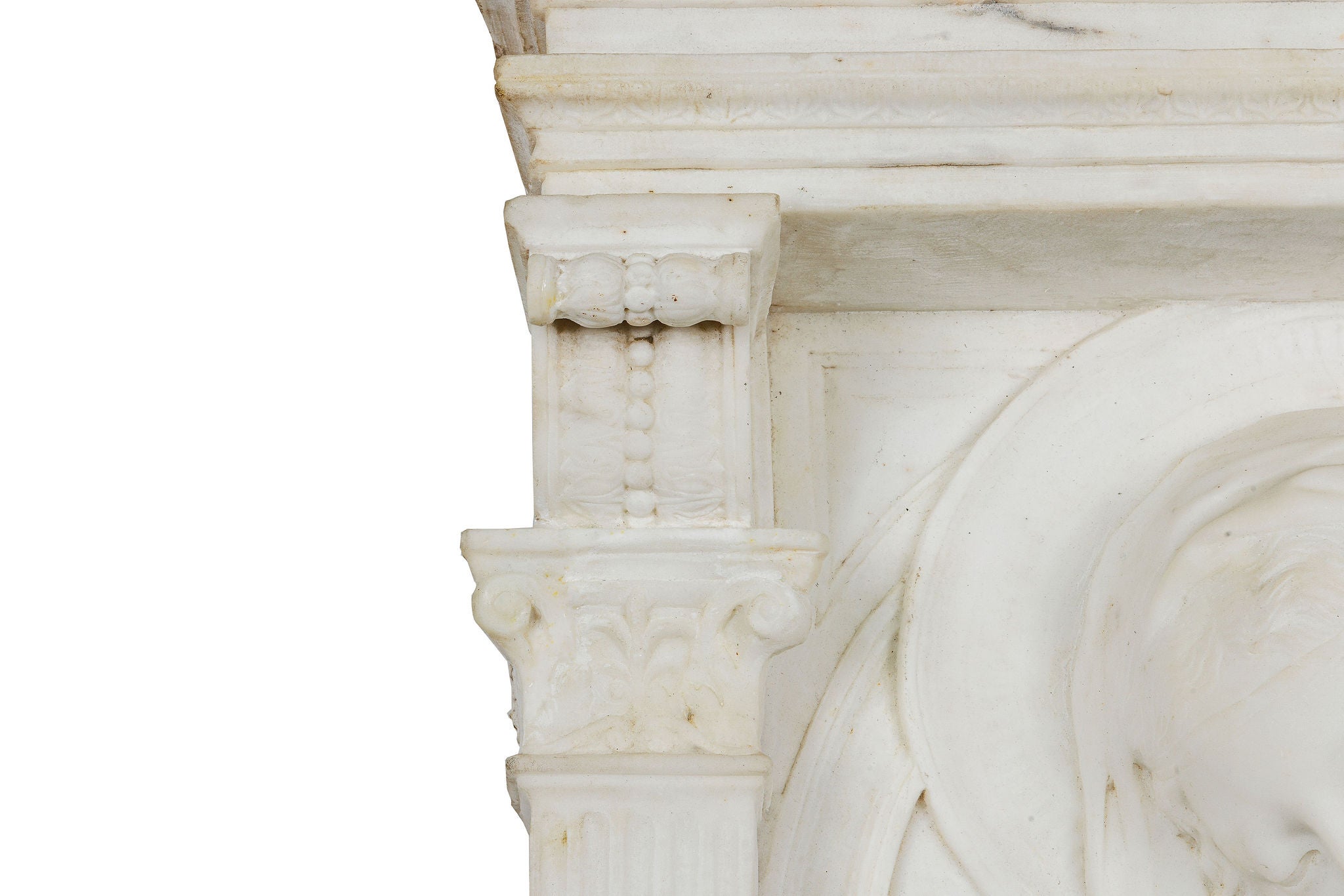
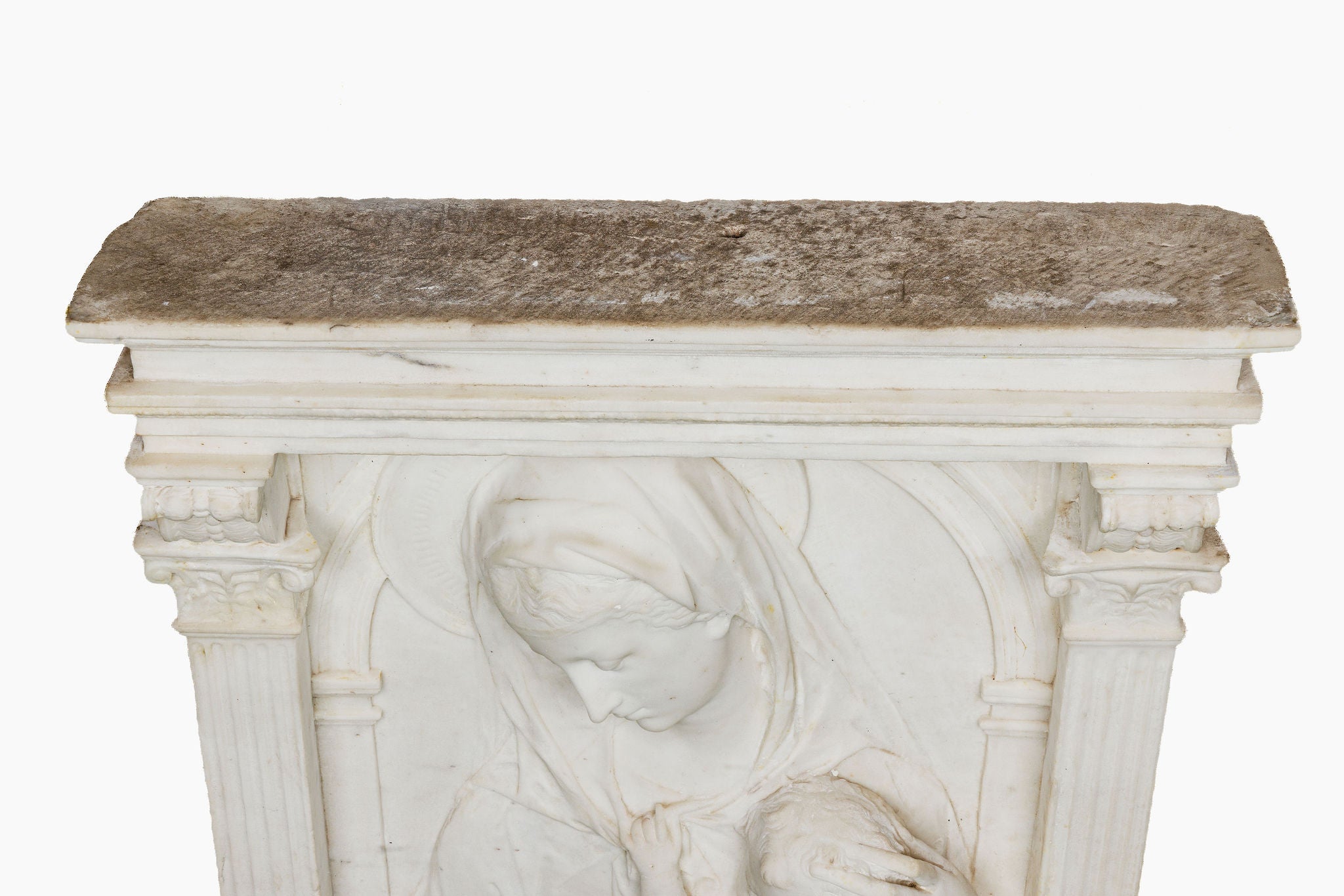
- Measuring an impressive 32 inches in height, this substantial sculptural composition presents the Virgin Mary tenderly embracing the Christ Child within an elaborate Renaissance-inspired architectural framework, distinguished by classical fluted columns, intricately carved capitals, and a projecting molded cornice.
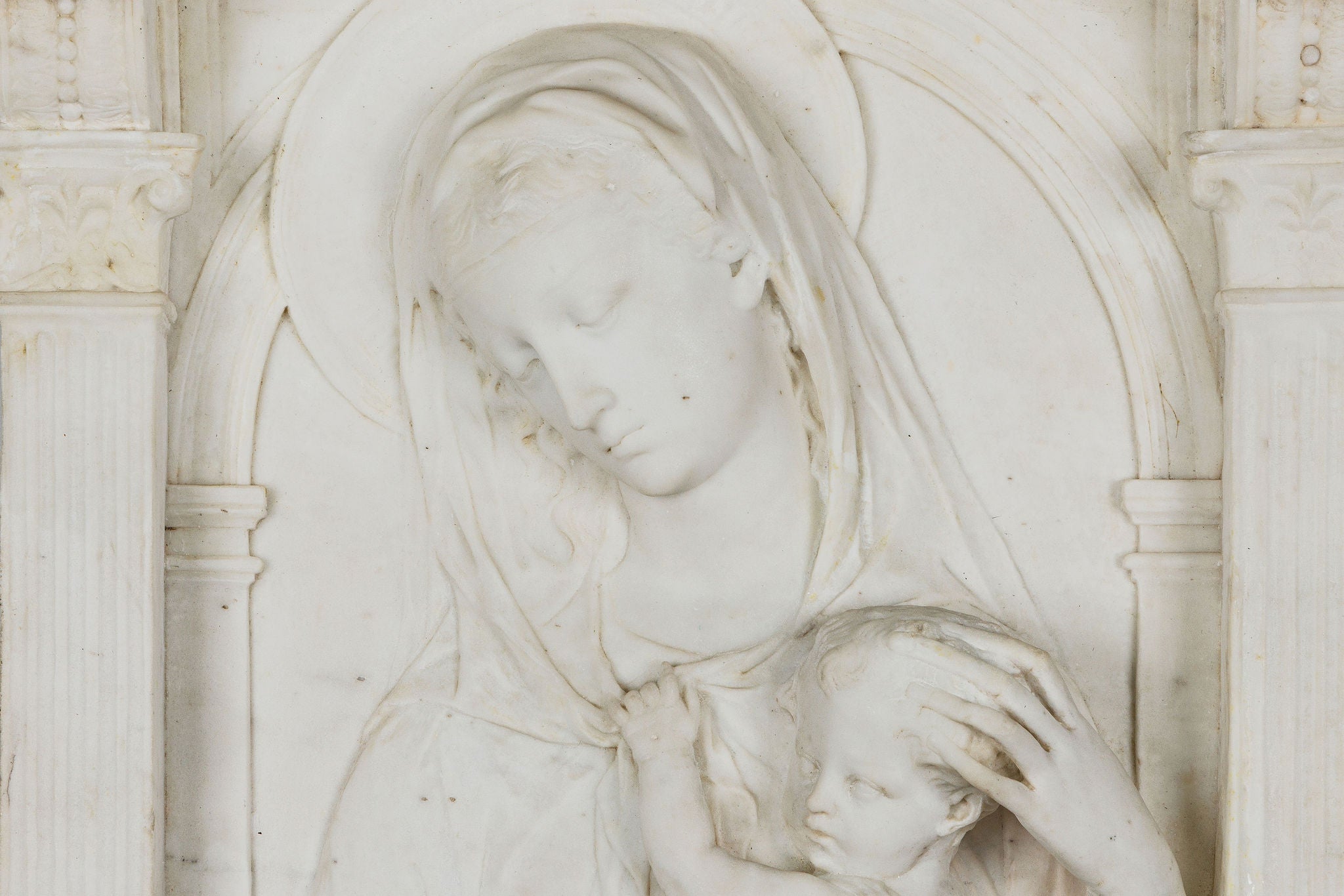
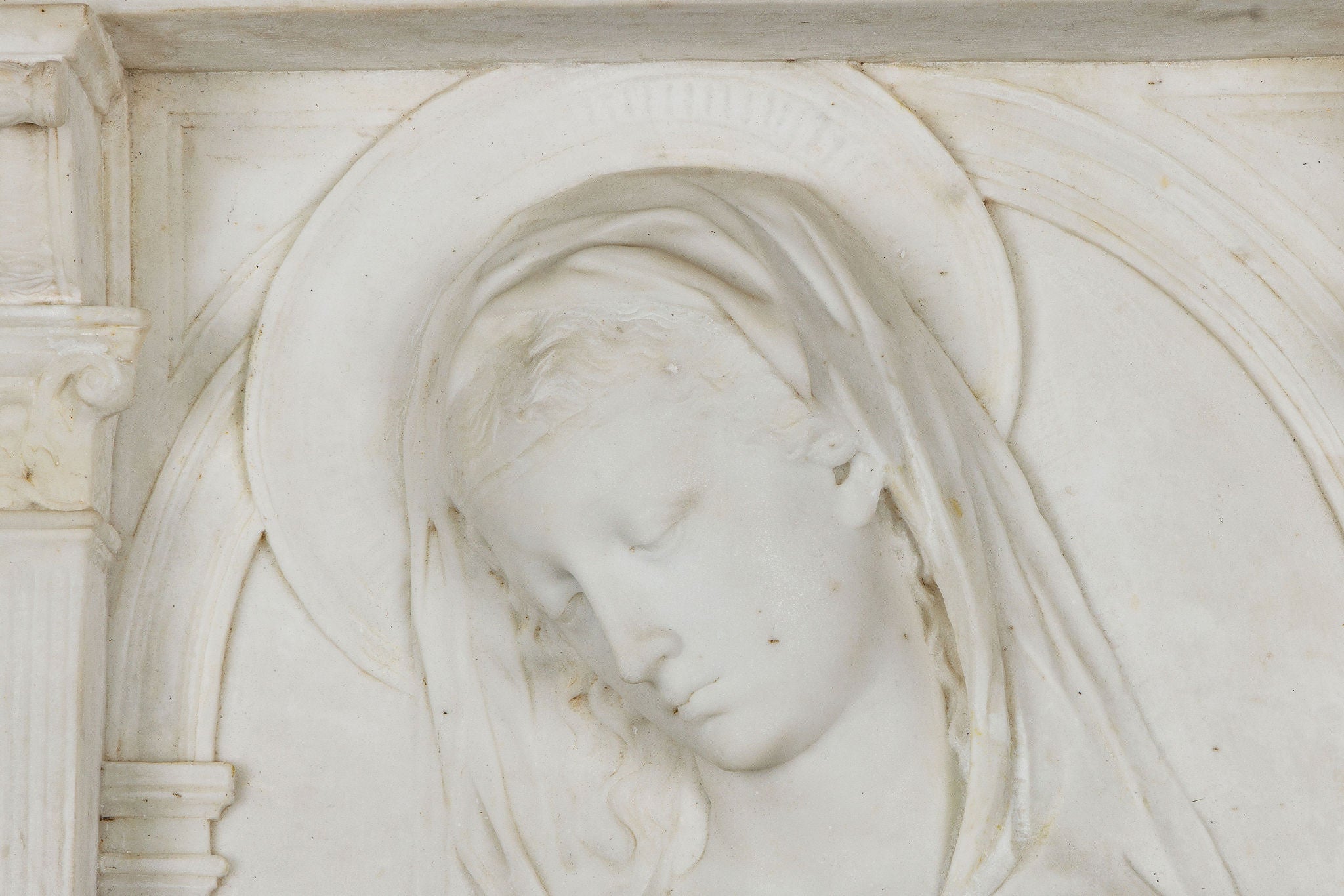
- The Virgin is portrayed with her head gently inclined toward the infant Christ, her expression conveying profound serenity, humility, and maternal devotion. Her delicately modeled features, gracefully flowing veil, and softly cascading drapery demonstrate a remarkable understanding of classical sculpture and the Italian Renaissance tradition.
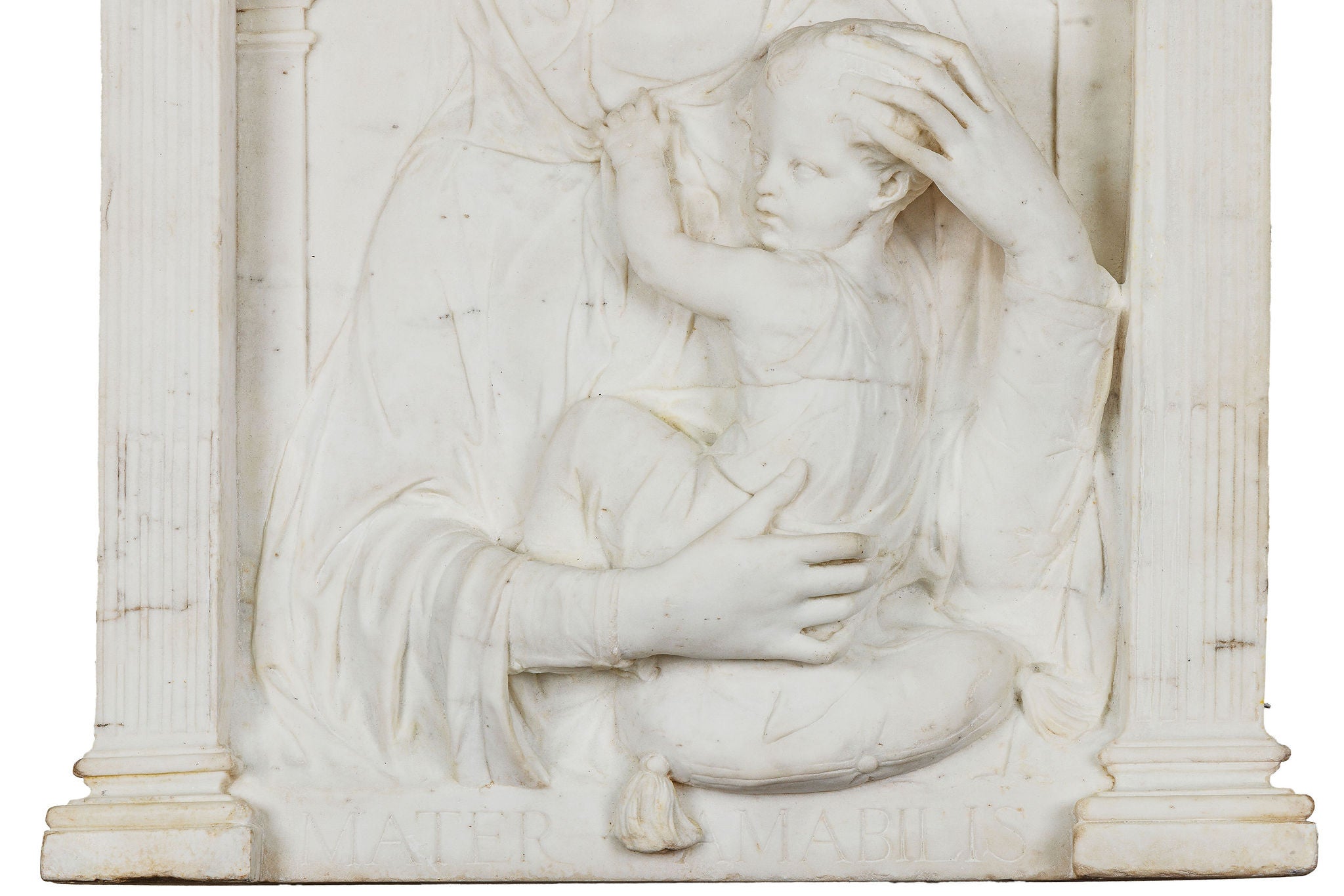
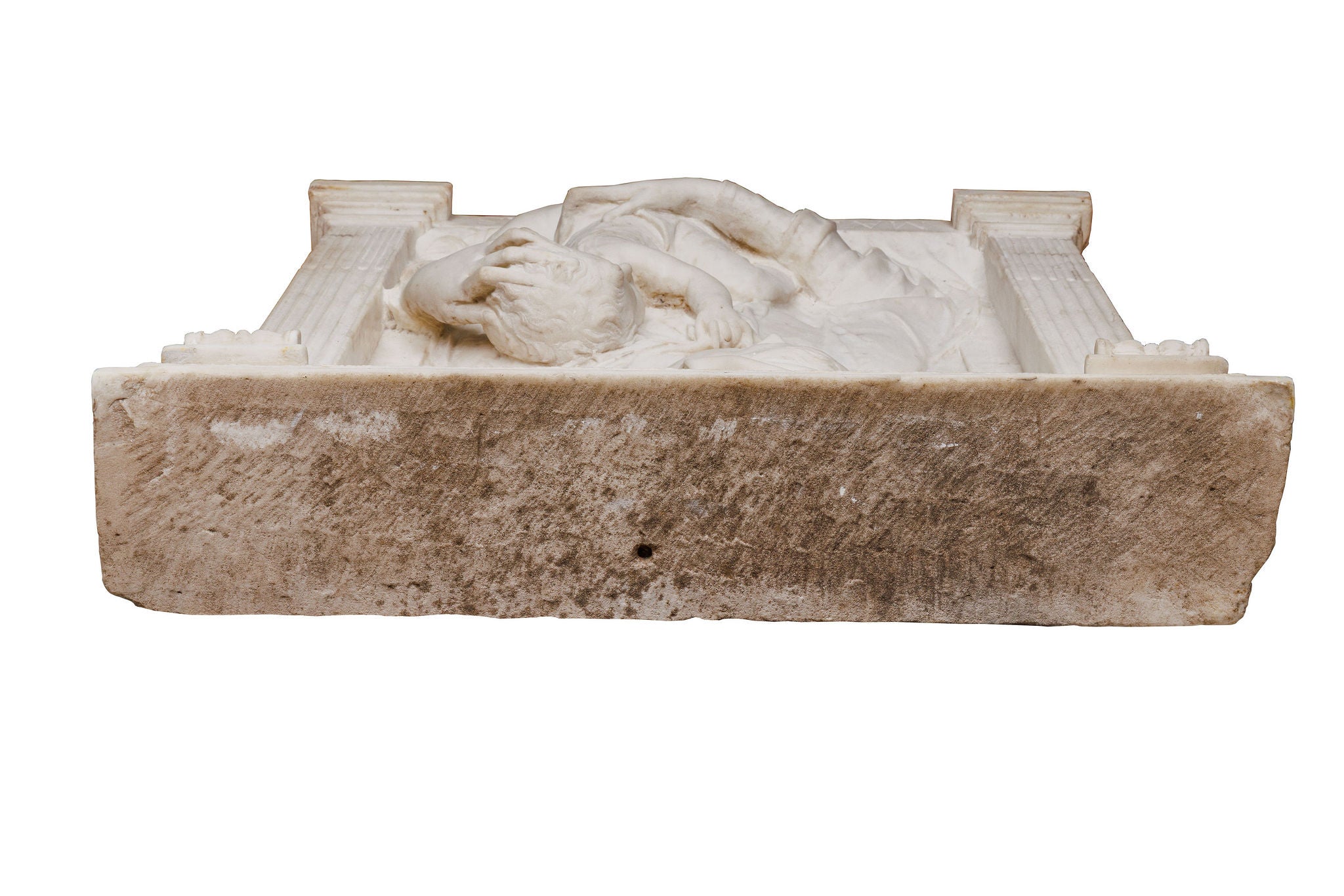
- The Christ Child rests upon an elegantly carved tasseled cushion, supported by the Virgin's hand, while reaching affectionately toward his mother's garment. Mary's other hand rests protectively upon the child's head, creating an intimate and emotionally compelling interaction between mother and son.
- The extraordinary sensitivity of the composition is particularly evident in the subtle modeling of the figures' faces, the naturalistic treatment of their hands, and the delicate articulation of the drapery.
- The figures are presented beneath a Renaissance-style architectural canopy, flanked by finely fluted classical columns surmounted by richly carved capitals. The architectural framework provides a monumental and devotional character to the composition, recalling the sculptural tabernacles and sacred marble reliefs produced in Florence during the Italian Renaissance.
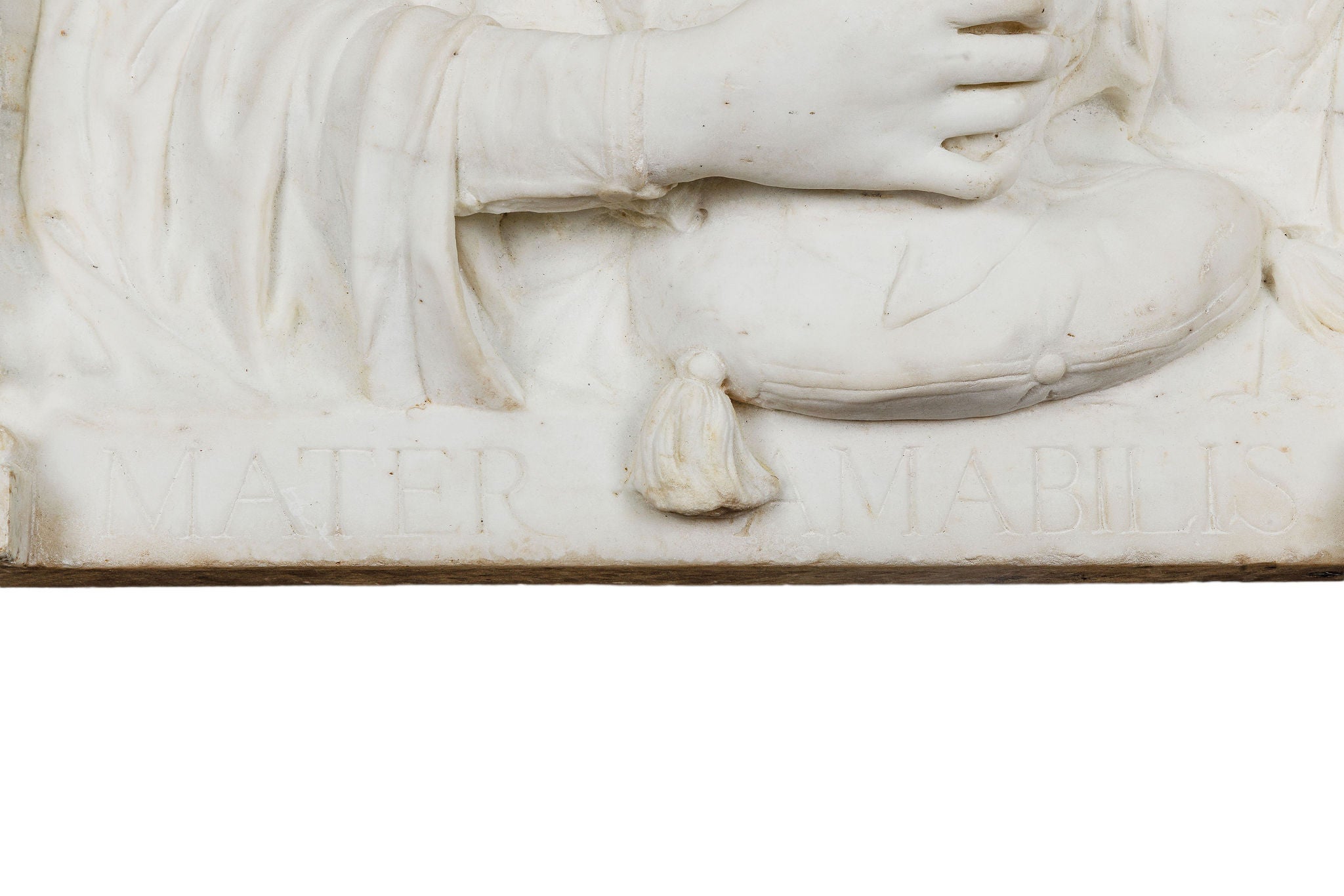
- Inscribed along the lower border are the Latin words **MATER AMABILIS**, identifying the subject as *The Loving Mother*, one of the traditional invocations of the Virgin Mary found in the Litany of Loreto.
- The Significance of Mater Amabilis:
- The title "Mater Amabilis", translated as "Mother Most Amiable" or "Loving Mother," occupies a distinguished place within Catholic Marian devotion.
- Unlike more formal representations of the Virgin enthroned or depicted as Queen of Heaven, the *Mater Amabilis* emphasizes the profoundly human relationship between Mary and the infant Christ.
- The subject celebrates maternal affection, compassion, tenderness, and the sacred bond between mother and child.
- In the present composition, these qualities are expressed through an exceptionally intimate arrangement. The Virgin's downward gaze, the gentle placement of her hand upon the Christ Child's head, and the infant's affectionate gesture create a sense of emotional immediacy rarely achieved in more conventional devotional representations.
- The inscription further distinguishes the work by explicitly identifying its Marian devotional theme rather than relying solely upon traditional iconography.
- Artistic and Historical Context:
- The present relief belongs to the distinguished tradition of Italian Renaissance-inspired devotional sculpture, particularly the marble representations of the Madonna and Child associated with the Florentine sculptural schools of the 15th and early 16th centuries.
- Its carefully balanced composition, idealized facial features, delicately modeled drapery, and classical architectural setting recall the artistic vocabulary developed by the great Florentine sculptors of the Renaissance.
- The work demonstrates stylistic affinities with the devotional reliefs associated with the traditions of Antonio Rossellino, Desiderio da Settignano, and the della Robbia circle, particularly in its emphasis on maternal tenderness, graceful naturalism, and harmonious composition.
- These comparisons are stylistic and do not constitute an attribution to any of these artists.
- During the 19th century, renewed European admiration for Renaissance sculpture inspired the production of exceptionally sophisticated marble works drawing upon the artistic achievements of 15th-century Florence.
- The present relief exemplifies this tradition through its combination of Renaissance architectural ornament, devotional symbolism, and highly accomplished figurative carving.
- Exceptional Sculptural Quality:
- Particularly noteworthy is the sophisticated treatment of the Virgin's face, characterized by softly lowered eyelids, delicately articulated lips, and an expression of quiet contemplation.
- The Christ Child is rendered with equally sensitive naturalism, his youthful features and carefully modeled anatomy providing a beautiful contrast to the serene elegance of the Virgin.
- The sculptor's technical accomplishment is further demonstrated in the treatment of the Virgin's hands, the deeply carved folds of her garments, and the ornamental details of the architectural surround.
- The contrast between the smooth, delicately finished flesh of the figures and the more deeply articulated architectural elements lends the composition remarkable visual depth.
- The overall execution reflects the work of a highly accomplished sculptor thoroughly familiar with the formal vocabulary and artistic traditions of Italian Renaissance marble sculpture.
- Rarity and Importance:
- An unusually elaborate and finely executed example of 19th-century Marian devotional sculpture, distinguished by its intimate iconography, architectural presentation, and explicit *Mater Amabilis* inscription.
- While representations of the Madonna and Child constitute one of the most celebrated subjects in European religious art, examples combining this particular devotional invocation with a substantial, architecturally framed marble relief are considerably more specialized.
- The work's refined execution, classical architectural framework, and emotionally expressive composition distinguish it from more conventional devotional sculpture of the period.
- Its subject matter, substantial architectural proportions, and presentation make it particularly appropriate for an important collection of European sculpture, Renaissance Revival art, religious works of art, or ecclesiastical antiquities.
- A remarkable work of devotional sculpture celebrating one of the most enduring and universally admired subjects in the history of Western art: the loving relationship between the Virgin Mary and the Christ Child.
- 32" high x 25" deep x 5.5" deep
- Very good antique condition, consistent with age. The carved marble displays natural variations in coloration, minor surface wear, scattered marks, and areas of light discoloration and patina accumulated over time. Minor imperfections and wear are visible along the architectural elements and edges. The finely carved figures retain their delicate sculptural details and overall presentation. No major losses are apparent in the photographs provided. . Please inquire for additional photographs.More DetailsDimensions: Height: 32 in (81.28 cm)Width: 25 in (63.5 cm)Depth: 5.5 in (13.97 cm)Style: Renaissance (In the Style Of)Materials and Techniques: Carrara MarblePeriod: 1870-1879Date of Manufacture: c. 1875Condition: GoodSeller Location: Long Island City, NY, NYReference Number: 1stDibs: LU1798252630962
Period
1870-1879
Style
Renaissance (In the Style Of)
Depth
5.5 in (13.97 cm)
Width
25 in (63.5 cm)
Height
32 in (81.28 cm)
Date of Manufacture
c. 1875
Materials & Techniques
Carrara Marble
Condition
Good
Price Range
◆
Price Range
◆ Under $5,000
◆ $5,000–$10,000
◆ $10,000–$25,000
◆ $25,000–$50,000
◆ $50,000–$100,000
◆ Over $100,000