

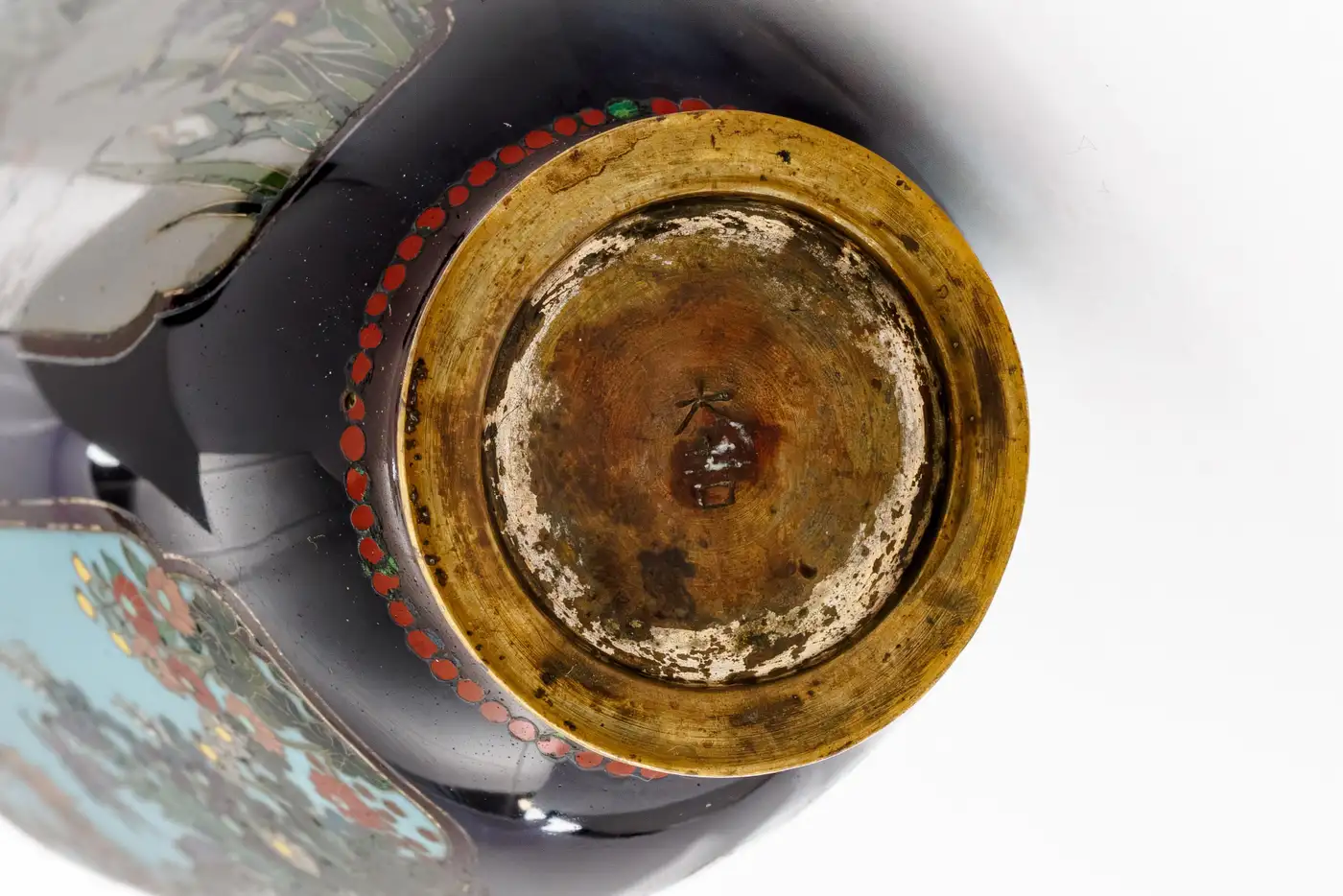
Important Set of Three Meiji Japanese Cloisonné Enamel Vases Signed by Ota
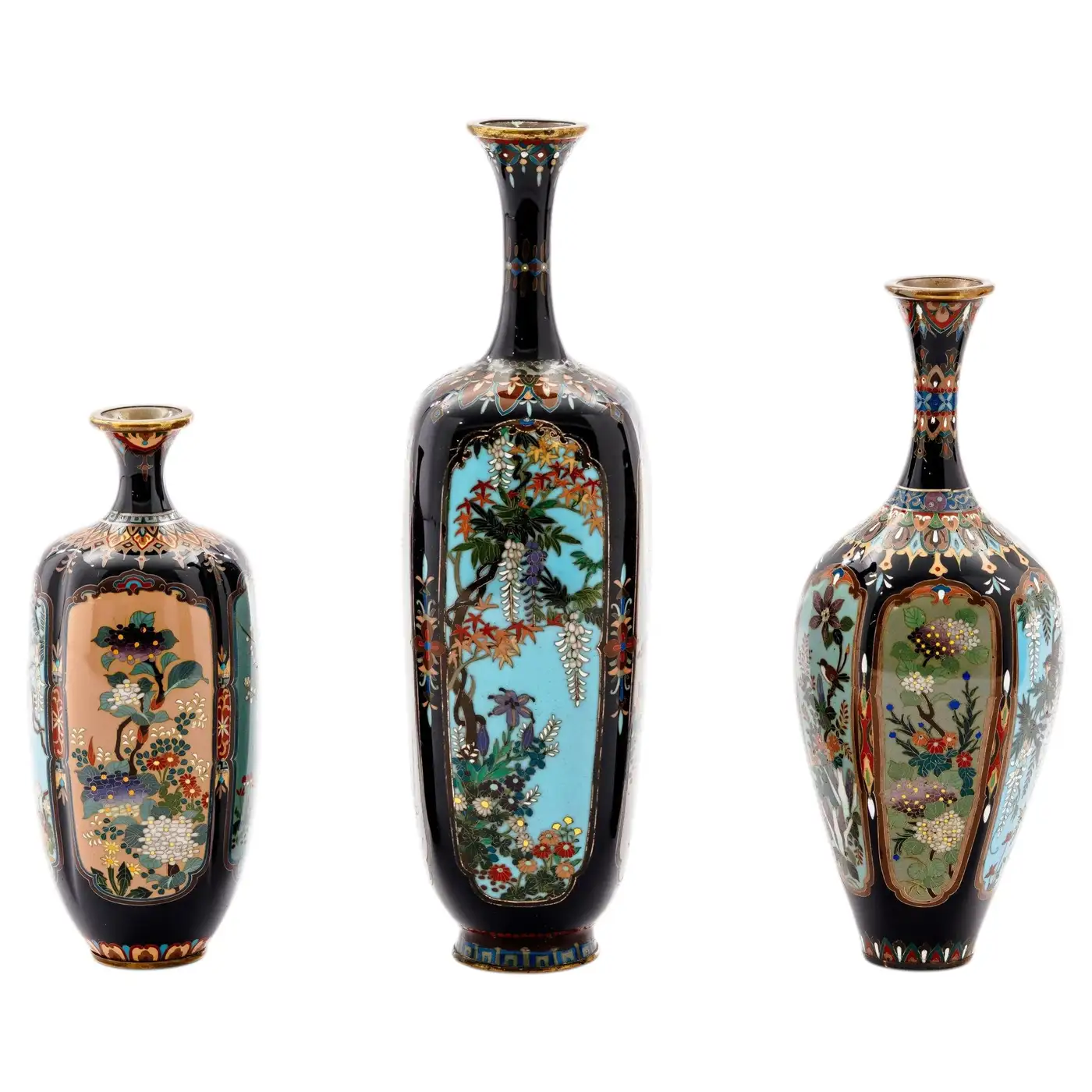
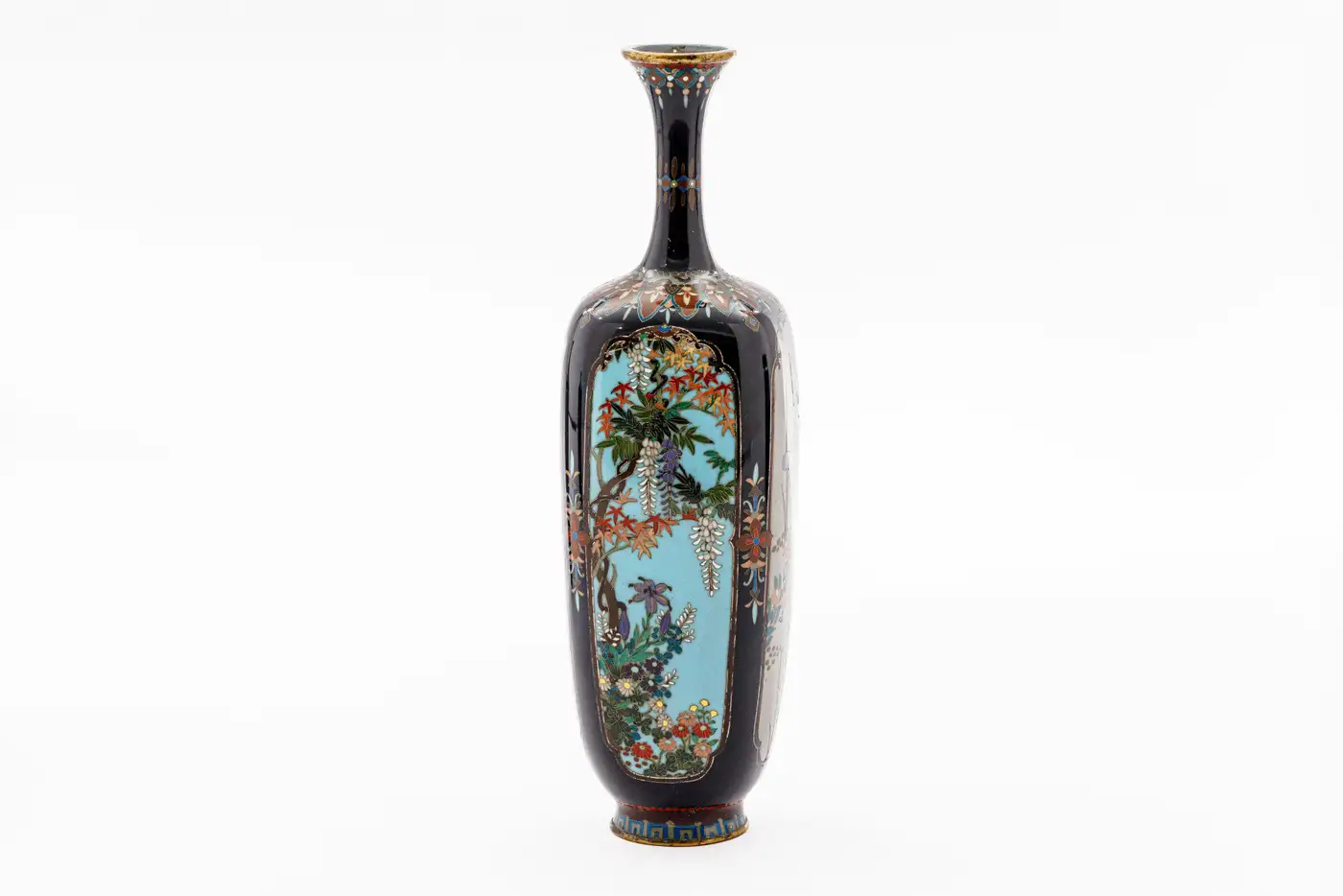
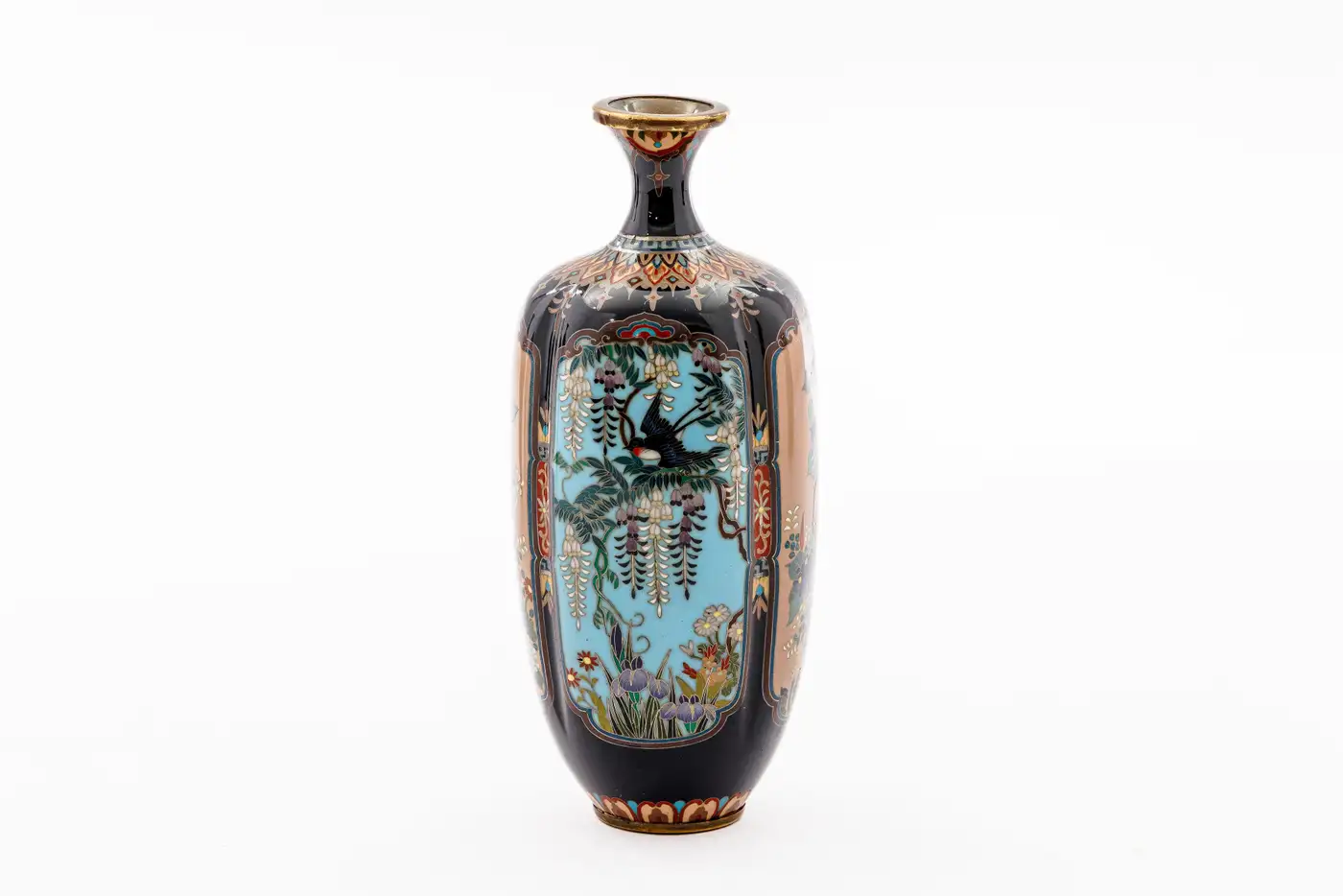
- An exceptional and highly important set of three Japanese cloisonné enamel vases from the Meiji period (1868–1912), each signed by members of the distinguished Ota family workshop—renowned for producing finely detailed works of remarkable elegance during the golden age of Japanese enameling.
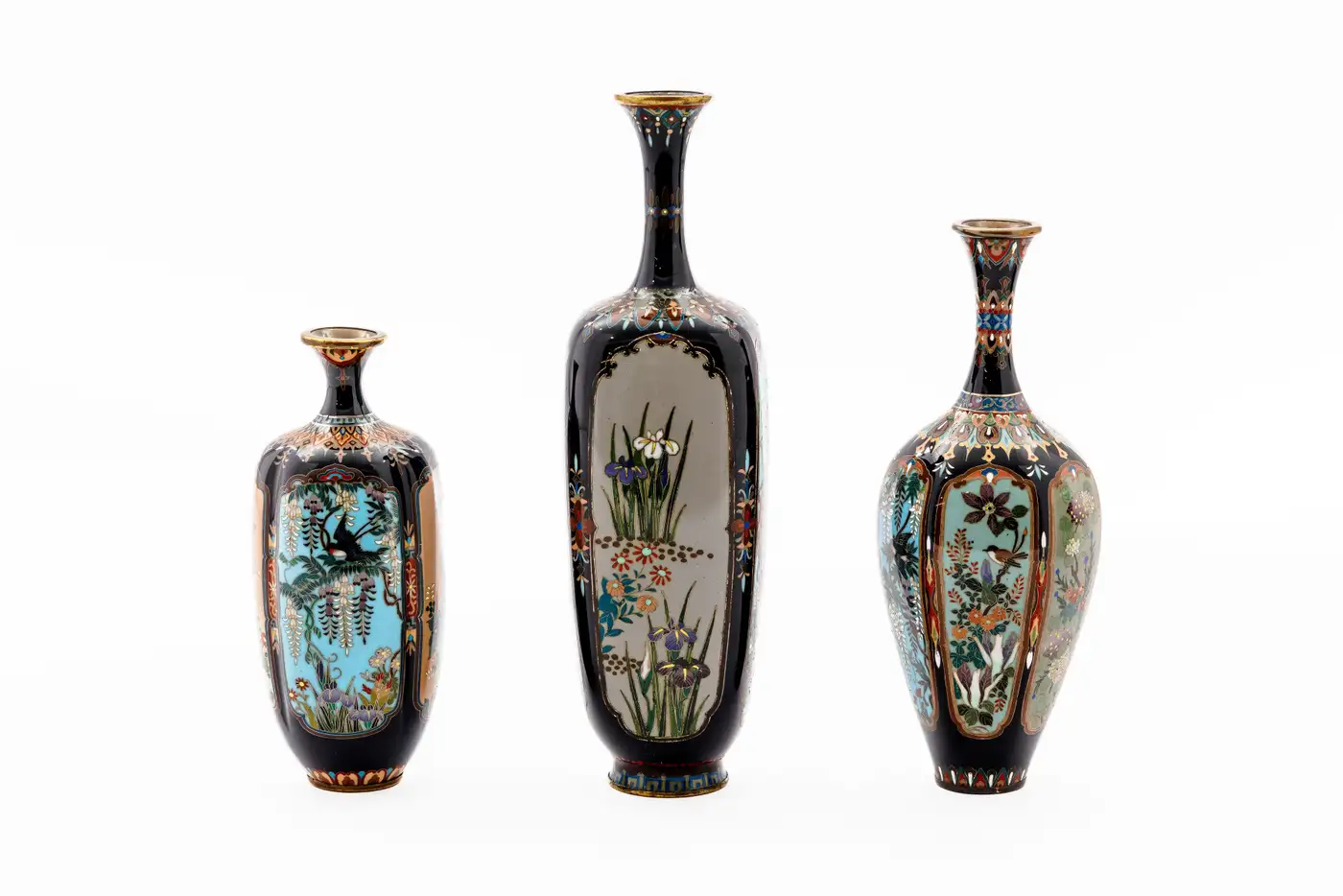
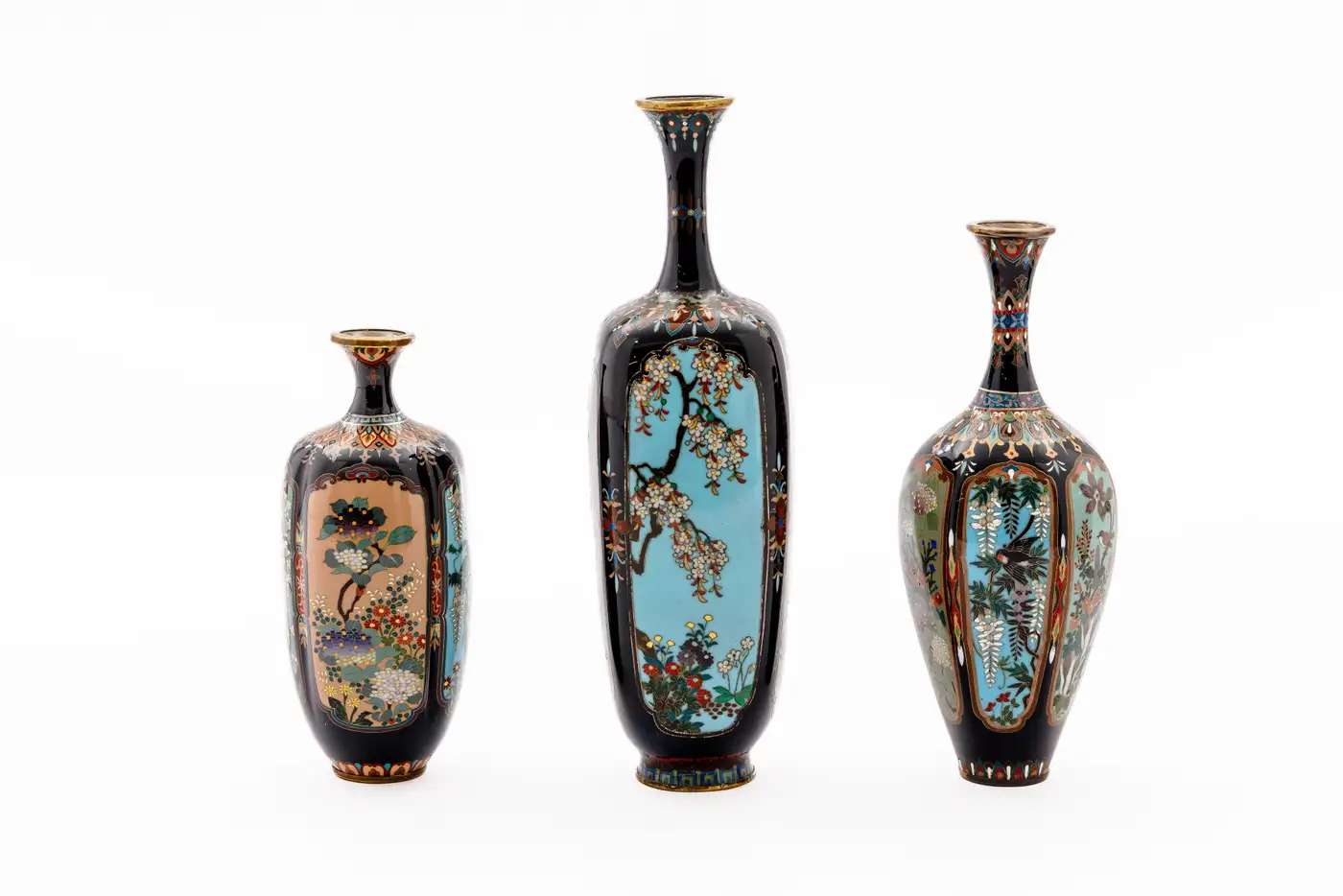
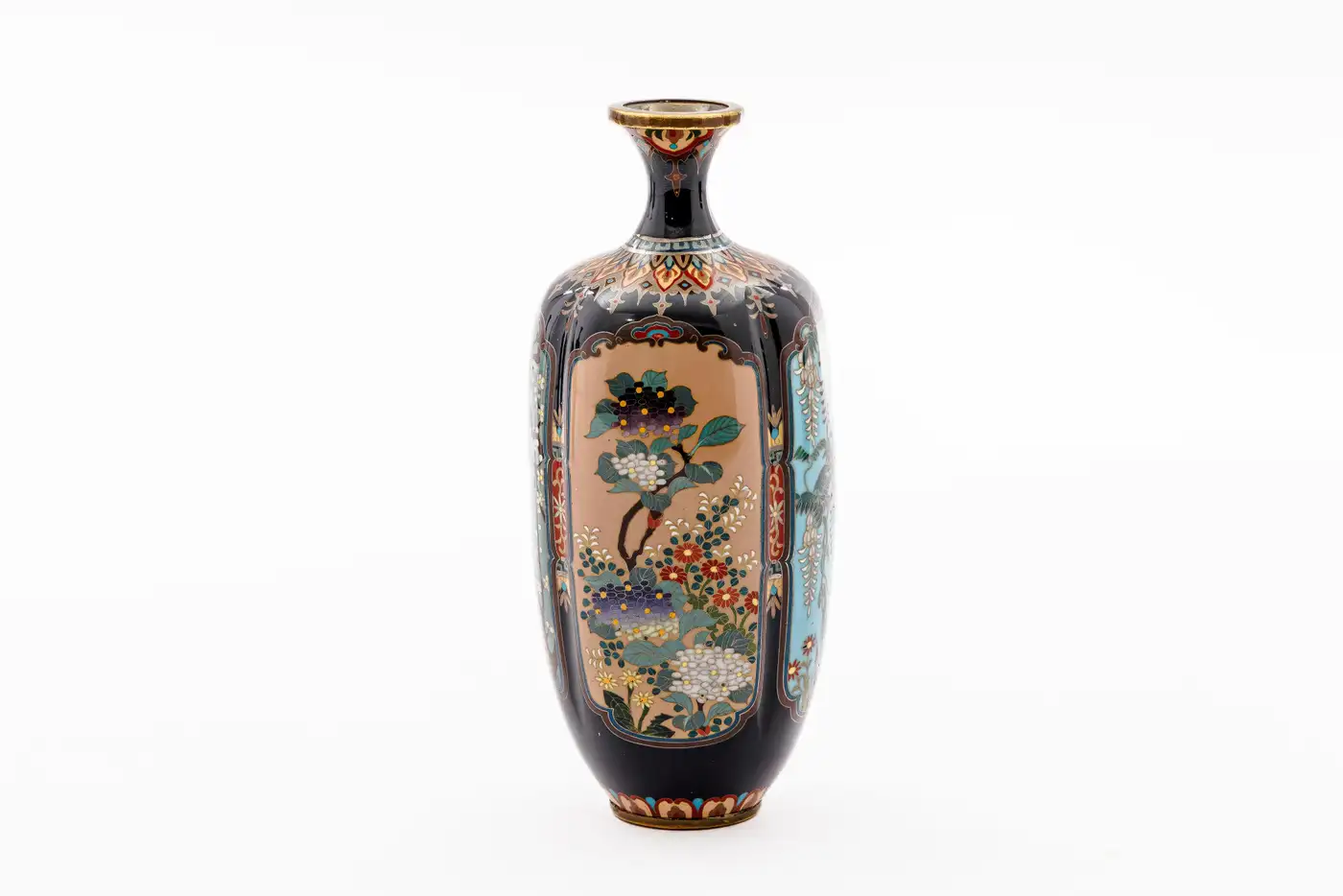
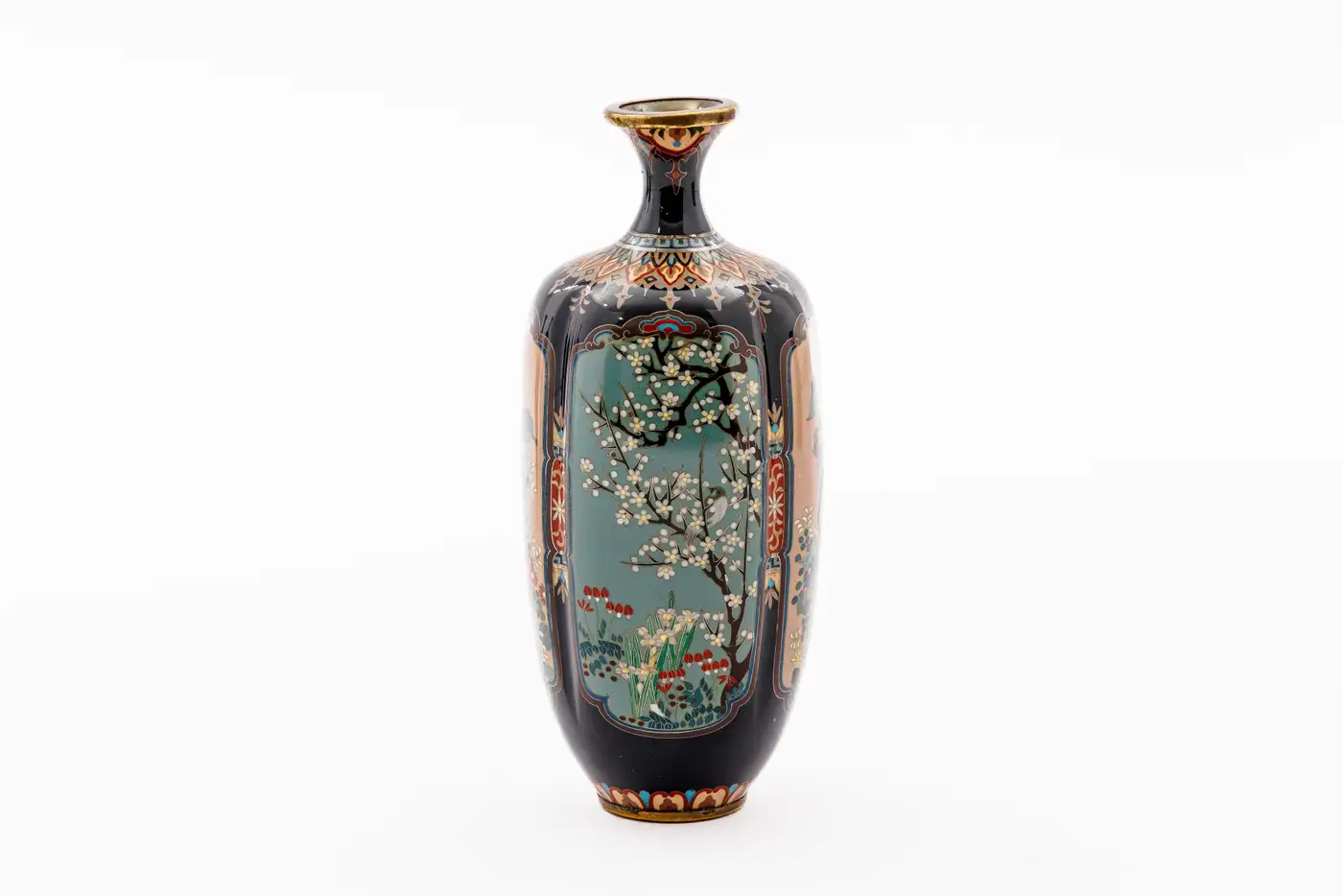
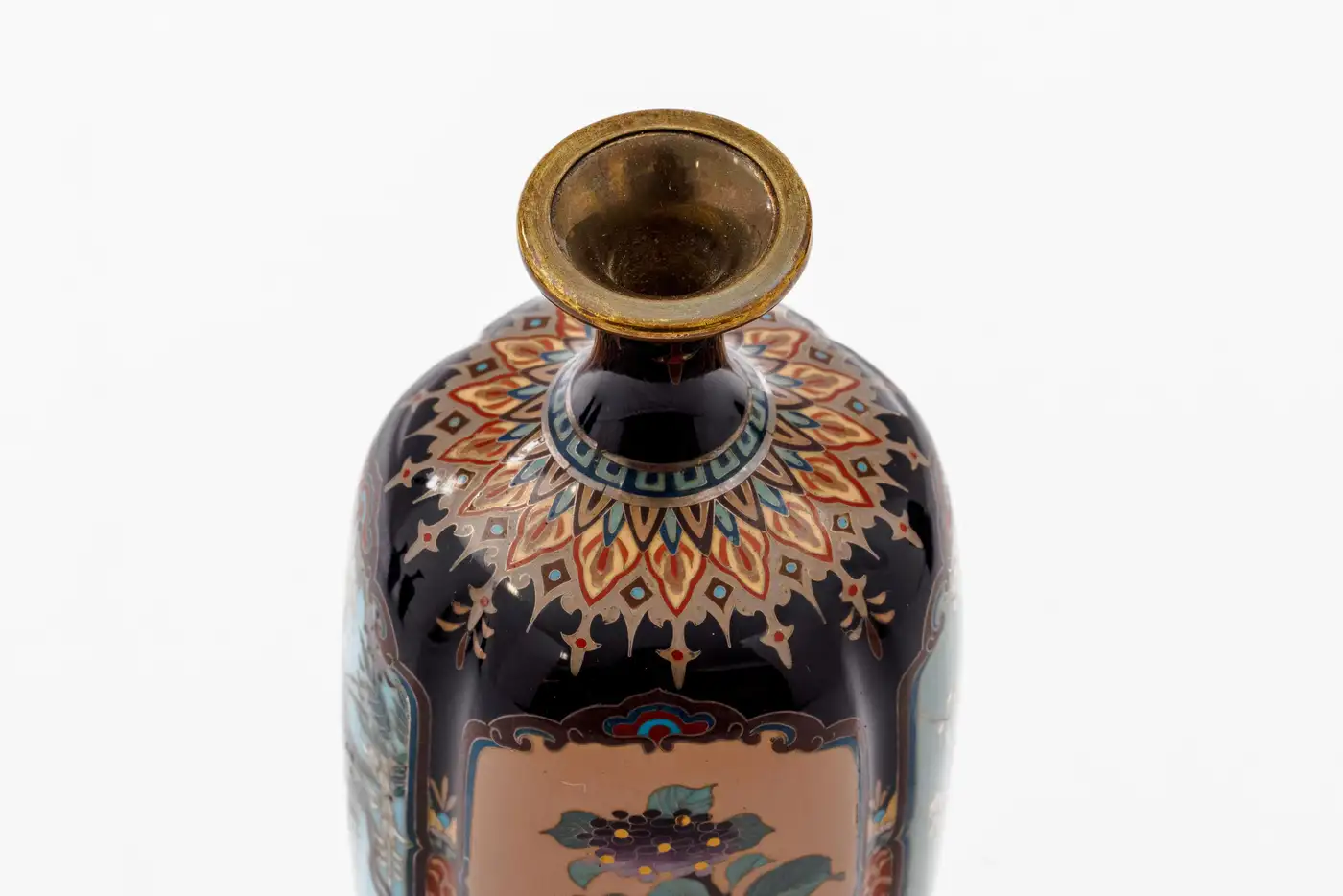
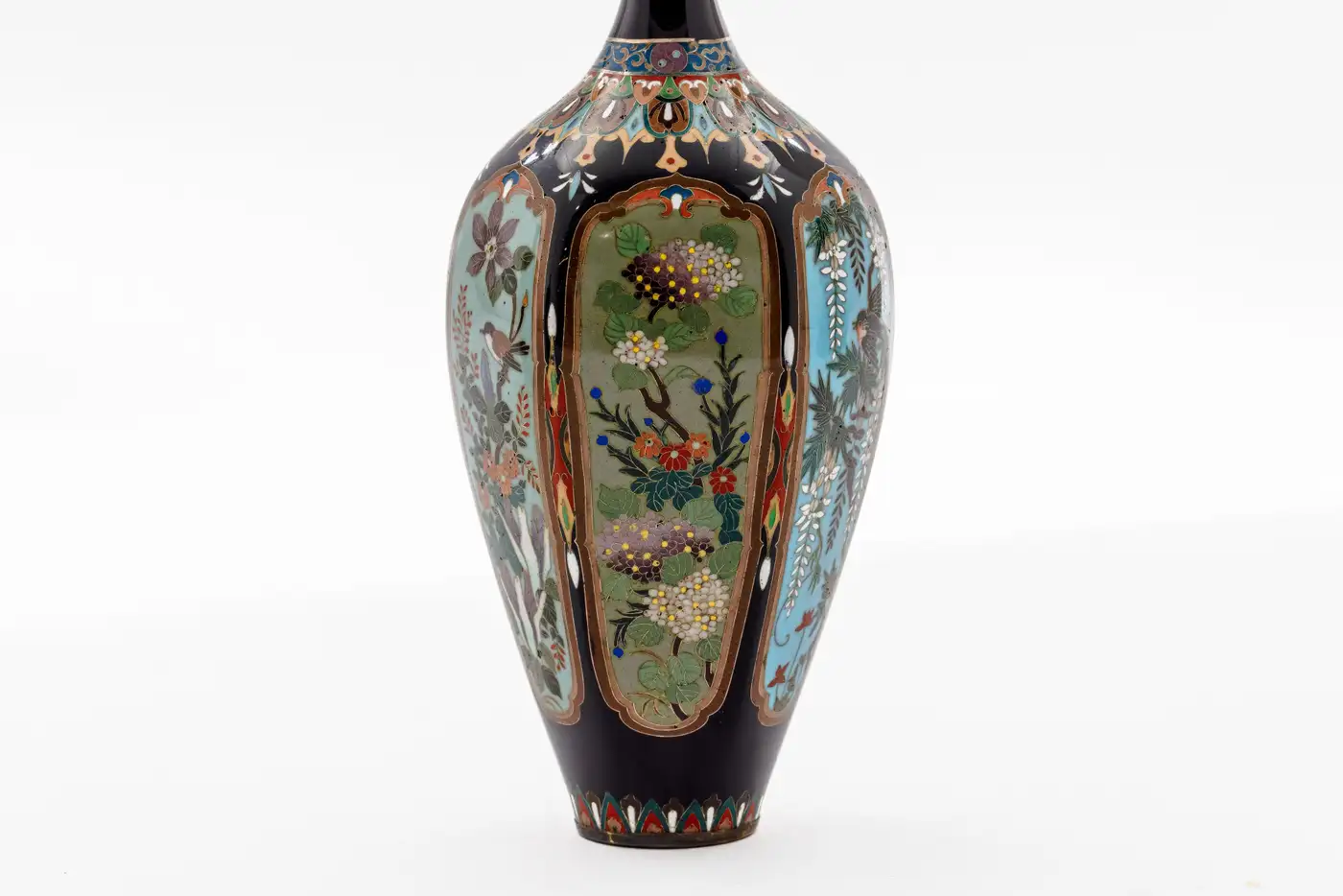
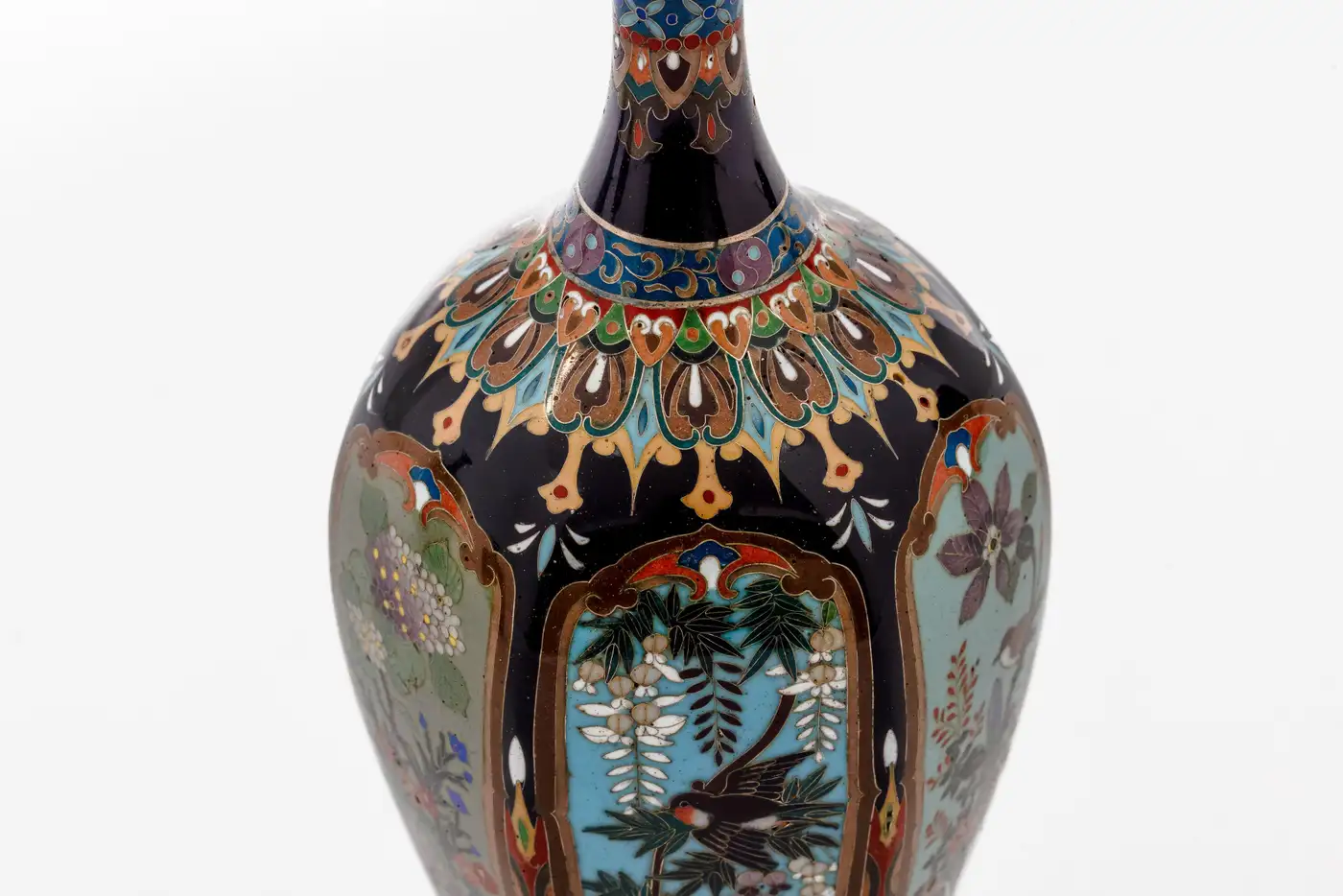
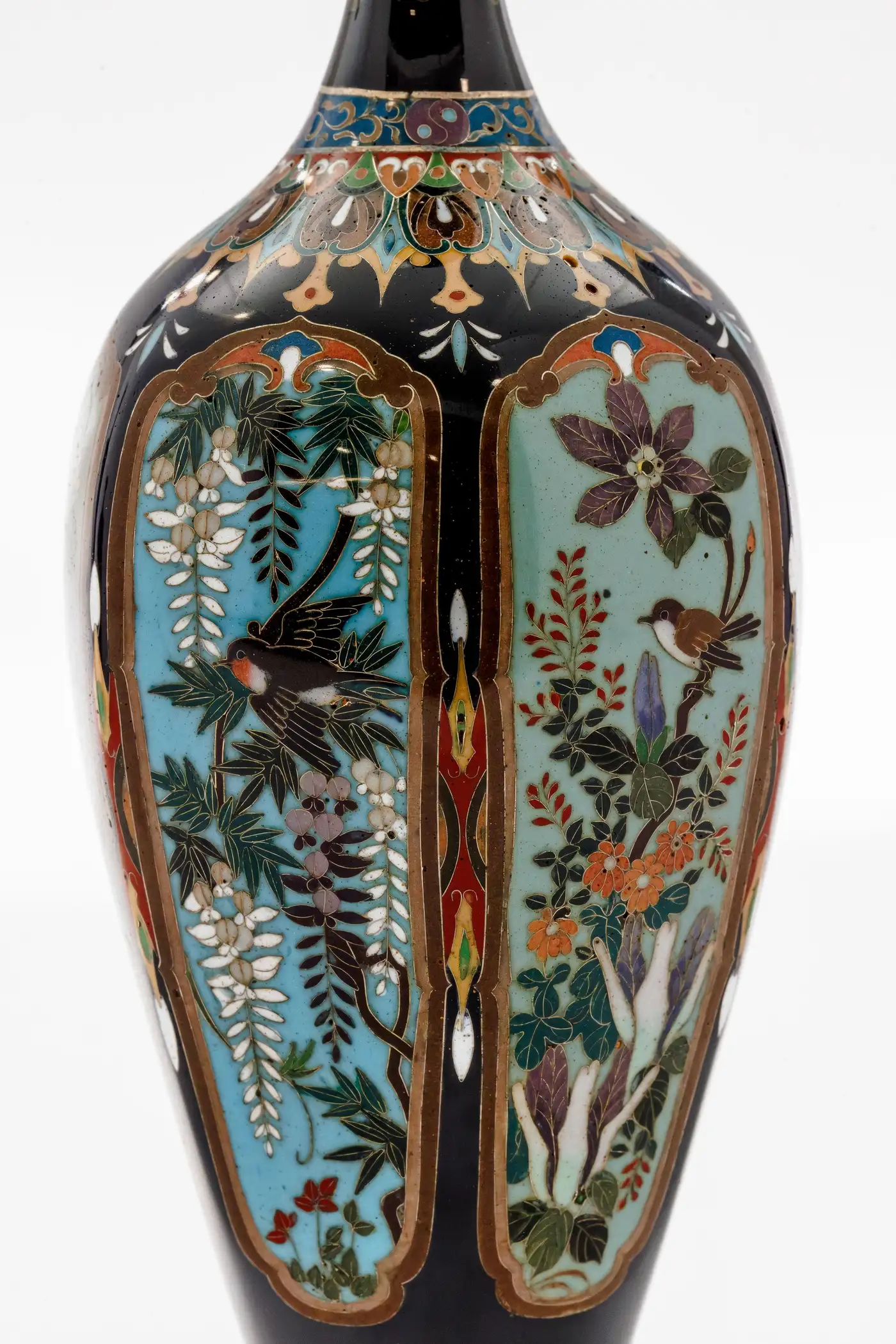
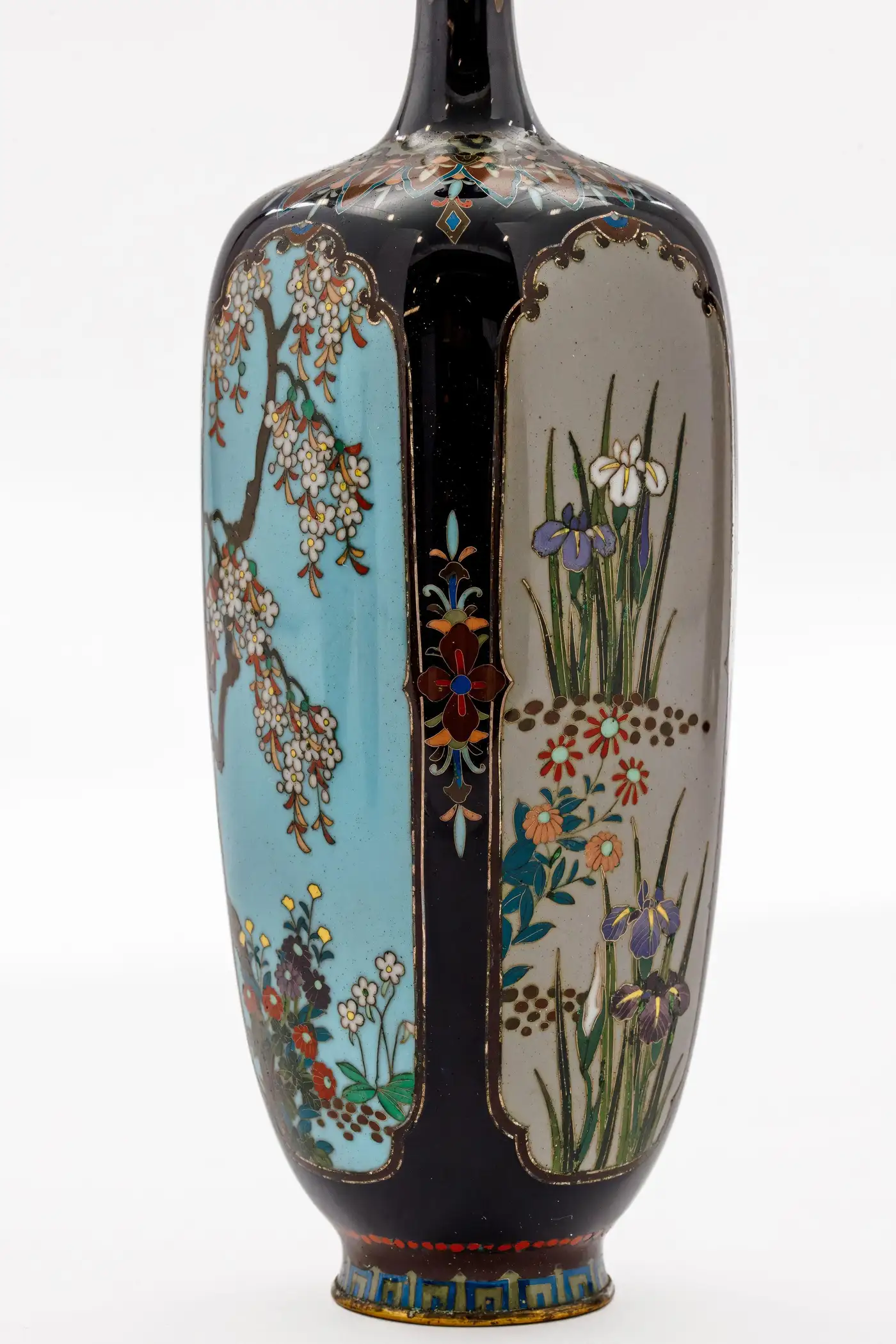
- Each vase is masterfully decorated with arched pictorial panels set against a deep midnight blue enamel ground of rich, mirror-like depth. These panels are framed by intricate ornamental borders executed in exceptionally fine silver cloisonné wire—an elevated and costly material requiring superior technical control and typically reserved for the highest quality production.
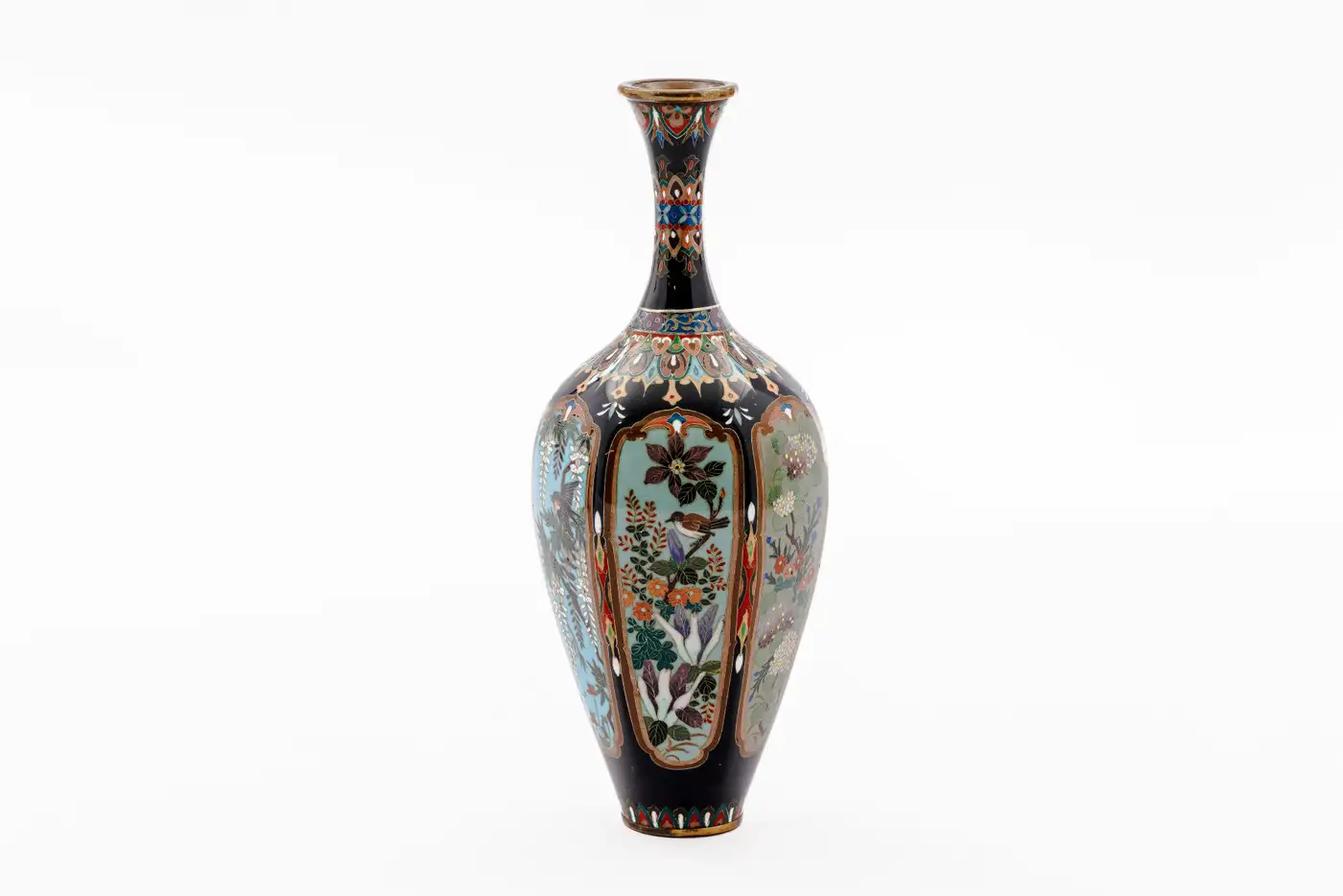
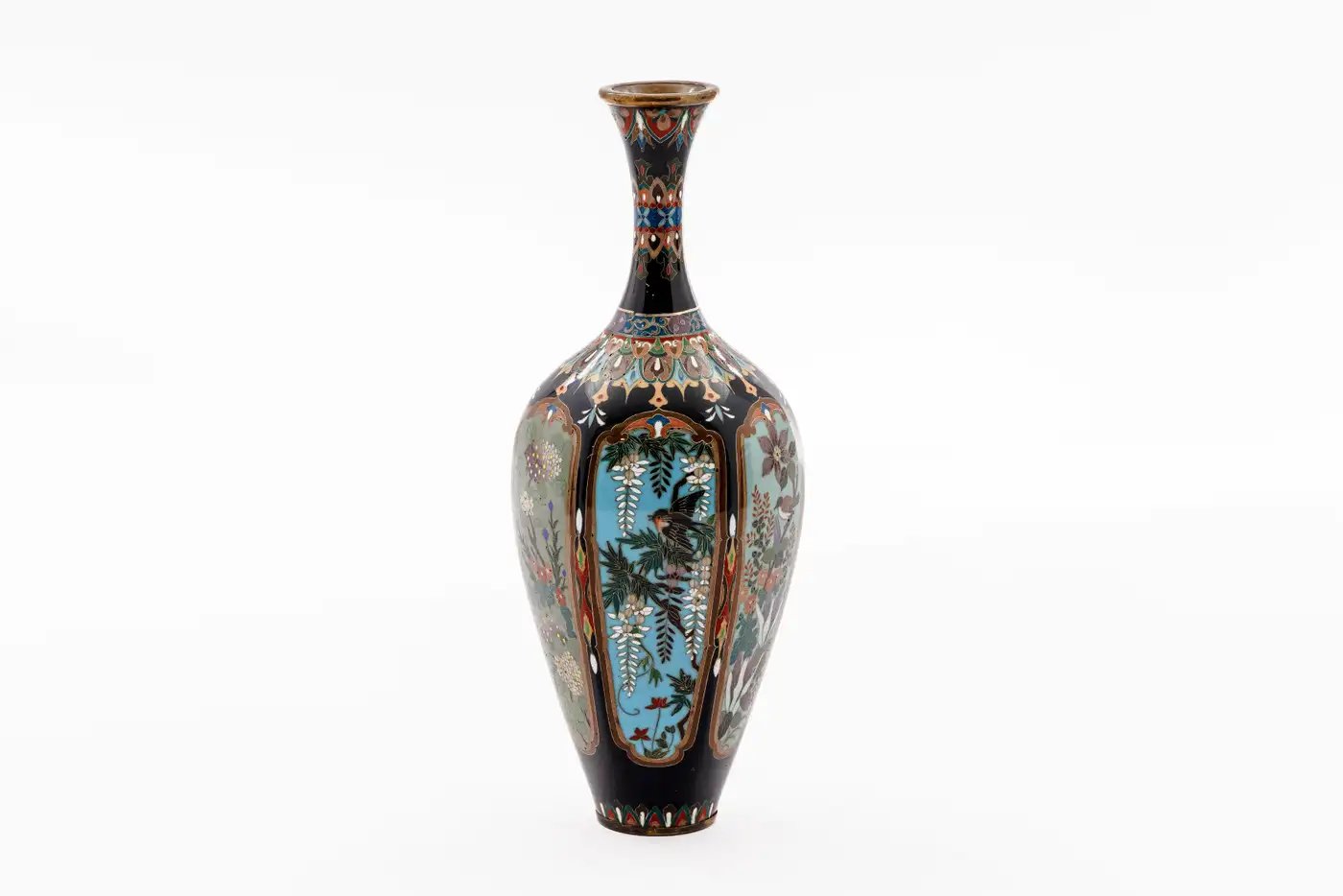
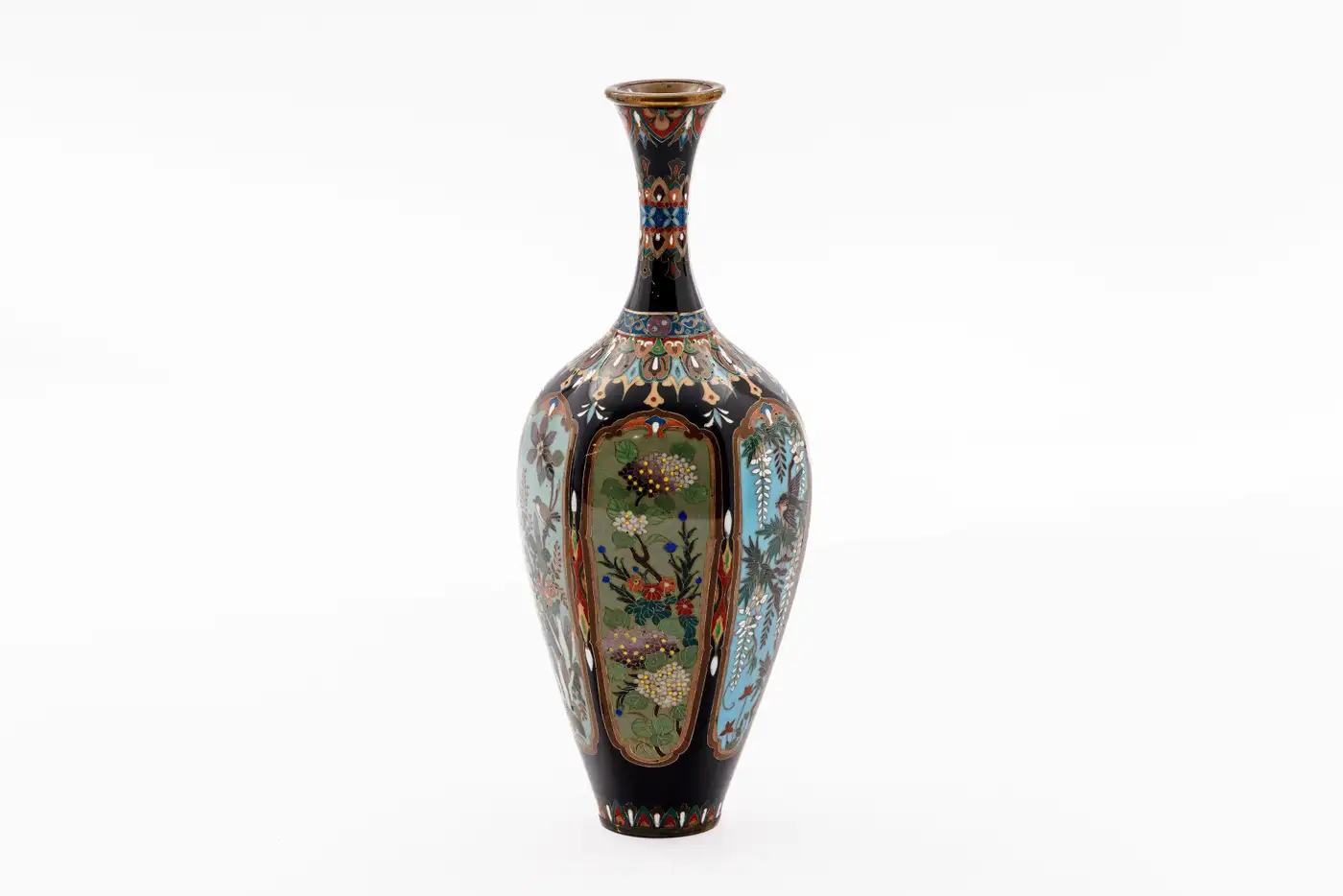
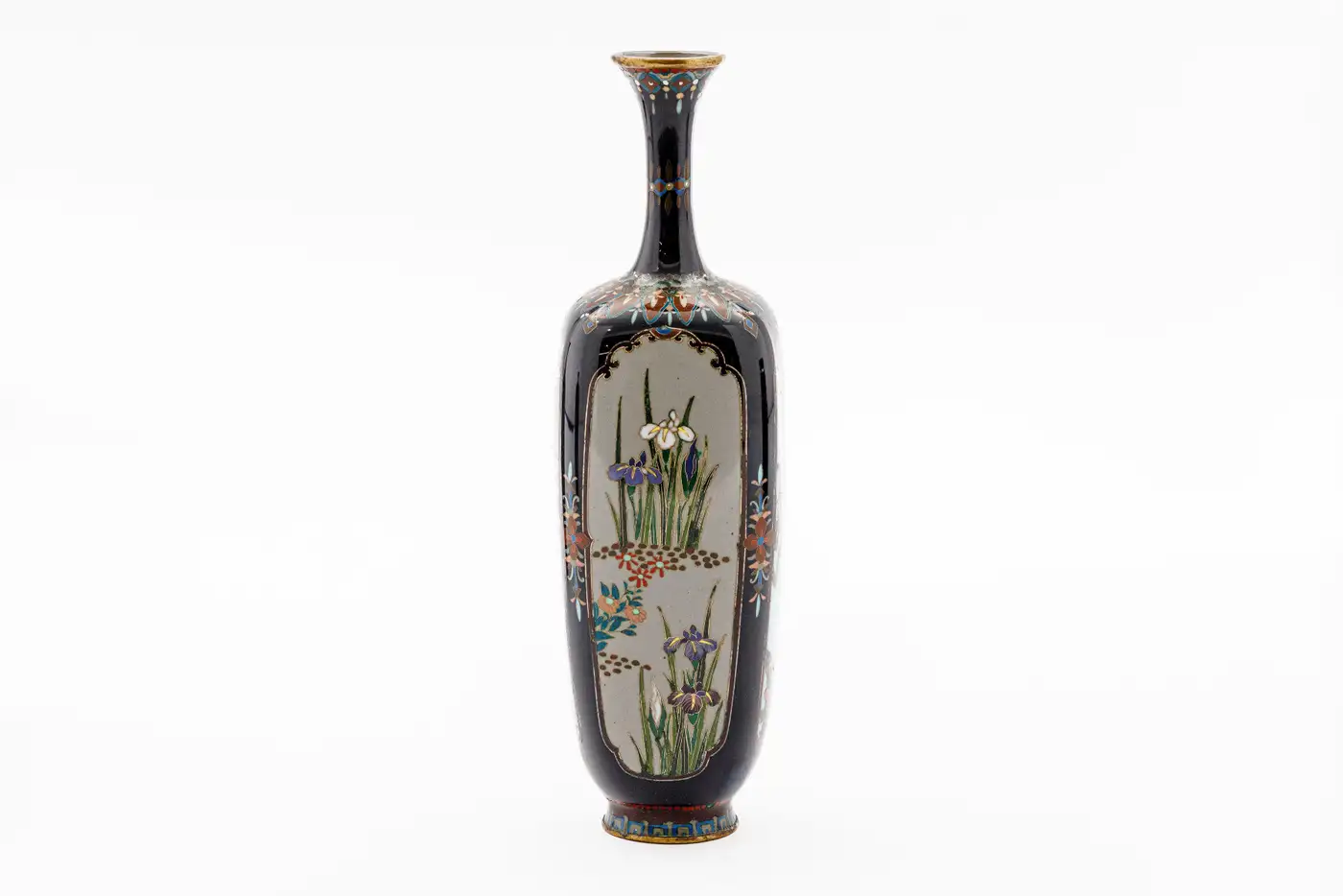
- The panels are further distinguished by their varied grounds—soft pink, pale blue, and gentle gray—creating a visually dynamic and sophisticated surface across the three vessels. Unlike many cloisonné works in which panels repeat similar imagery, here each reserve presents a completely unique composition, reflecting both artistic ambition and technical versatility.
- The scenes are rendered with extraordinary refinement and sensitivity, depicting birds, flowering plants, and seasonal botanical subjects with a painterly quality rarely achieved in enamel. Among the highlights, one vase features elegant compositions of birds among cascading wisteria blossoms, autumnal maple leaves, and chrysanthemums—evoking the poetic transition of the seasons. Another presents delicately rendered plum blossoms in bloom, their white petals suspended against pale grounds, alongside a variety of garden flora arranged in harmonious balance.
- Particularly striking is a vivid pink-ground panel depicting hydrangea blossoms, the clustered petals articulated through exceptionally fine silver wire and subtle tonal gradations, demonstrating a level of detail and control of the highest order. The third vase includes beautifully observed songbirds perched among flowering branches, their plumage rendered with delicate shading and precision, further emphasizing the naturalistic elegance of the compositions.
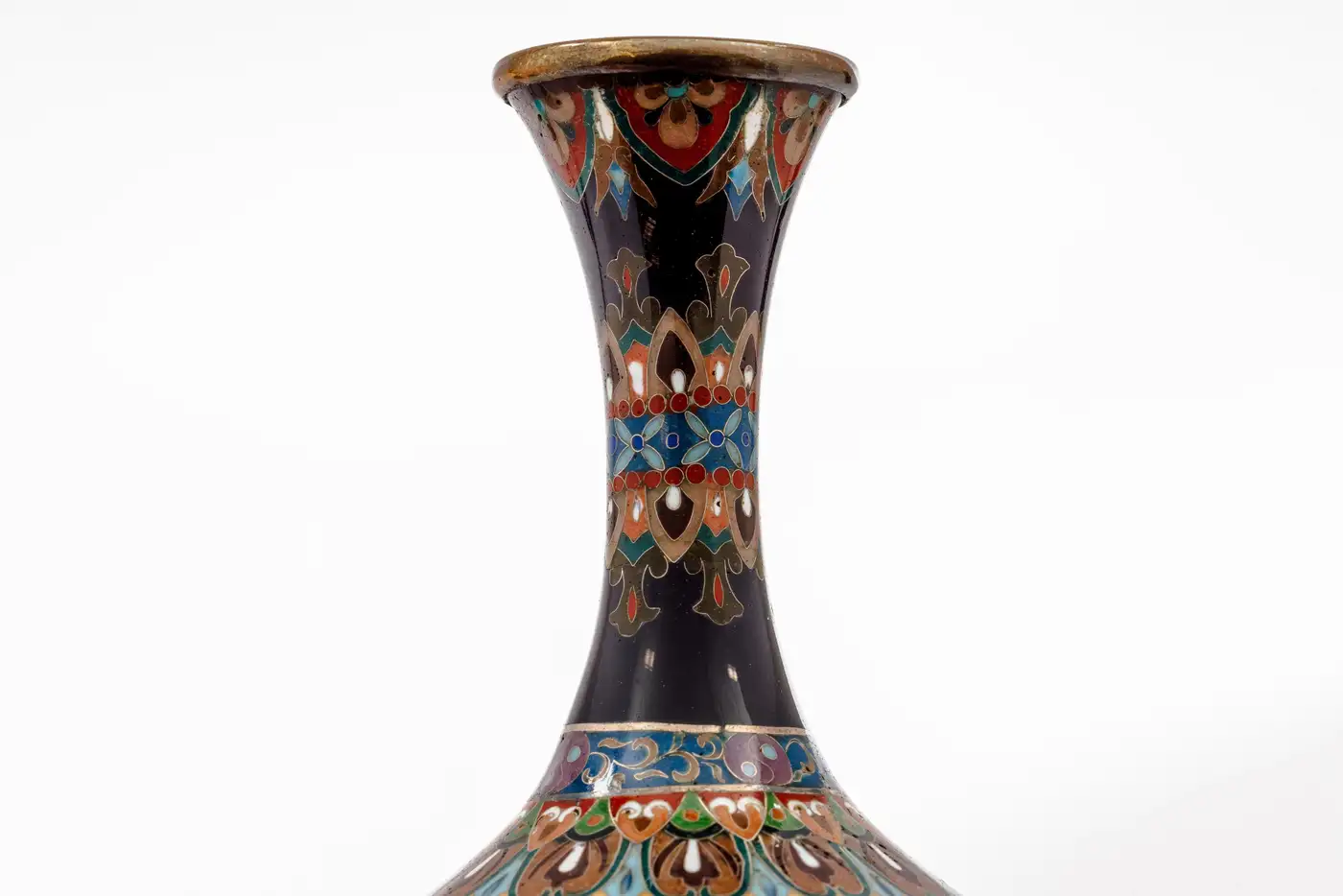
- The necks and shoulders are richly adorned with geometric and floral ornament, including stylized lotus motifs, scrolling patterns, and jewel-like borders. These bands provide a seamless transition between the dark ground and the lighter panels, while showcasing the remarkable discipline and consistency of the wirework.
- The use of silver wire throughout is of particular importance. Far more difficult and costly than standard brass wire, silver allows for finer, more delicate lines and a softer visual effect within the enamel. Works employing such extensive silver wire were produced in more limited numbers and are today especially prized for their rarity and technical excellence.
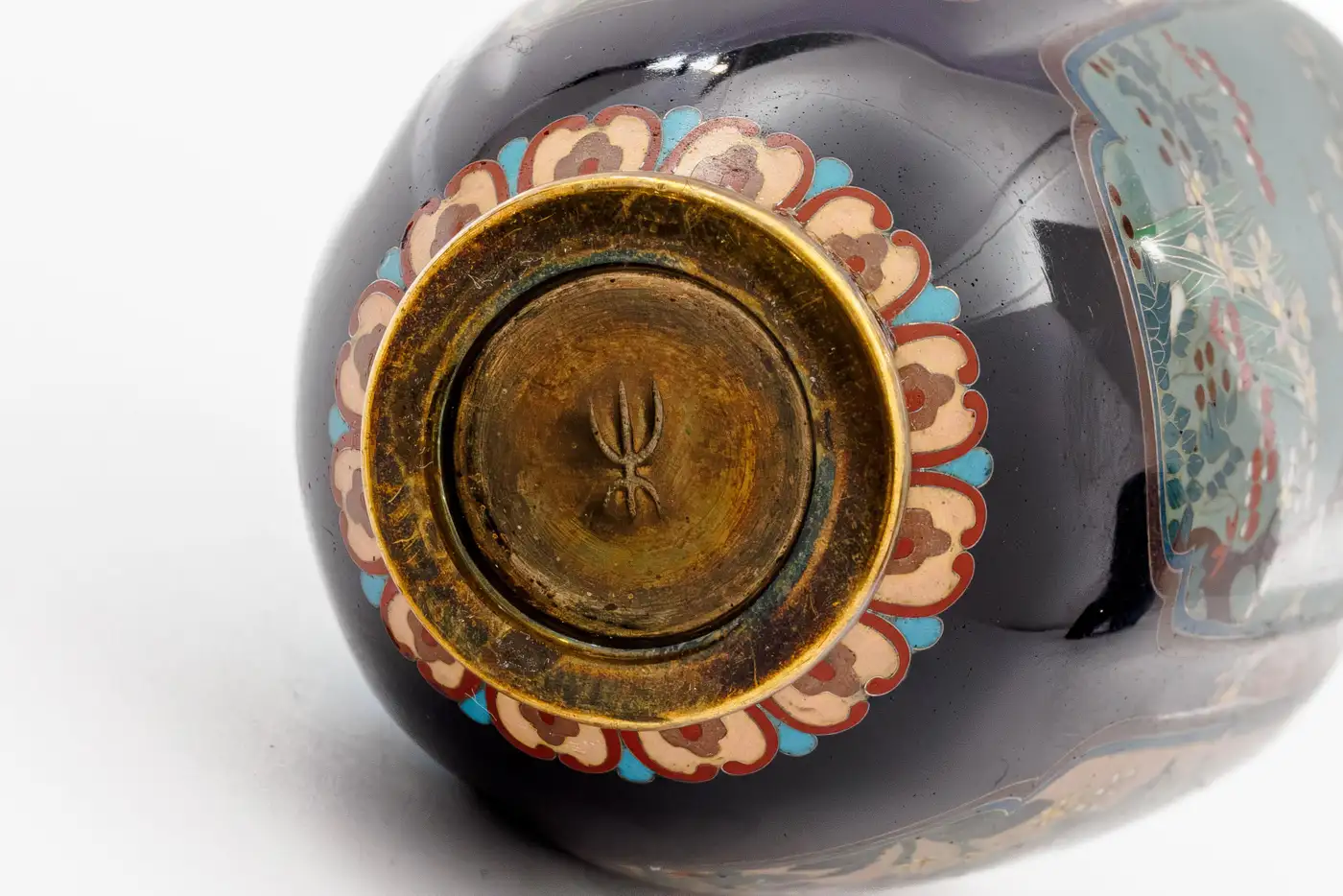
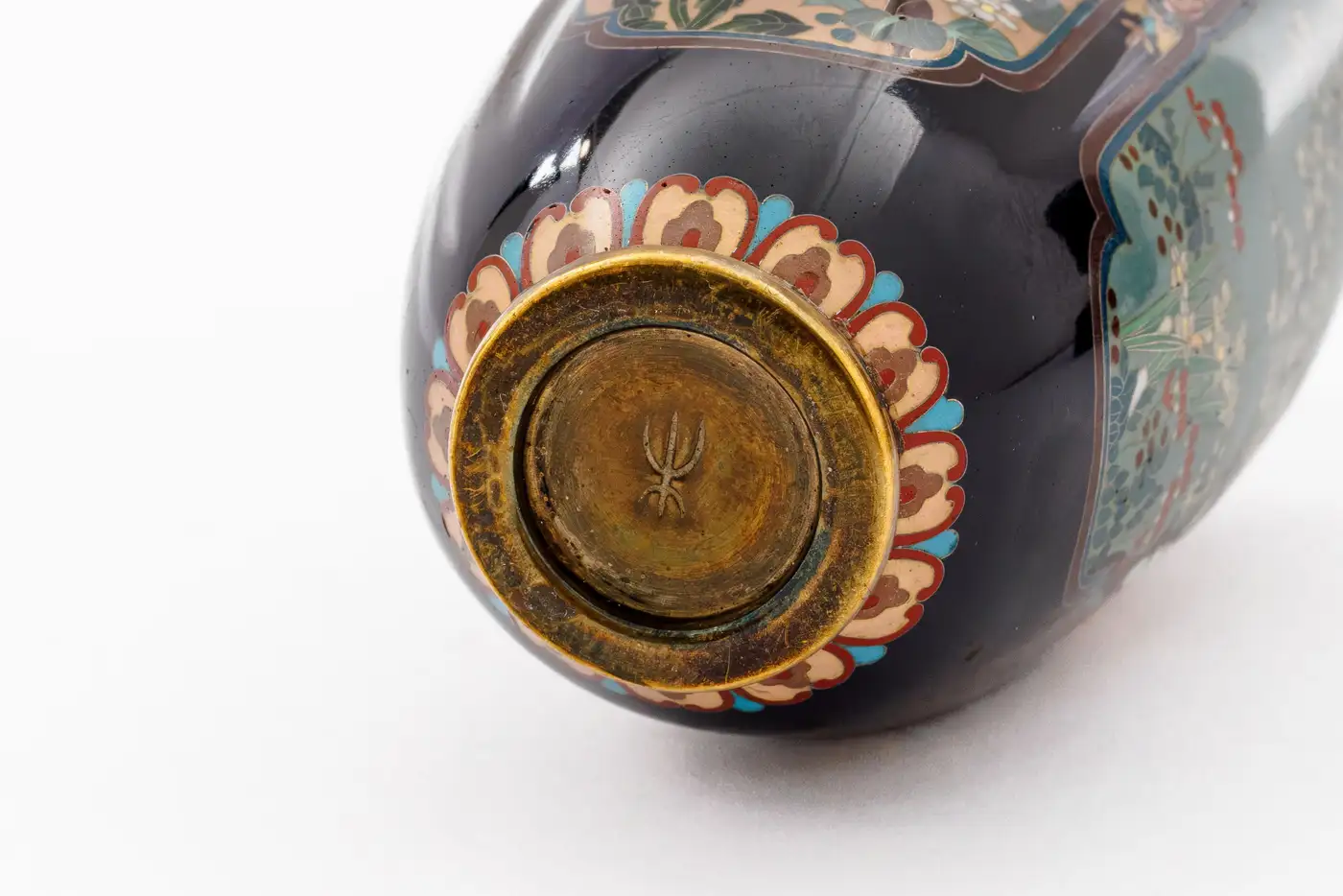
- Members of the Ota family employed a variety of signatures across generations, and their works are associated with a refined body of cloisonné distinguished by elegant panel compositions, exceptional craftsmanship, and a highly developed naturalistic aesthetic.
- Offered as a cohesive set of three, these vases represent a rare and important survival—an ensemble that embodies the artistic sophistication, technical innovation, and decorative richness that define the finest Meiji period cloisonné.
- 7.5″ high the tallest x 1″ diameter
- Good condition. No damage noted.
- Period: 19th Century
- Place of Origin:Japan
- Style:Meiji
- Diameter: 1 in (2.54 cm)
- Height: 7.5 in (19.05 cm)
- Date of Manufacture: 19th Century
- Materials & Techniques: Copper,Enamel
Price Range
◆ Under $5,000
◆ $5,000–$10,000
◆ $10,000–$25,000
◆ $25,000–$50,000
◆ $50,000–$100,000
◆ Over $100,000