

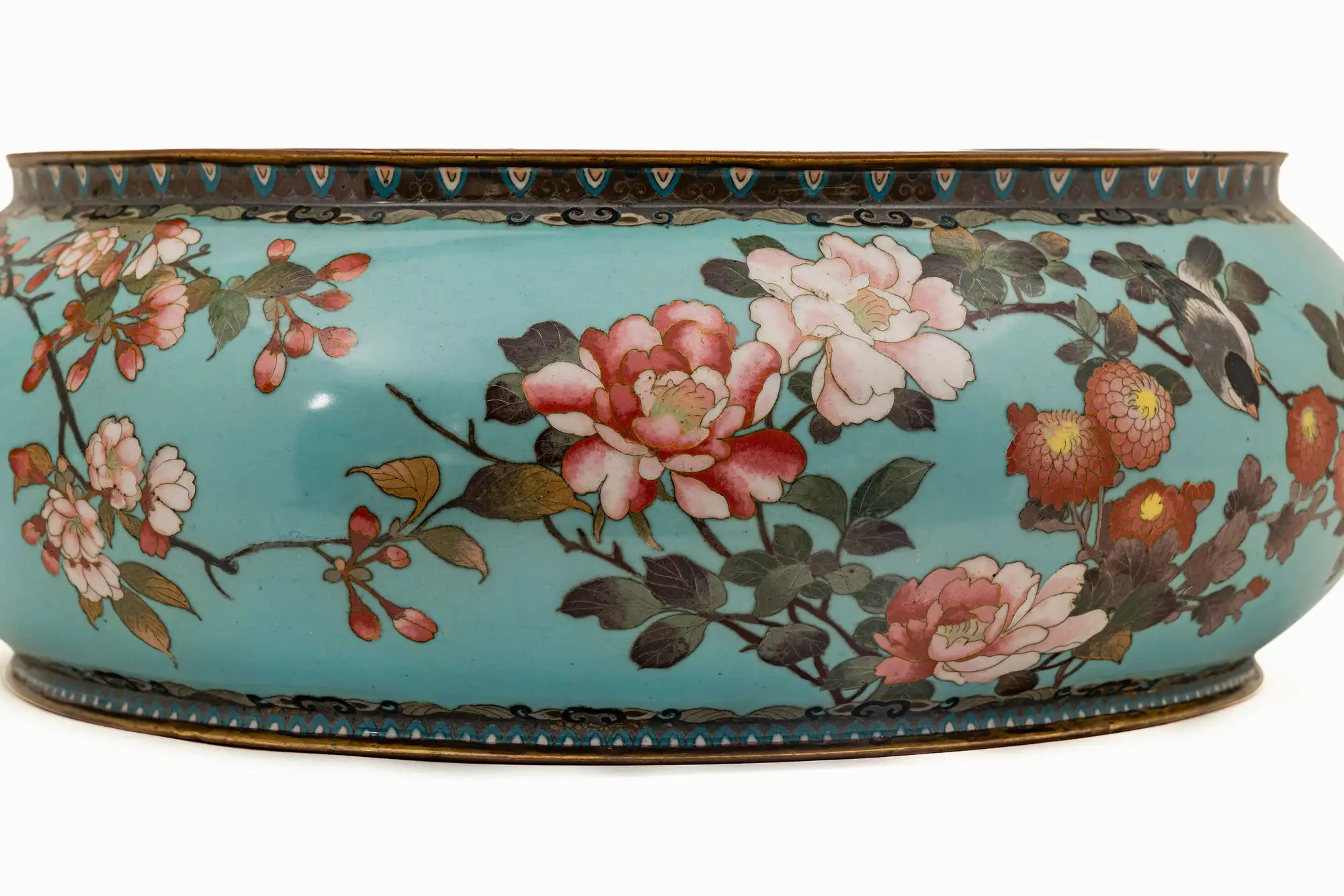
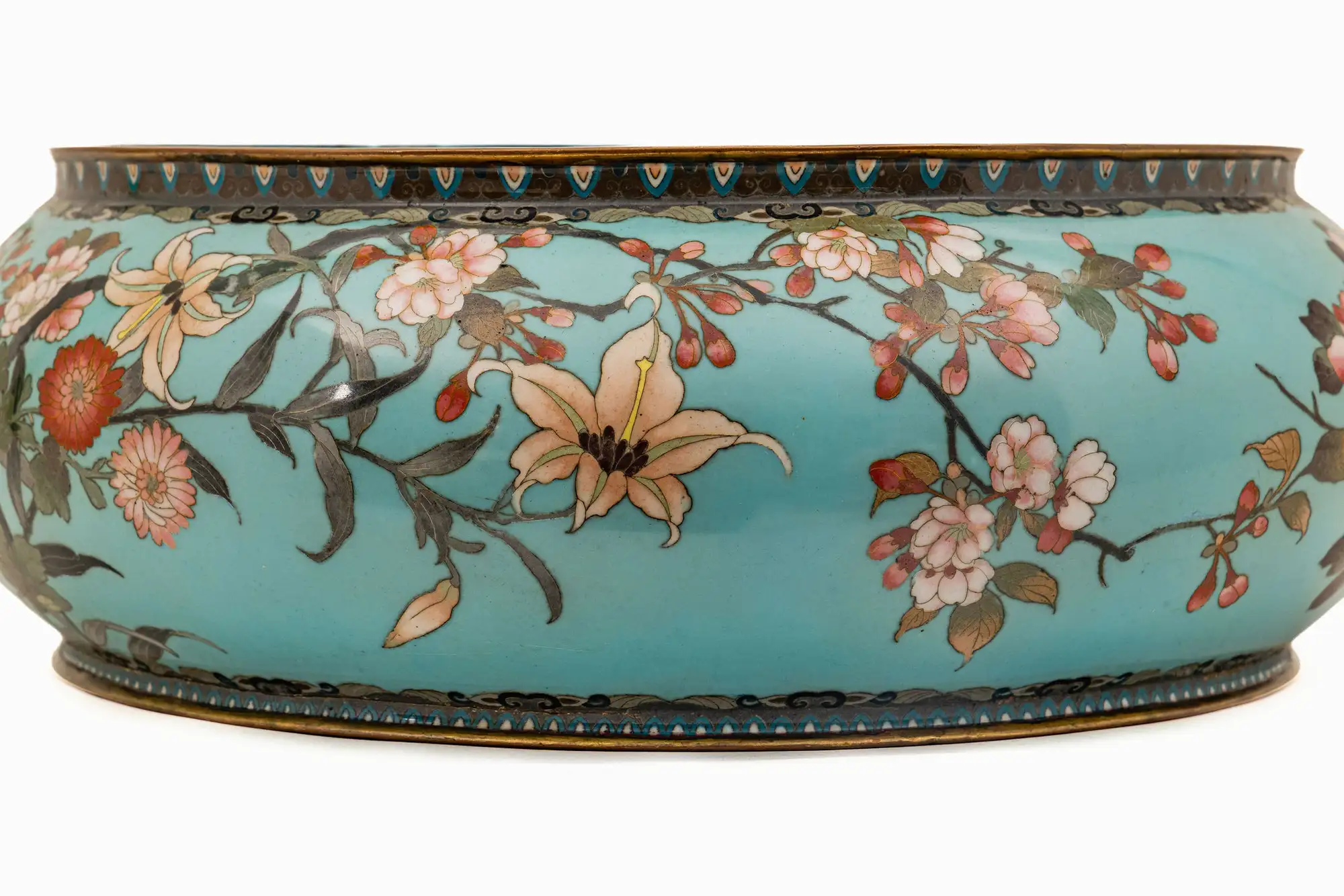
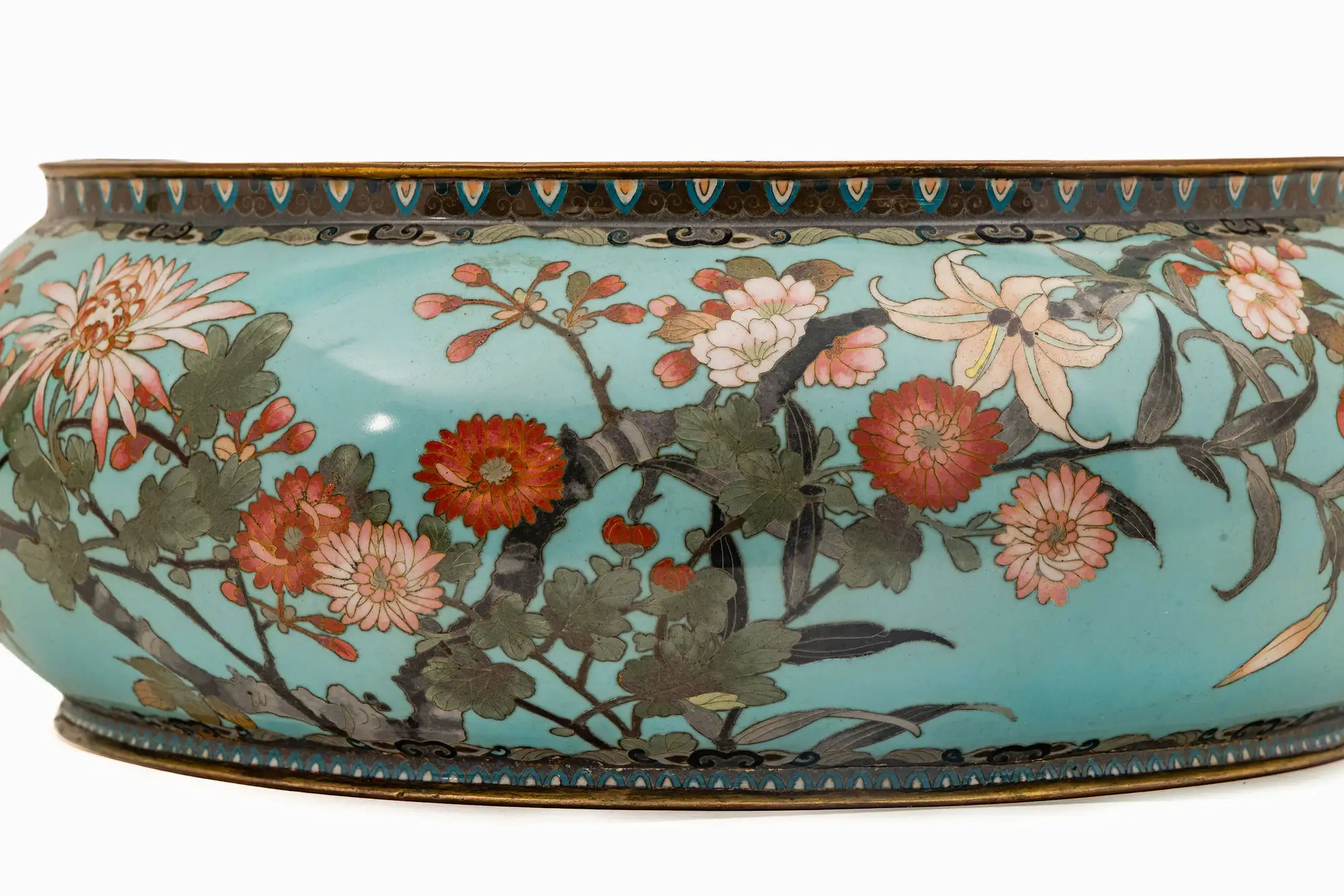
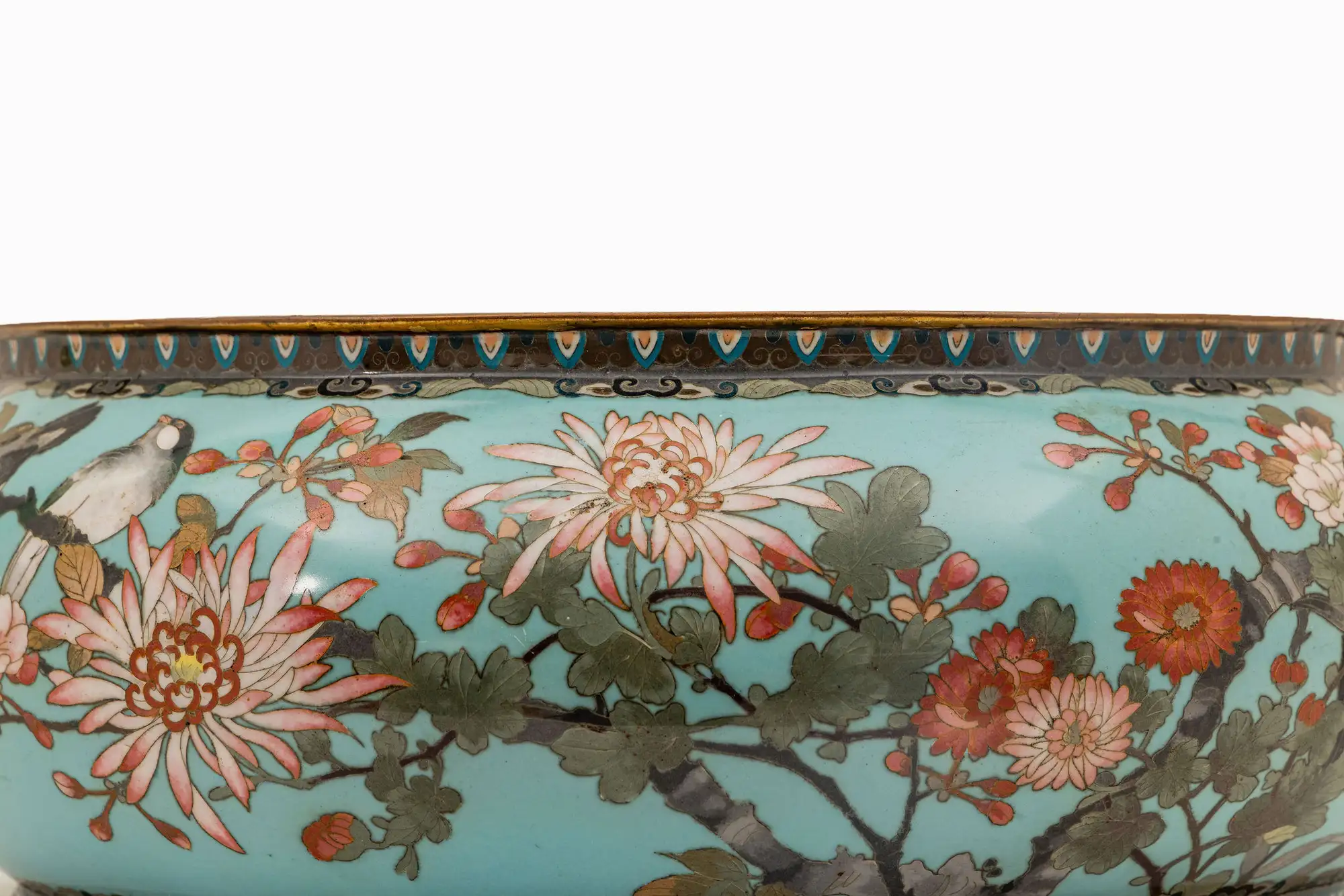
Exceptional Large Japanese Cloisonné Enamel Planter Attributed to Goto Seizaburo
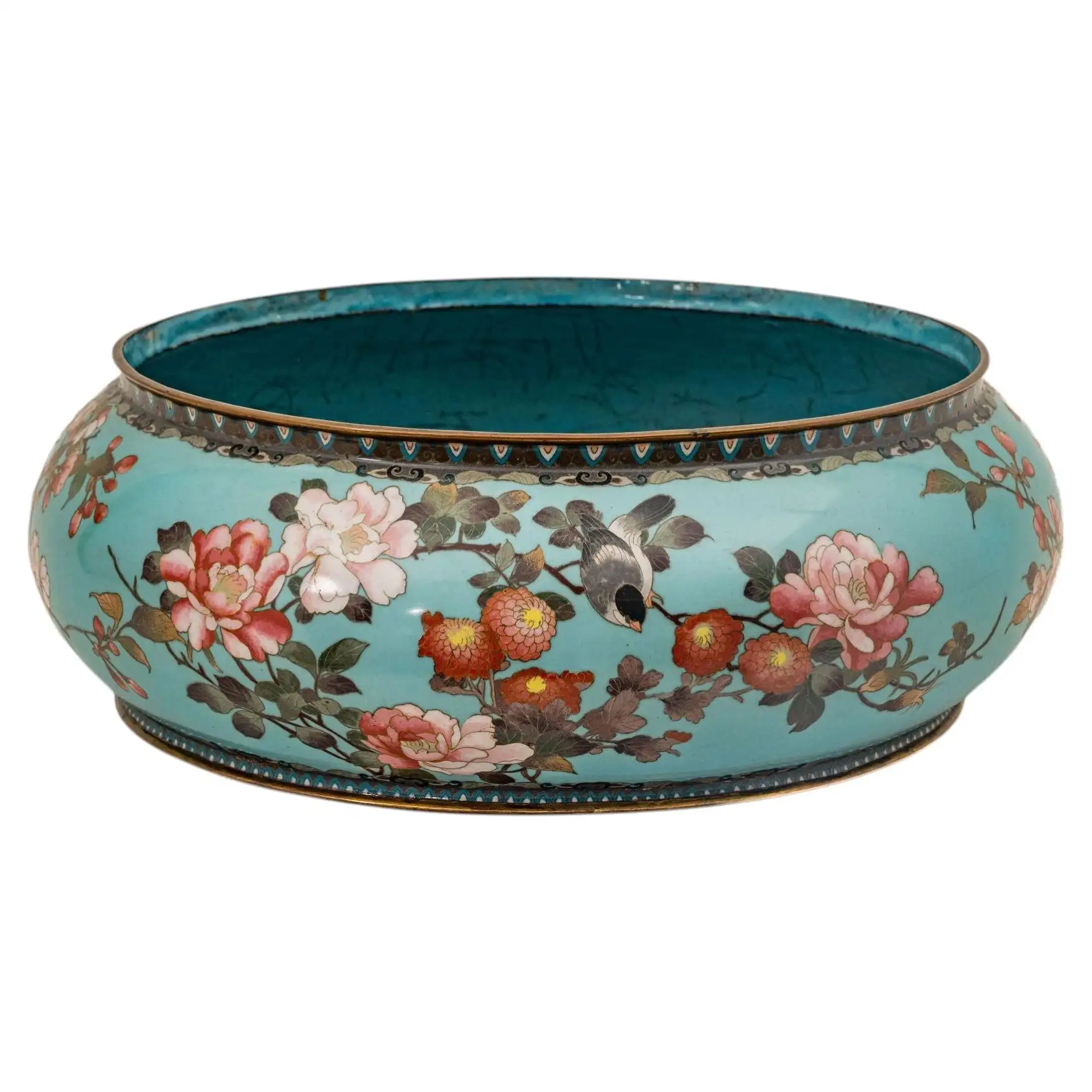
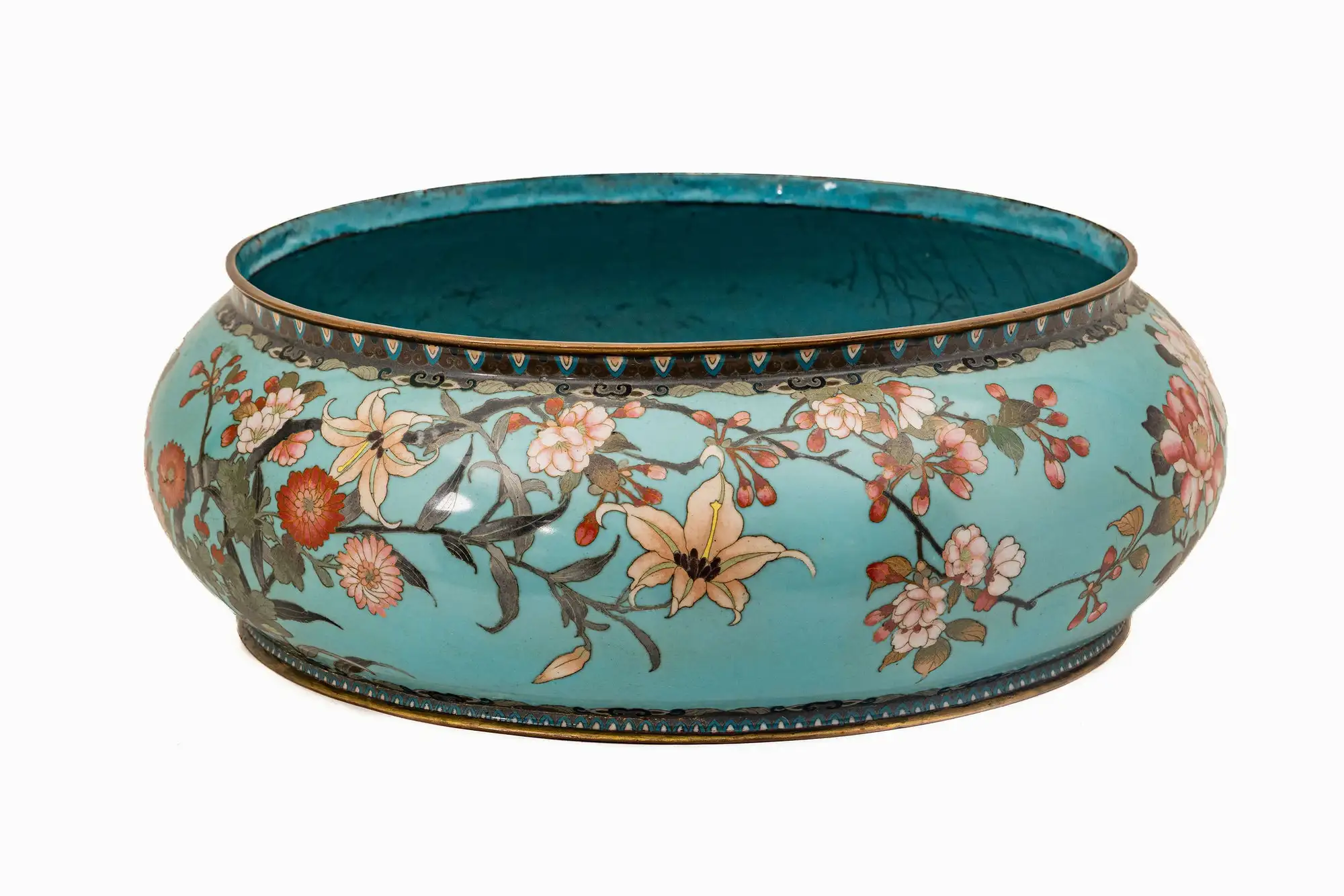
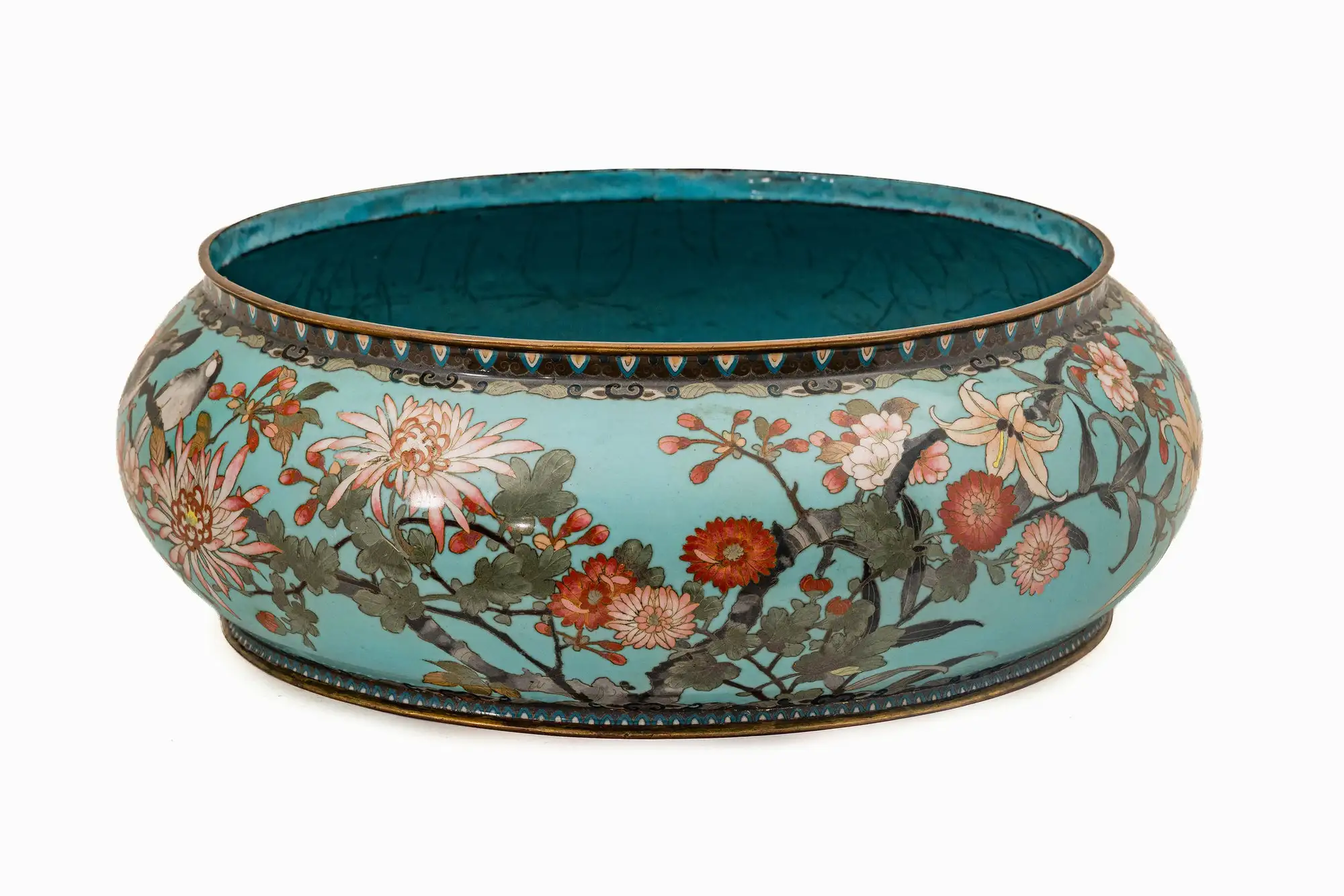
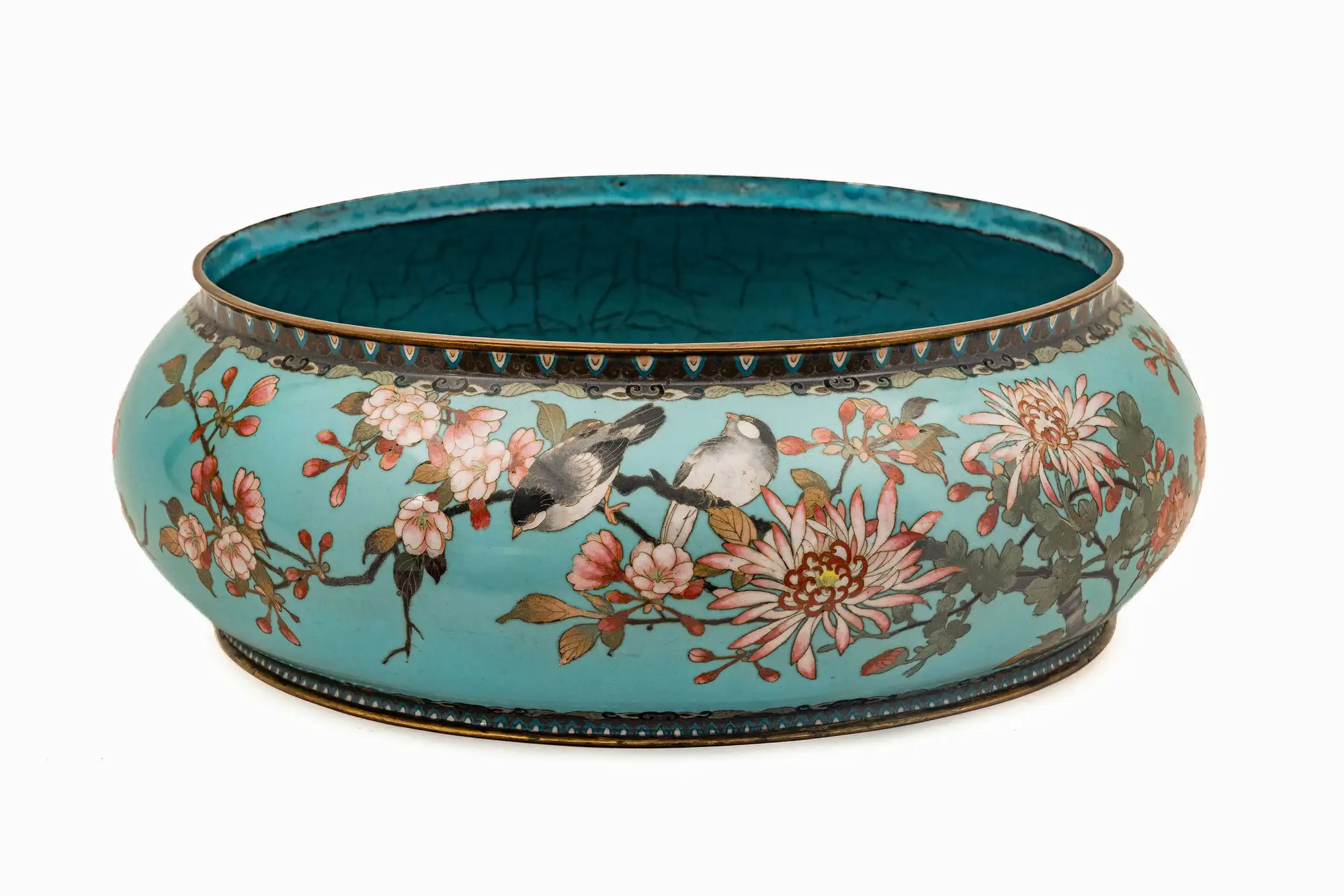
- An exceptional and unusually large Japanese cloisonné enamel planter attributed to the celebrated Meiji-period enamel artist Goto Seizaburo (1857–1923), circa 1890. Measuring an impressive 14 inches in diameter, this magnificent planter is distinguished by its brilliant turquoise-blue enamel ground, extraordinarily fine silver-wire decoration, and exquisitely rendered naturalistic composition of flowering chrysanthemums, orchids, and birds.
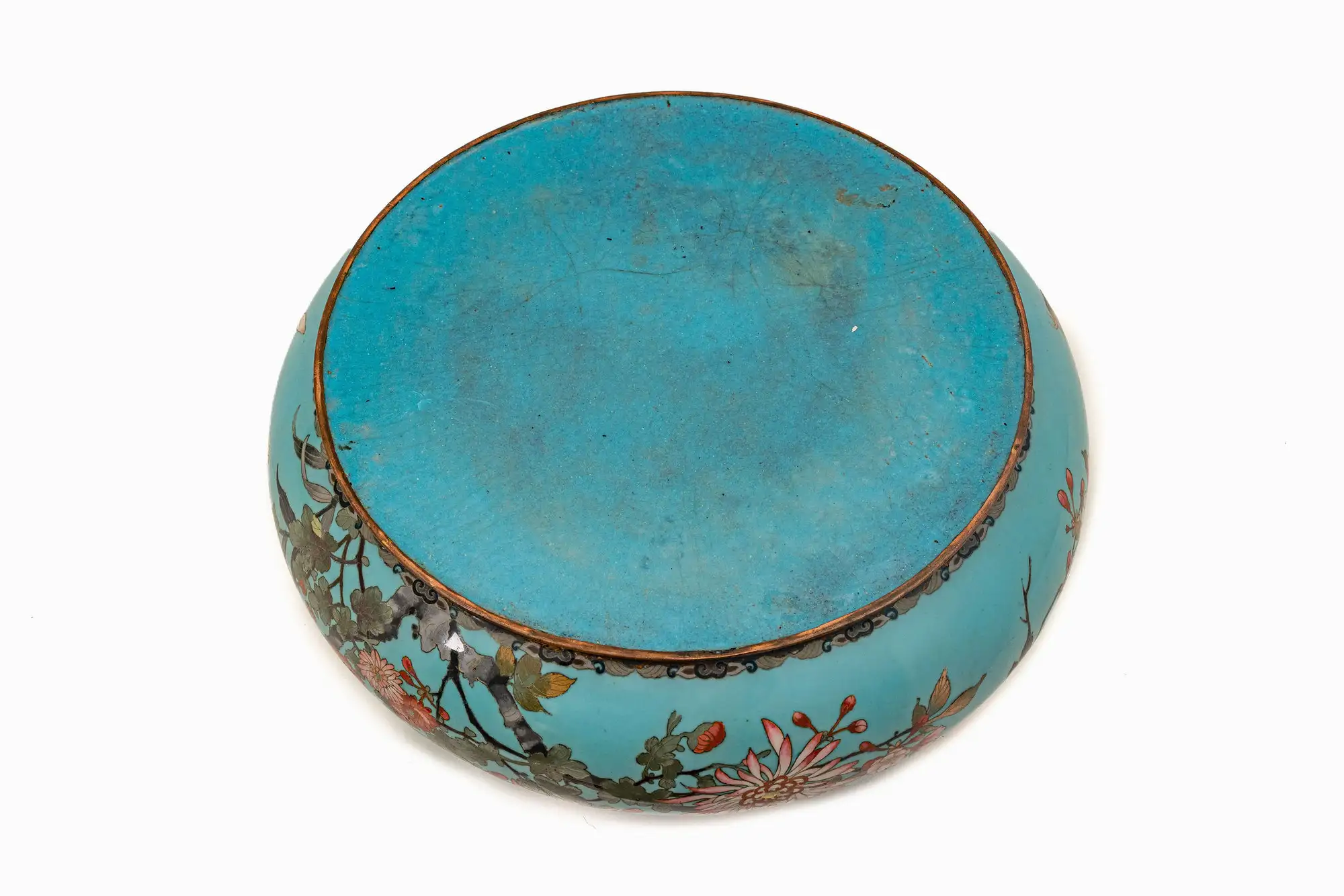
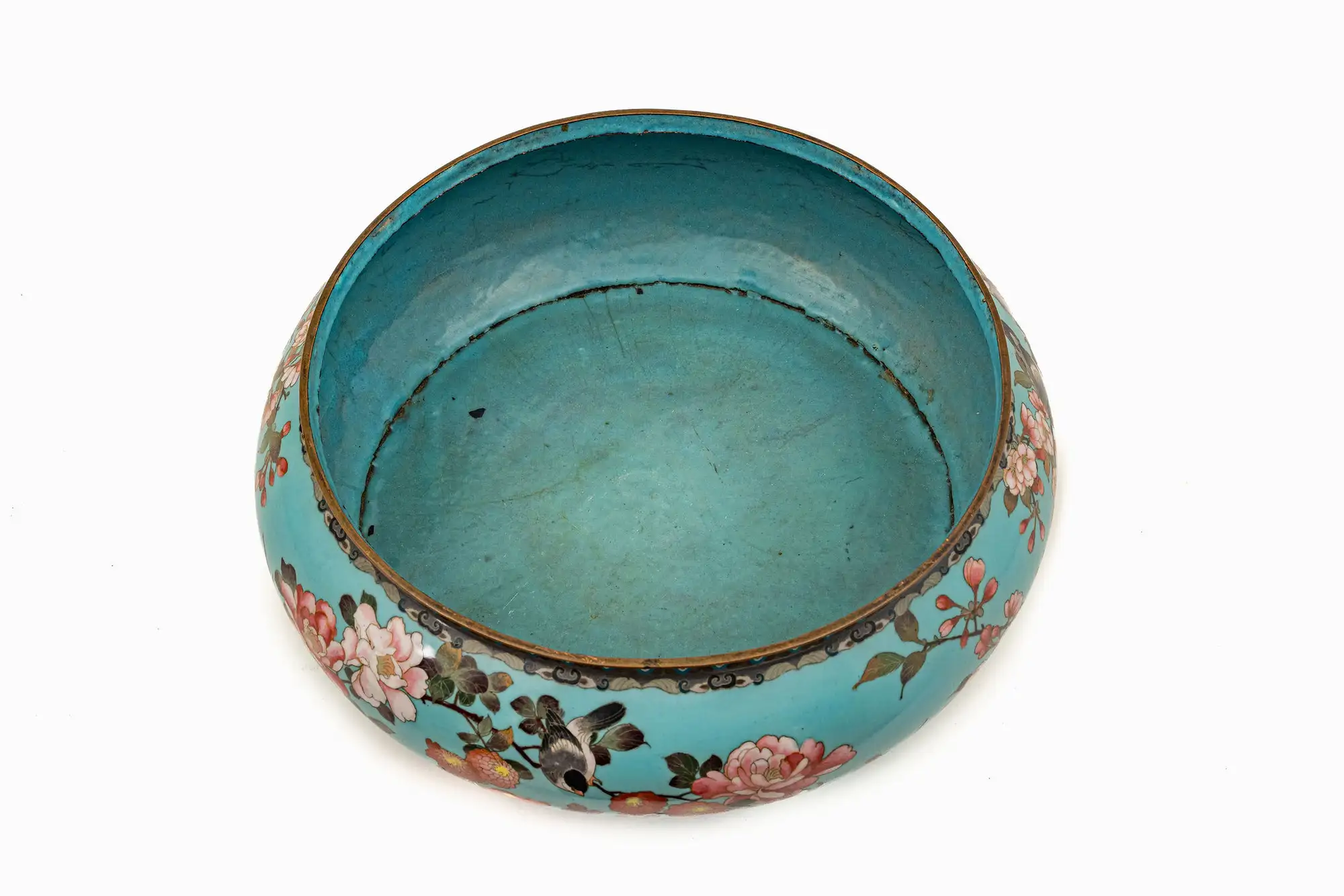
- Of elegant, generously rounded form, the planter features a broad circular opening, gently swelling sides, and a recessed foot. Its substantial proportions provide an expansive surface for an elaborate continuous pictorial composition extending around the entire circumference.
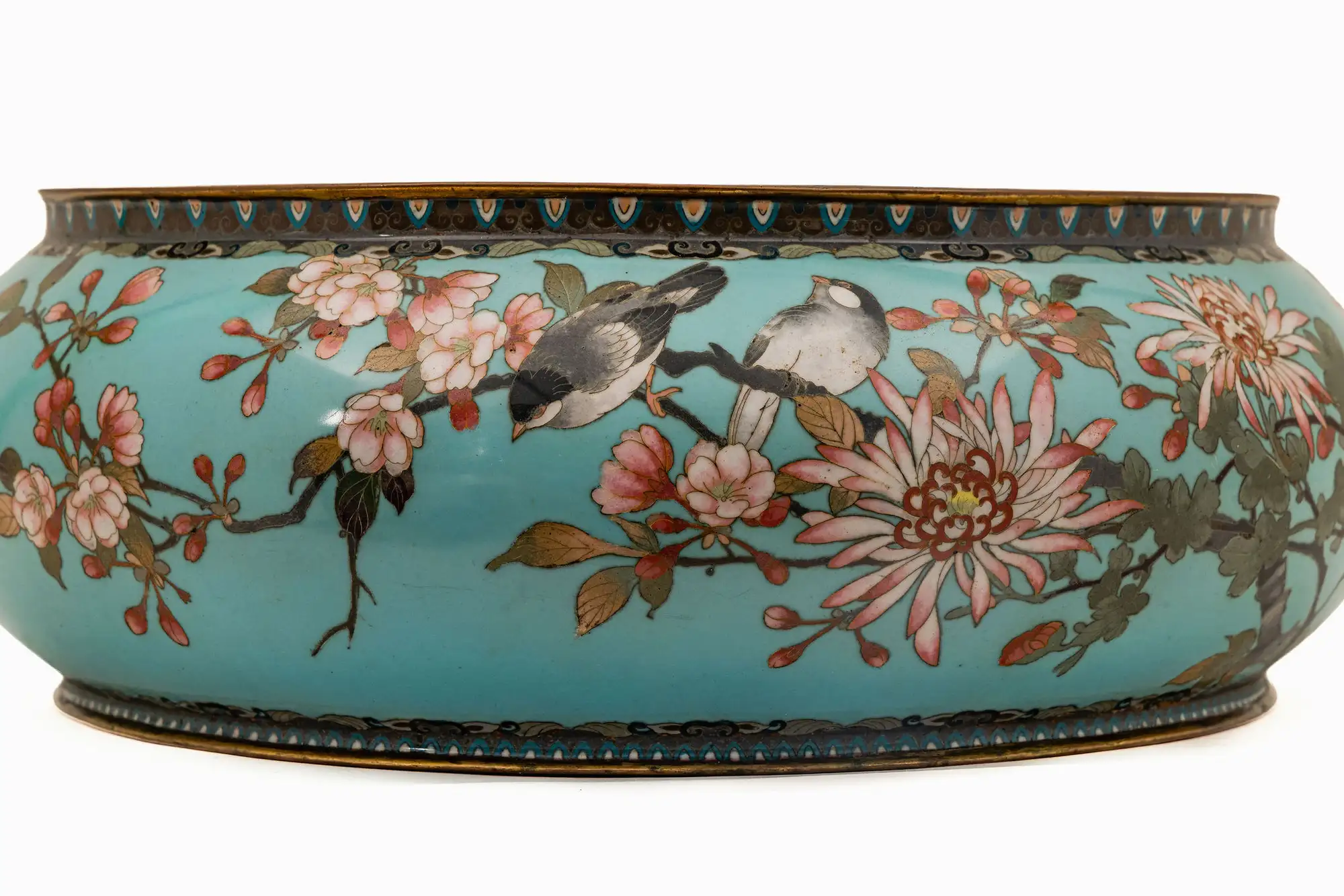
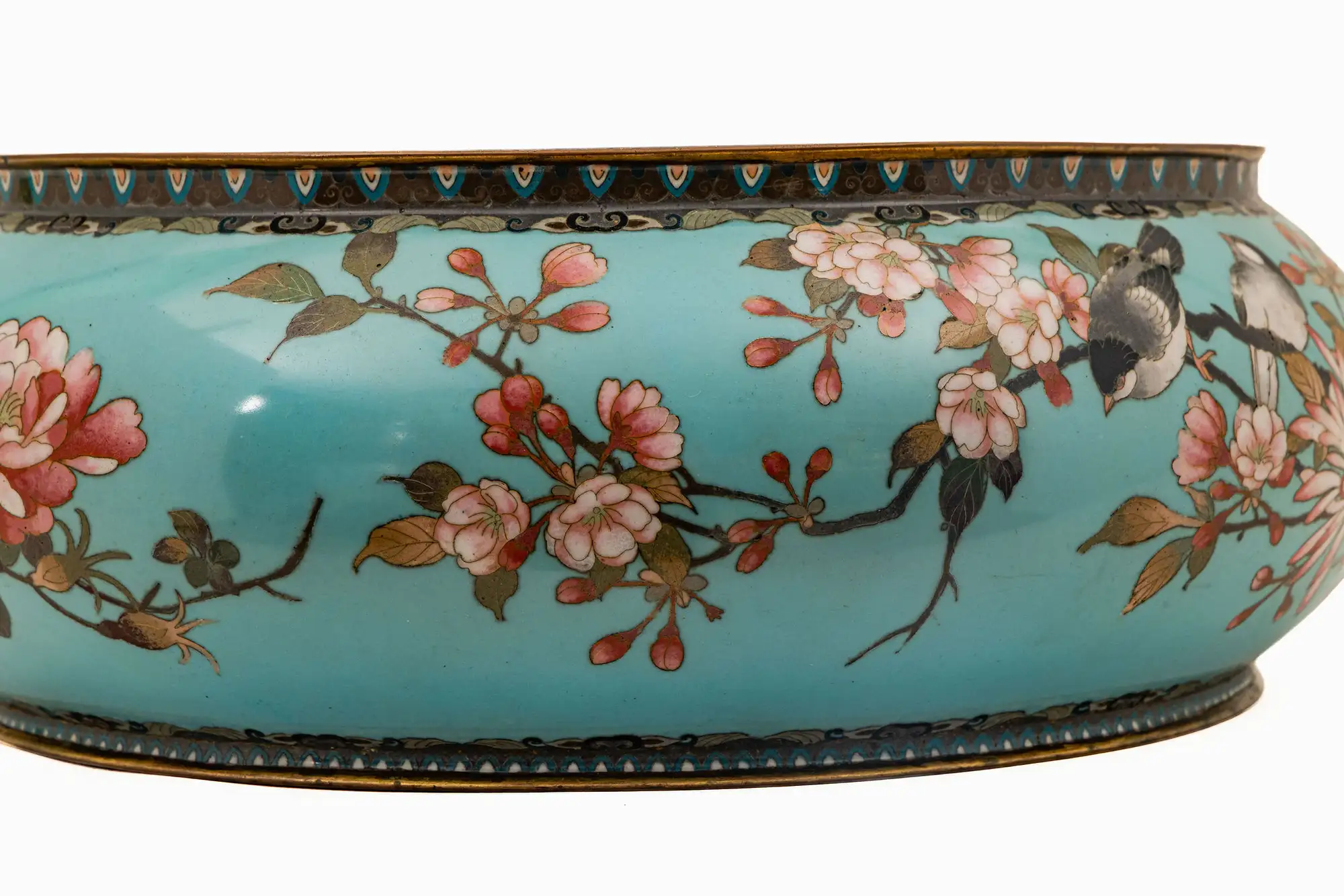
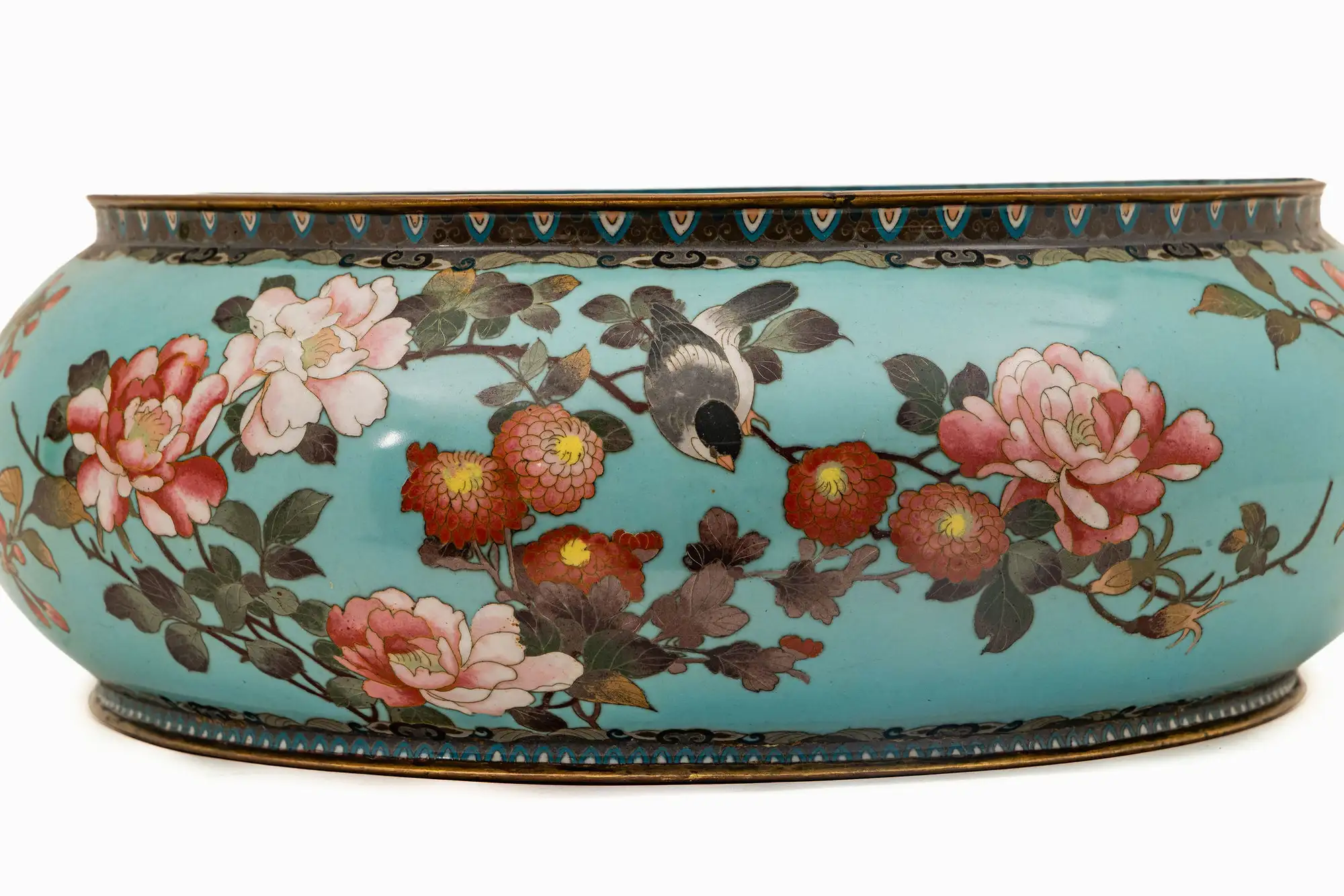
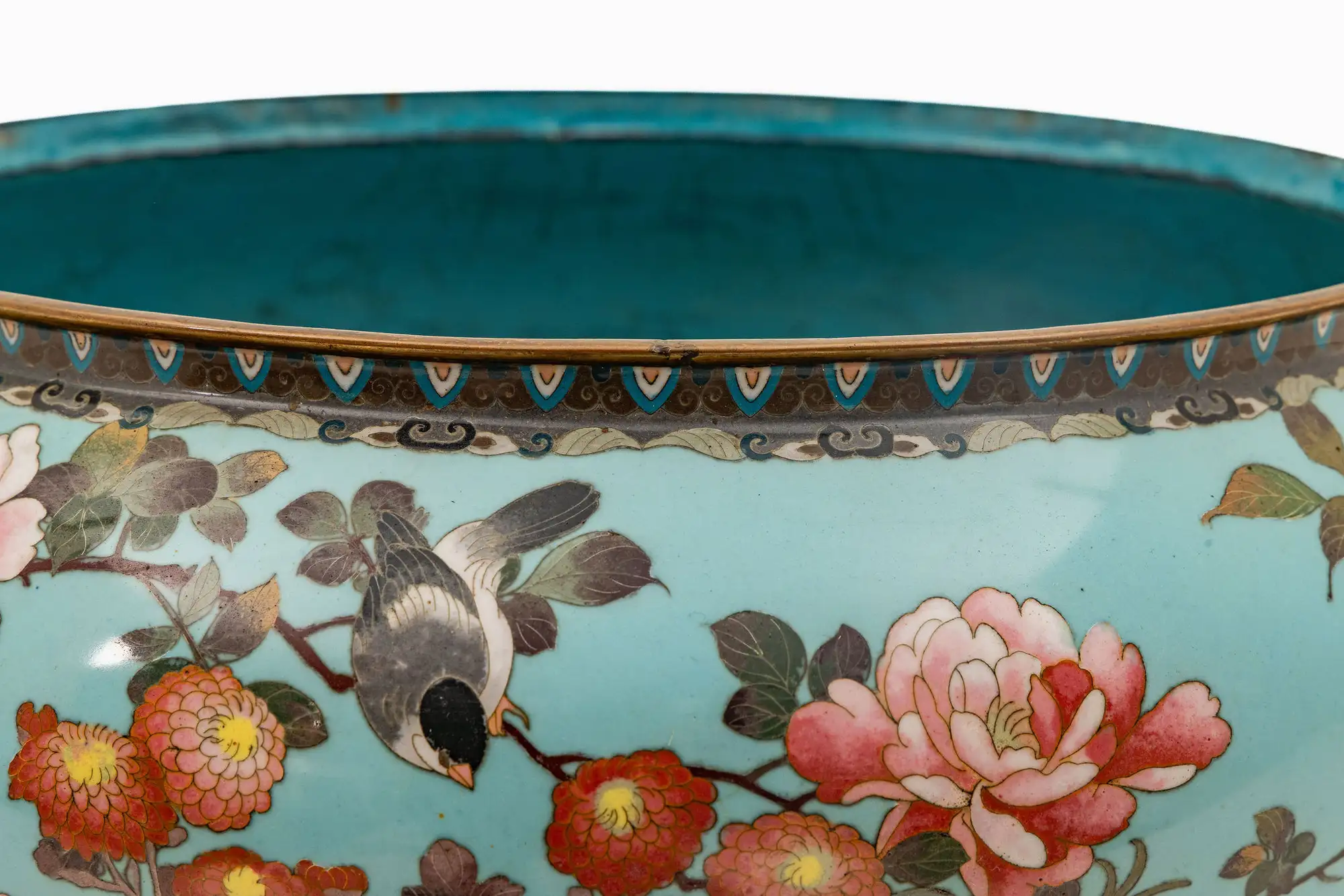
- The luminous turquoise-blue enamel ground provides a striking contrast to the richly colored floral decoration. Magnificent chrysanthemums and delicate blossoms in shades of pink, coral, crimson, and white emerge among gracefully twisting branches and finely articulated foliage. Small birds appear among the flowers, their delicately rendered plumage introducing movement and vitality to the composition.
- Particularly noteworthy is the exceptional precision of the silver-wire cloisonné workmanship, defining individual flower petals, leaves, branches, and birds with remarkable refinement. The subtle gradations of enamel color create an almost painterly effect, reflecting the extraordinary technical achievements of Japanese enamel artists during the Meiji period.
- The upper and lower borders incorporate finely executed geometric and scrolling ornament, while the interior is finished in a rich blue-green enamel.
- Attribution to Goto Seizaburo:
- Goto Seizaburo (1857–1923) was an accomplished Japanese cloisonné enamel artist active during the Meiji period, associated with the production of refined enamelwork in Yokohama.
- The present planter is attributed to Goto Seizaburo on the basis of its exceptional workmanship, distinctive turquoise ground, sophisticated naturalistic decoration, and extraordinarily delicate silver-wire execution. The attribution is further informed by extensive firsthand examination of Japanese cloisonné enamels, including signed and unsigned examples, together with comparative research into historical auction catalogues and museum collections.
- The Meiji period represented the golden age of Japanese cloisonné enamel production, during which leading artists elevated the medium to extraordinary levels of technical precision and artistic sophistication.
- The present planter is particularly remarkable for its unusually large 14-inch diameter, brilliant turquoise enamel ground, intricate continuous floral composition, and exceptional quality of execution.
- An outstanding example of Japanese Meiji-period decorative arts, combining impressive scale, remarkable craftsmanship, and exceptional artistic refinement.
- 6" high
- 12" opening diameter
- 14" overall diameter
- Very good condition. No damages noted.
Period
19th Century
Style
Meiji (Of the Period)
Origin
Japan
Height
6 in (15.24 cm)
Date of Manufacture
19th Century
Materials & Techniques
Copper,Enamel
Condition
Good Wear consistent with age and use.
Price Range
◆
Price Range
◆ Under $5,000
◆ $5,000–$10,000
◆ $10,000–$25,000
◆ $25,000–$50,000
◆ $50,000–$100,000
◆ Over $100,000