

Important Japanese Cloisonne Enamel Garniture Attributed to Goto Seizaburo
- Important Japanese Cloisonné Enamel Three-Piece Garniture Attributed to Goto Seizaburo, Meiji Period
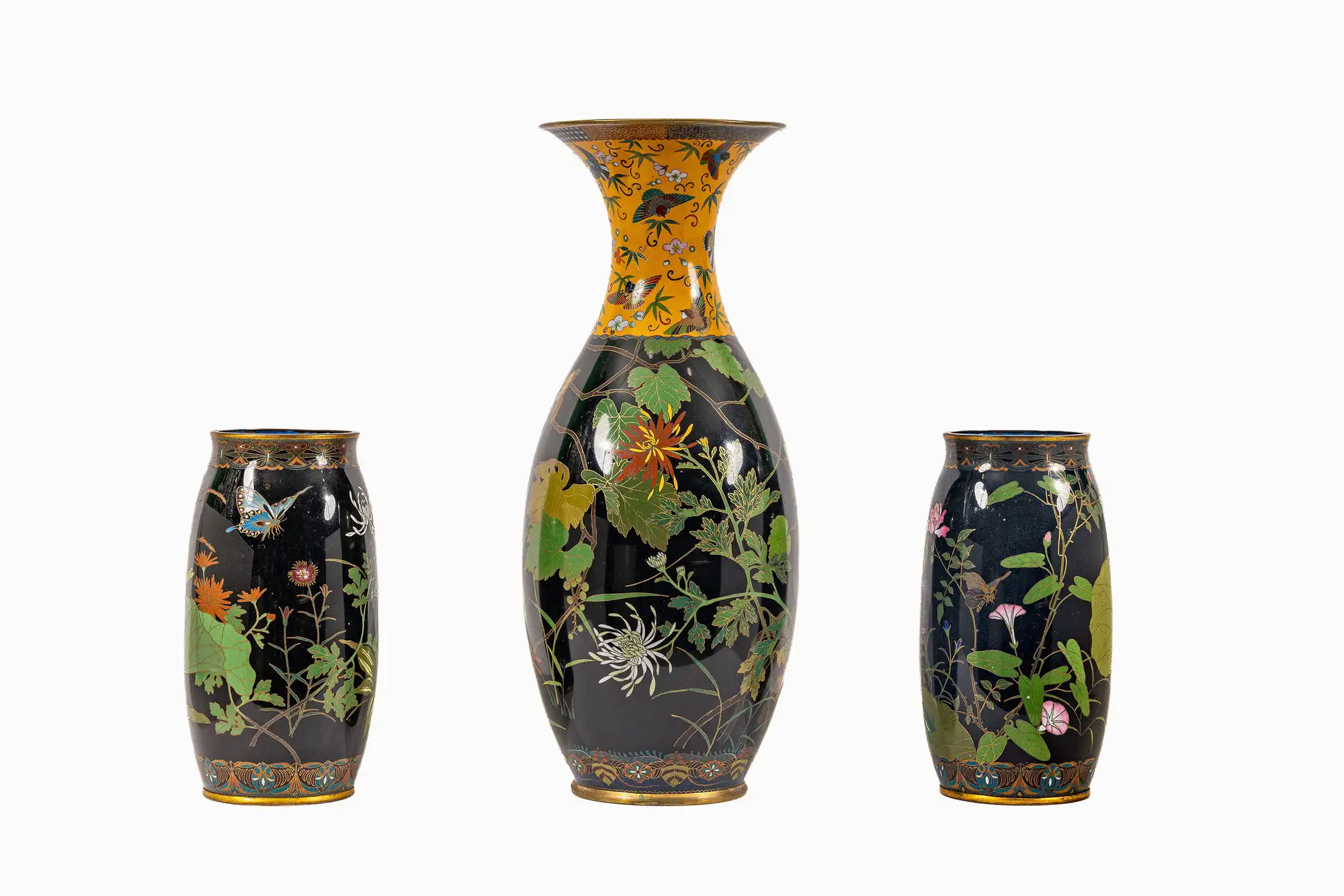
- An exceptional and rare three-piece Japanese cloisonné enamel garniture attributed to Goto Seizaburo (1857–1923), Meiji period, circa 1880–1890, distinguished by its extraordinary craftsmanship, richly colored enamels, and remarkably sophisticated naturalistic decoration.
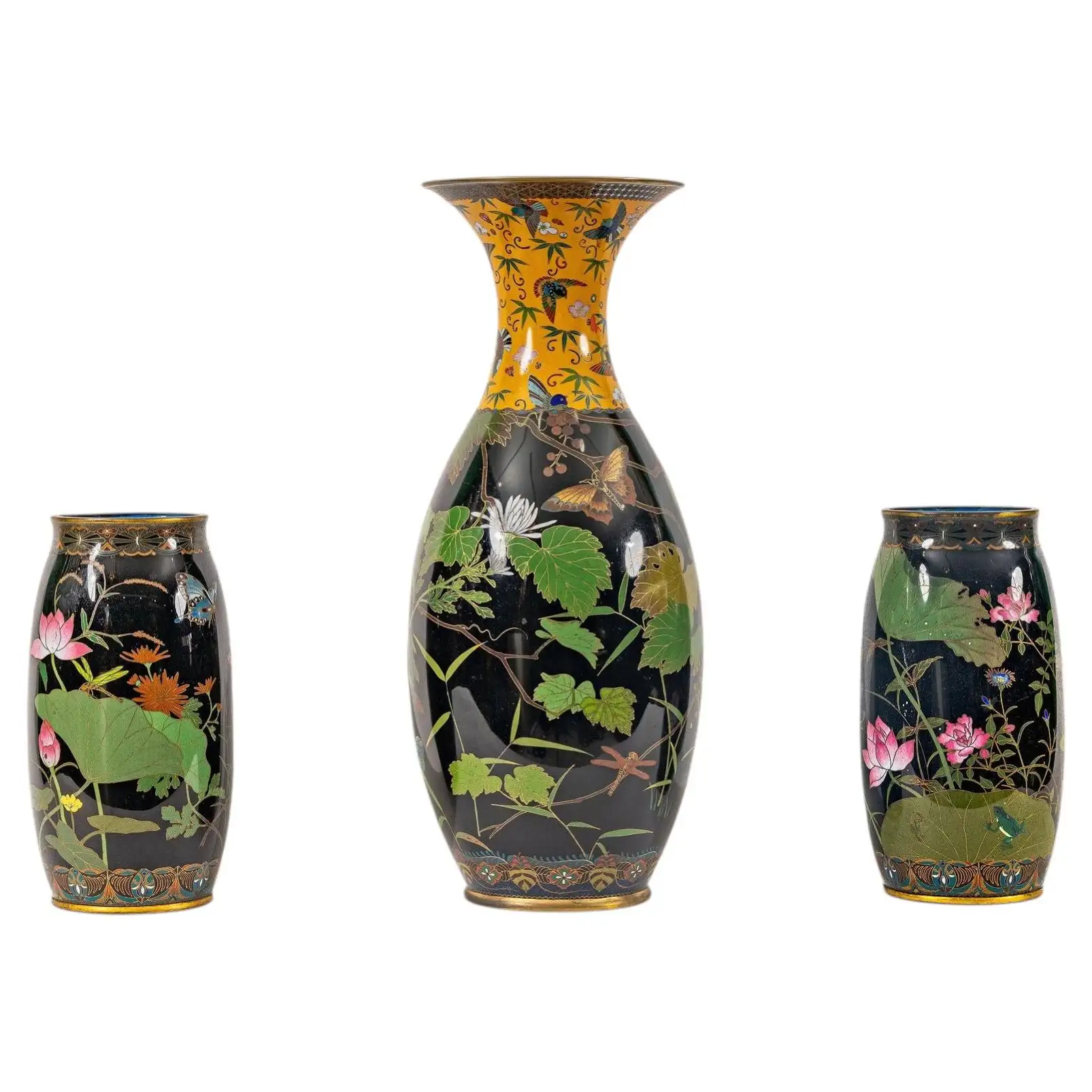
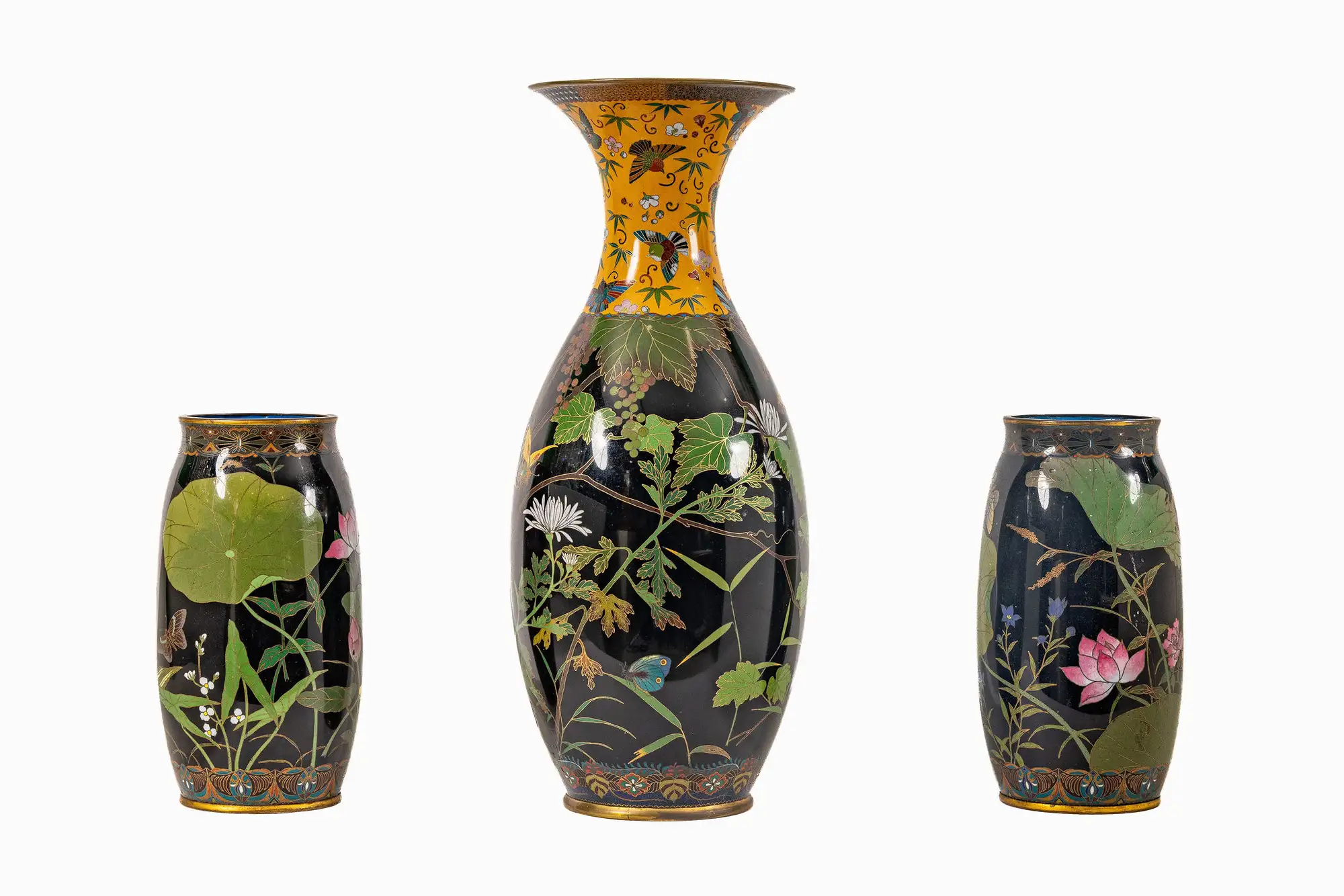
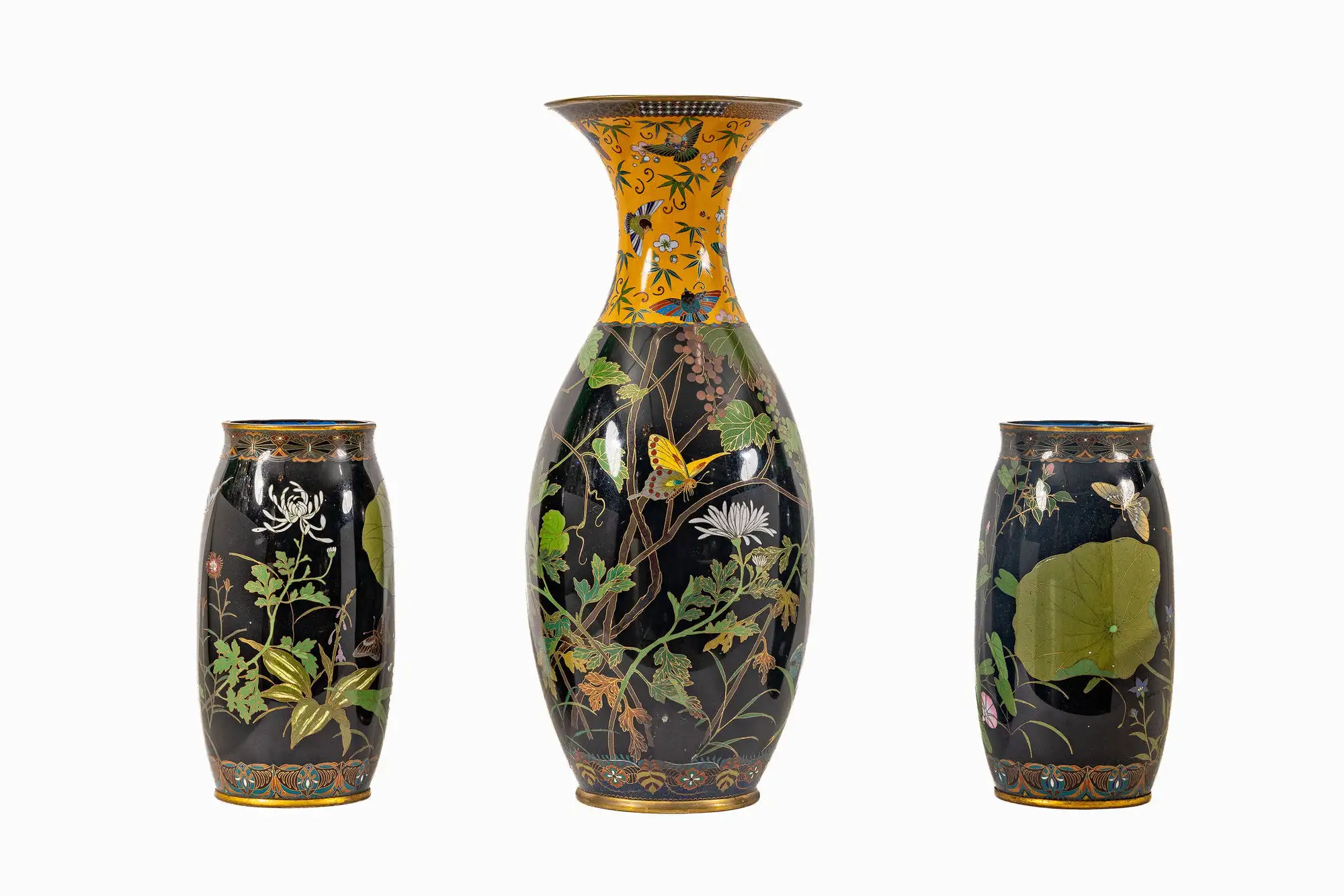
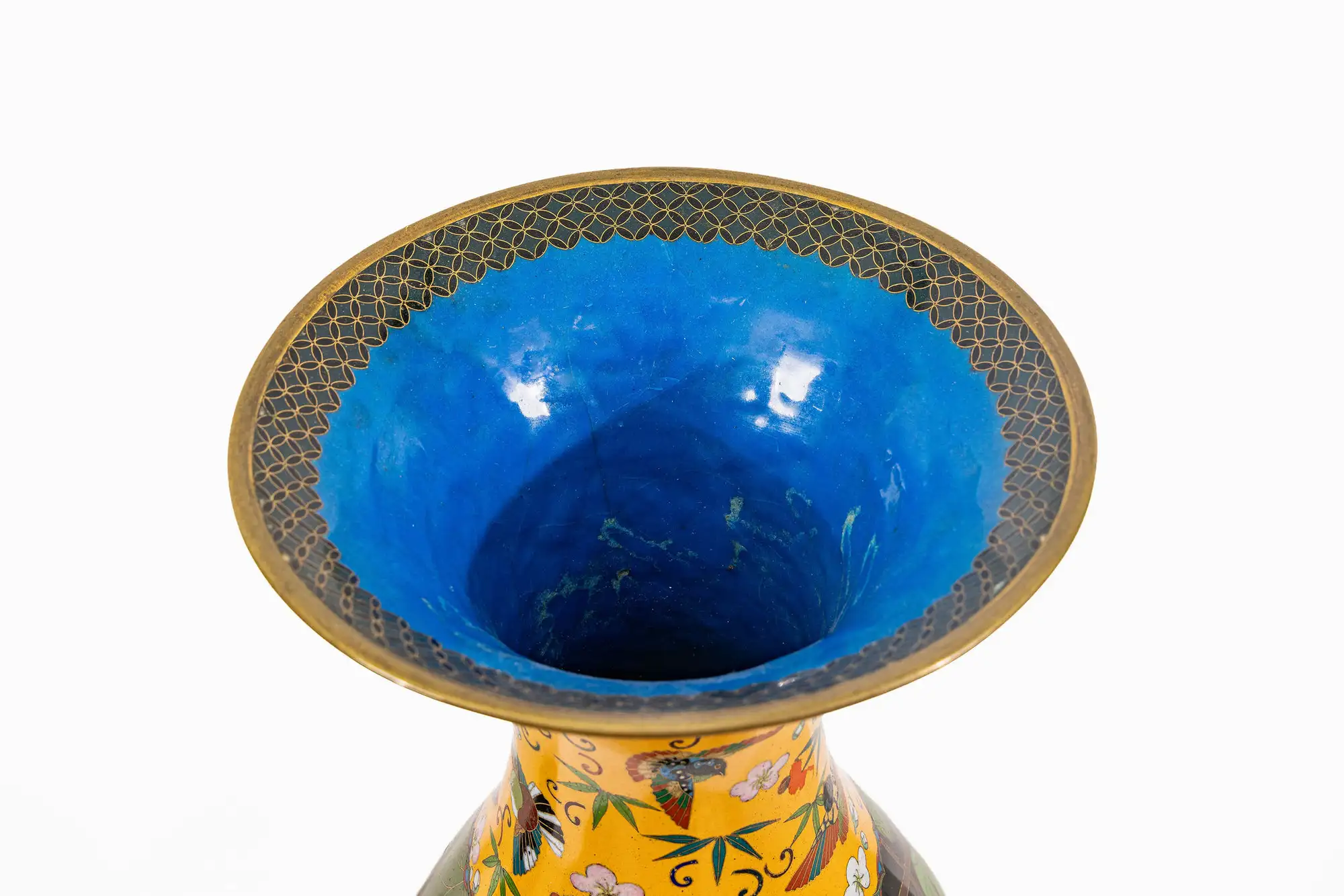
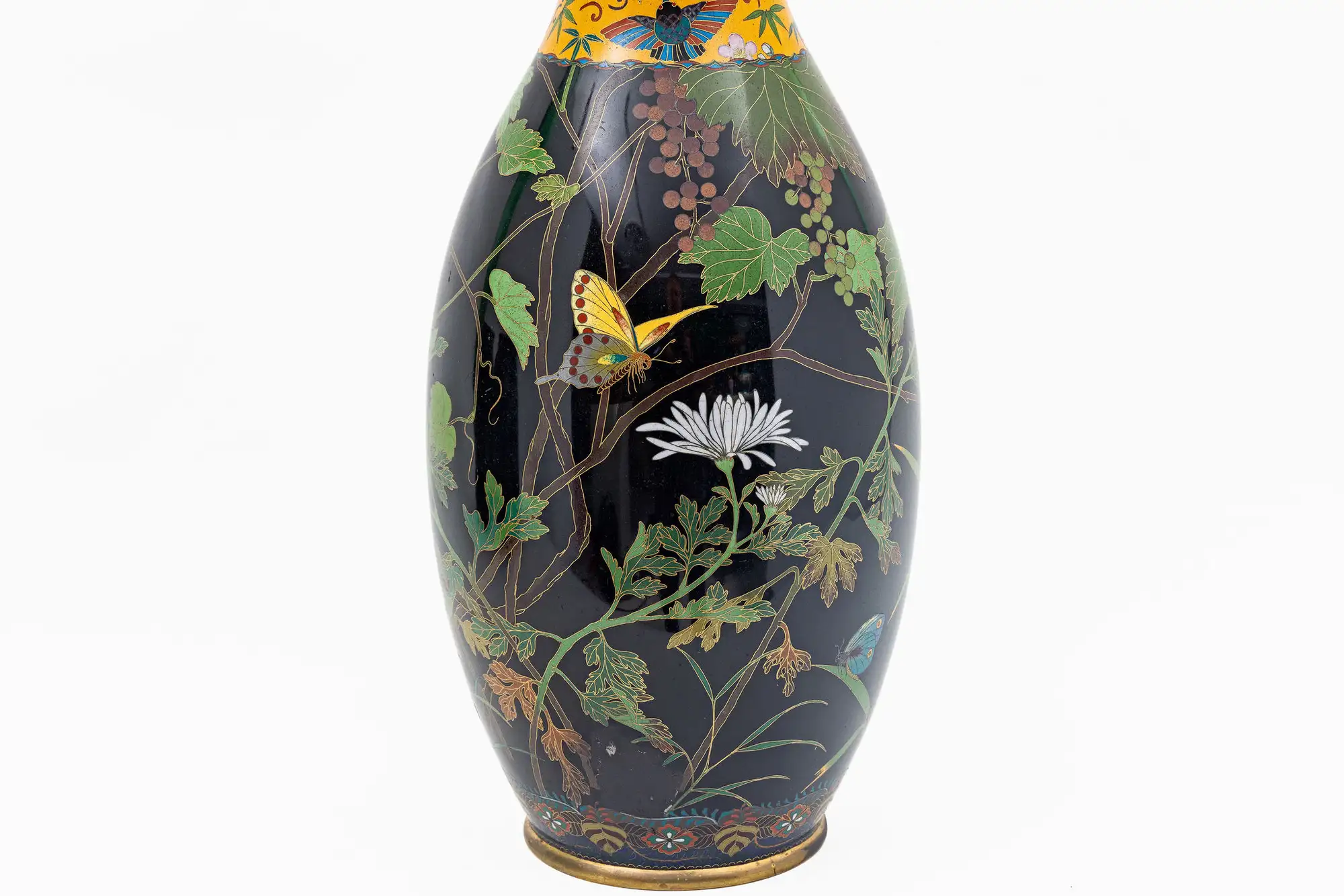
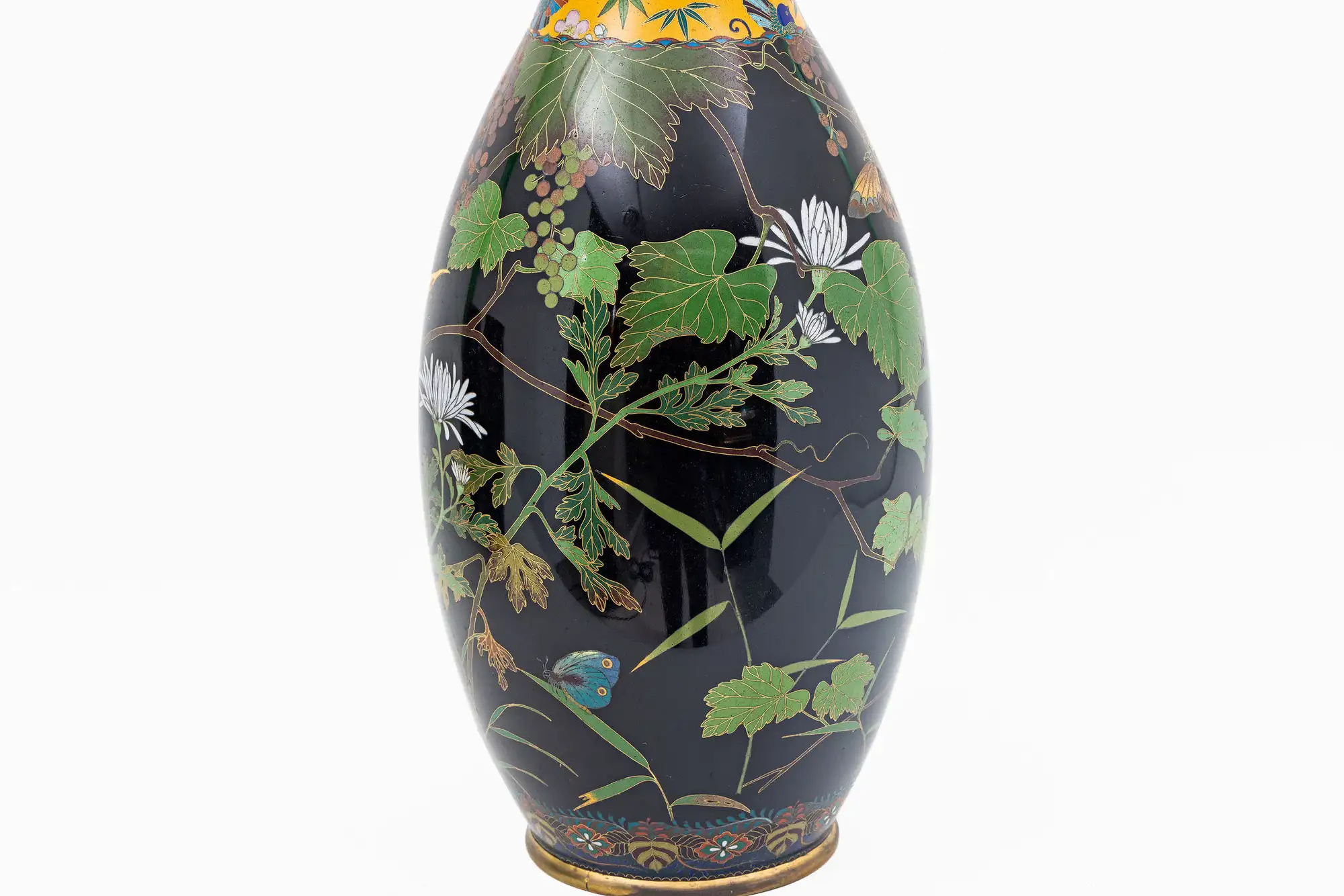
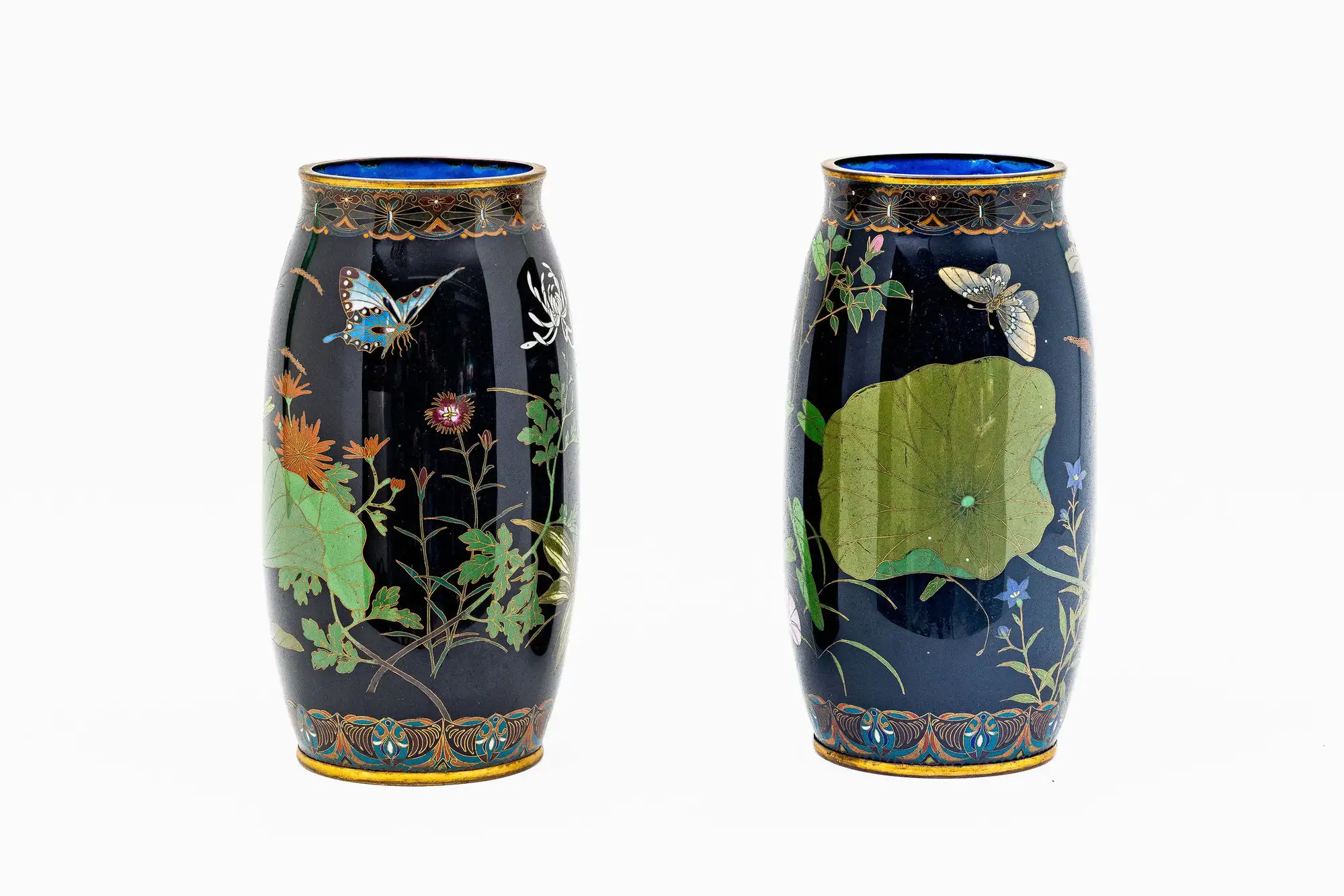
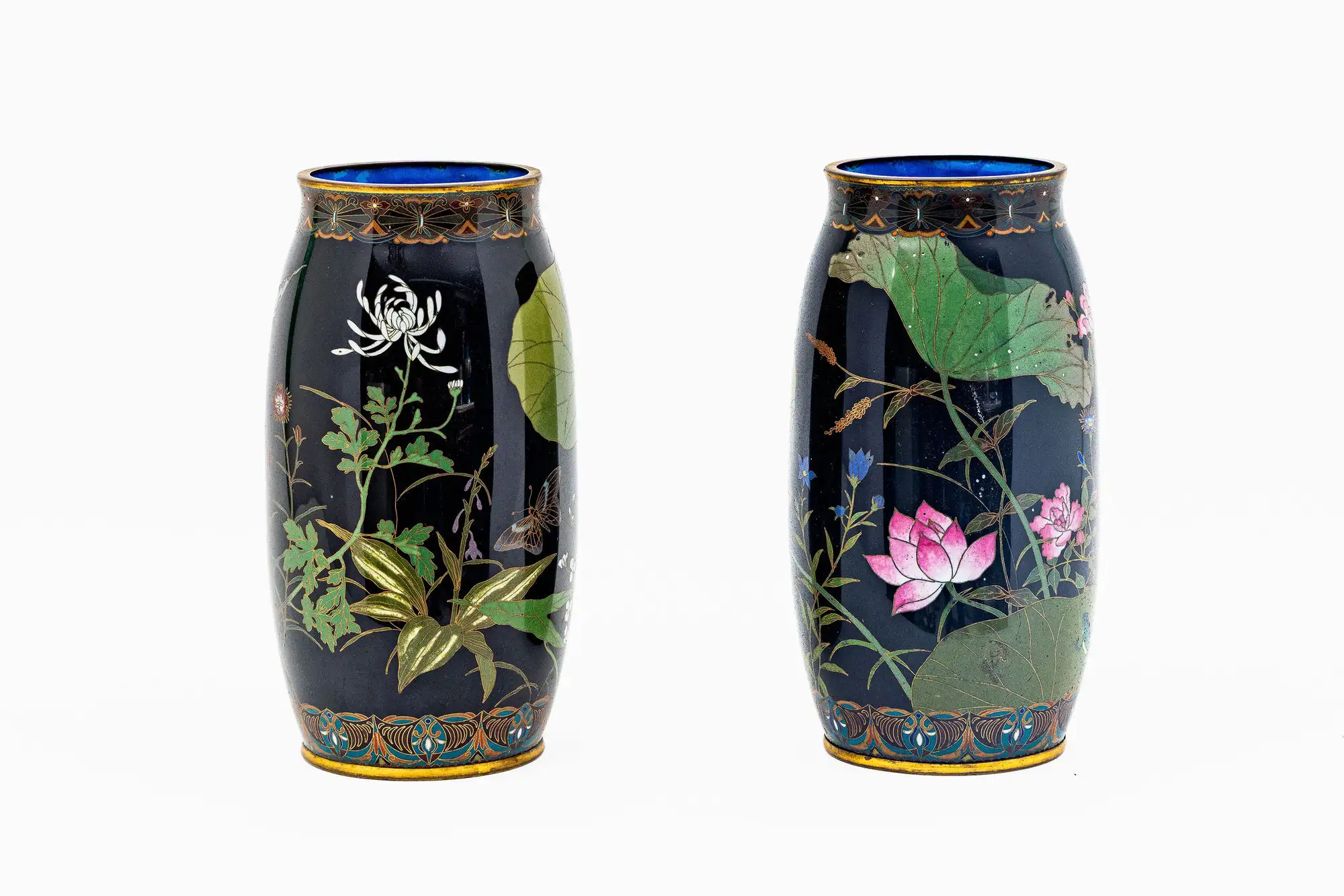
- This magnificent ensemble comprises a monumental baluster-form vase with an elongated trumpet neck and dramatically flared mouth, accompanied by a matching pair of cylindrical vases, all exquisitely decorated with elaborate botanical and aquatic scenes against deep, lustrous black enamel grounds.
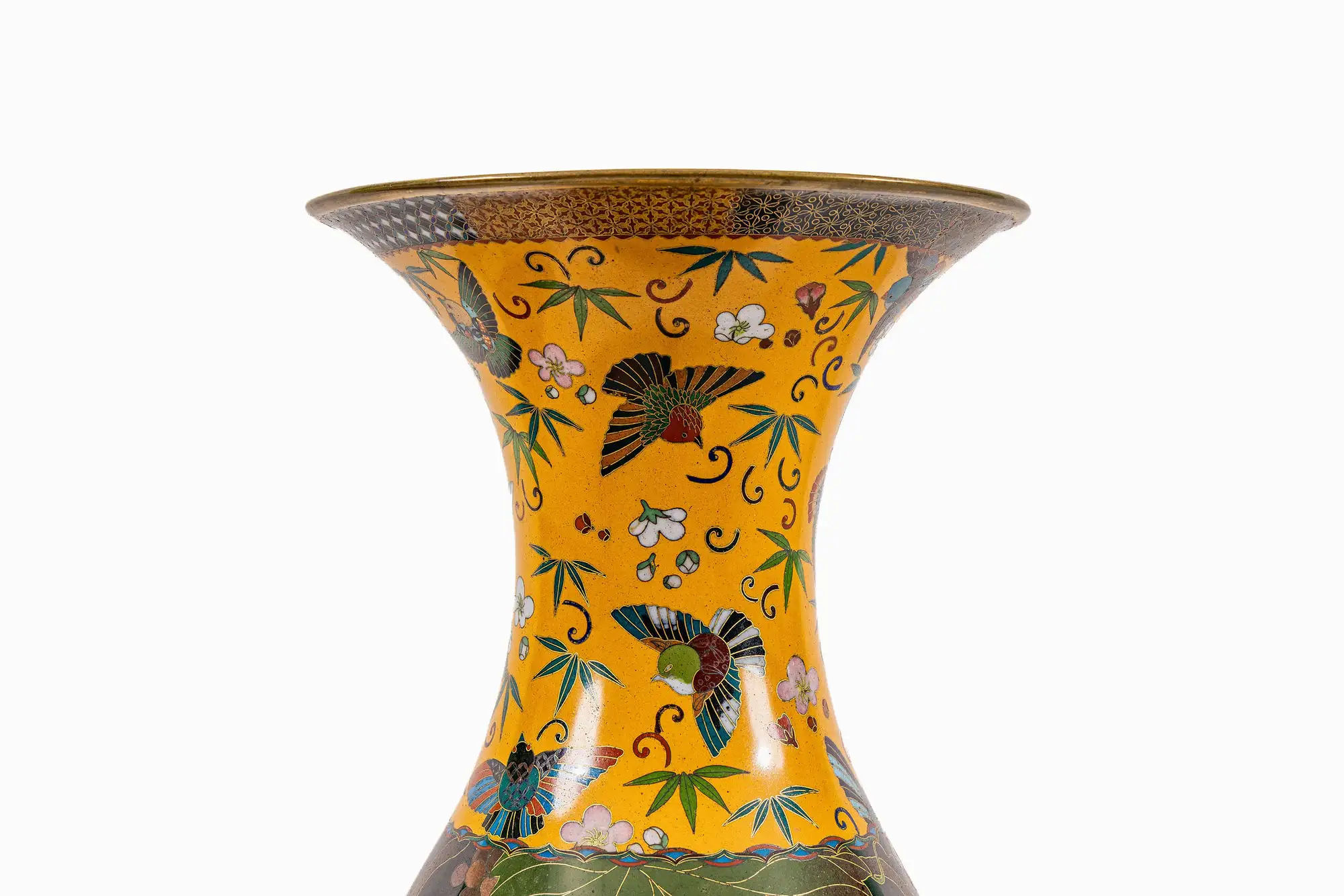
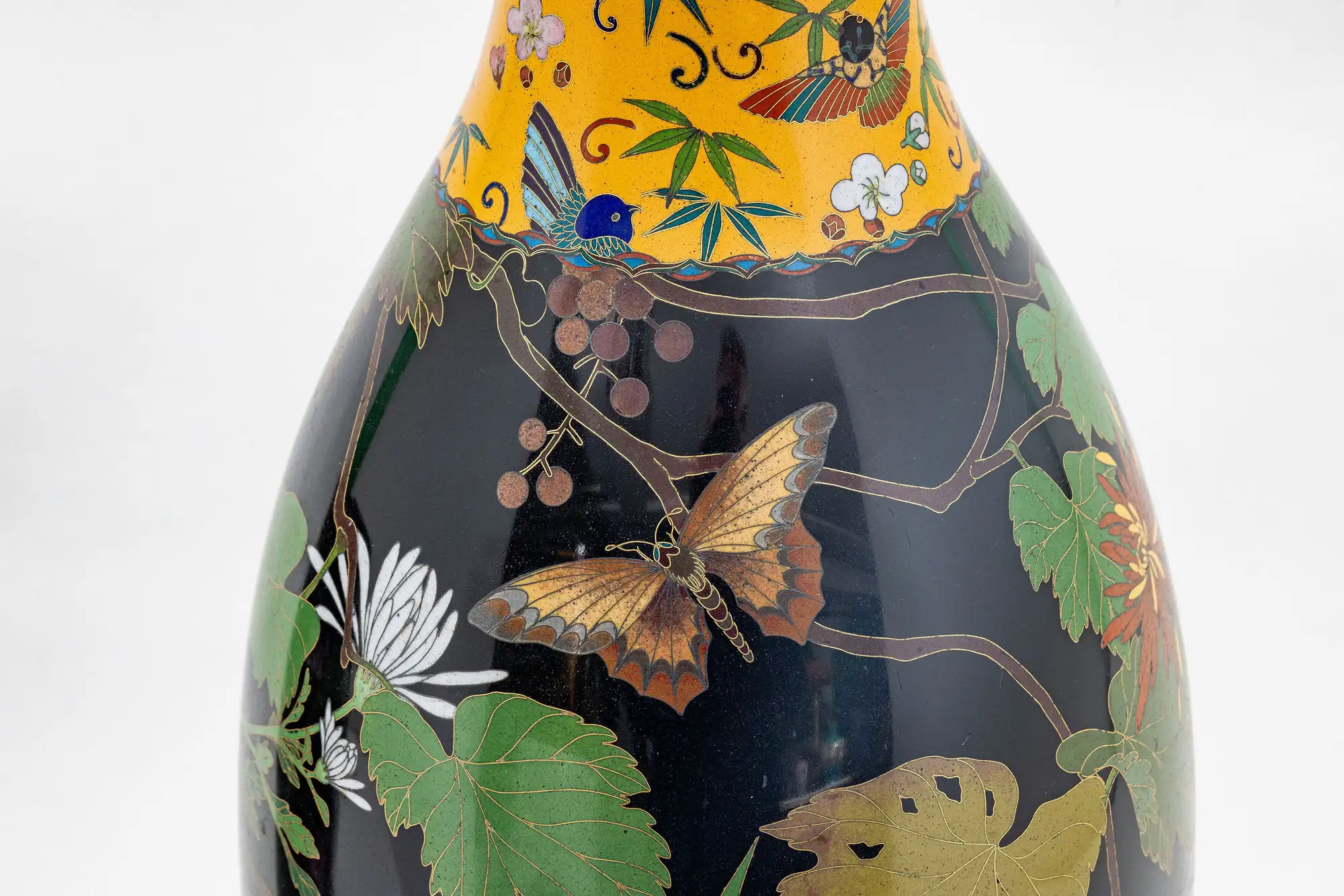
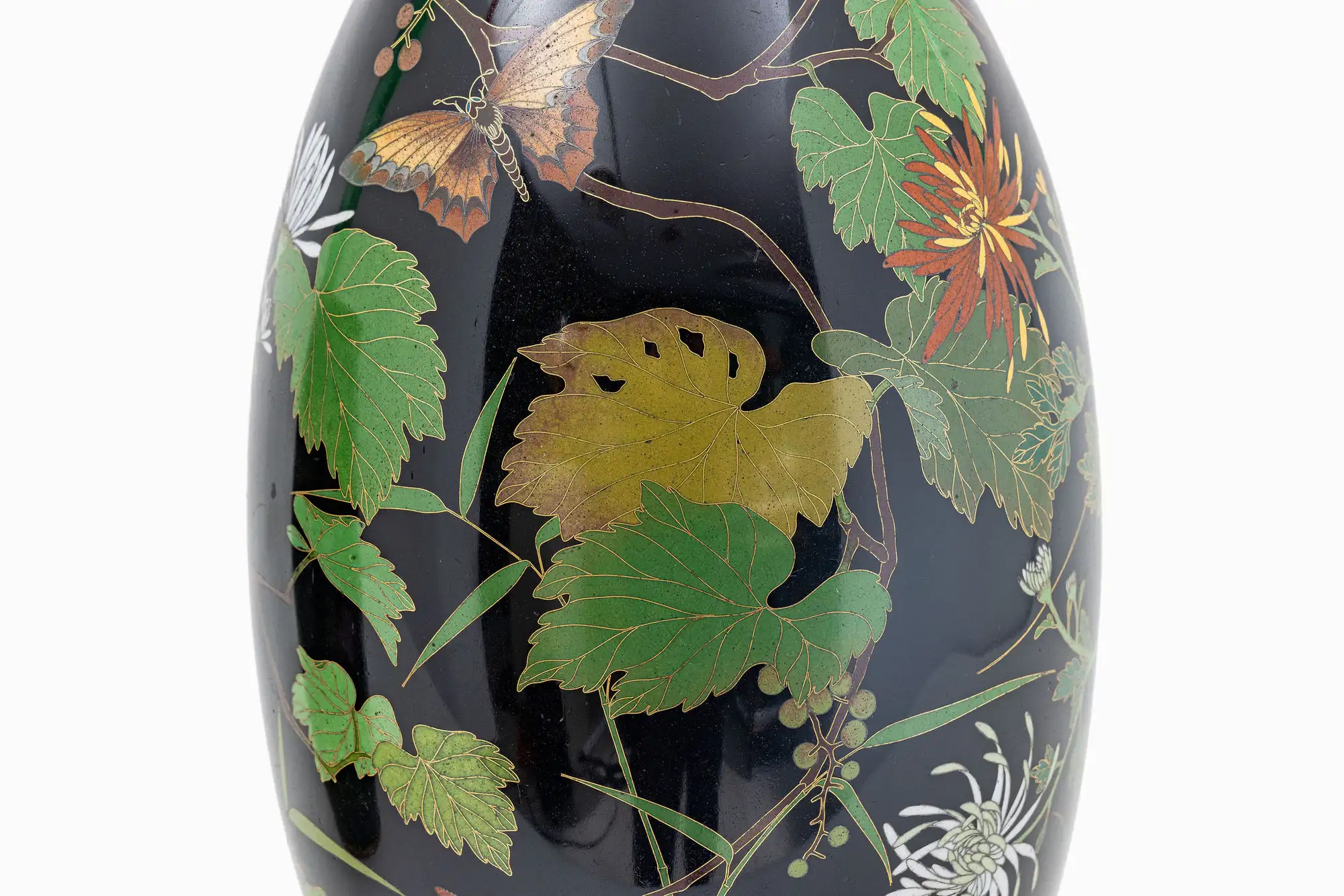
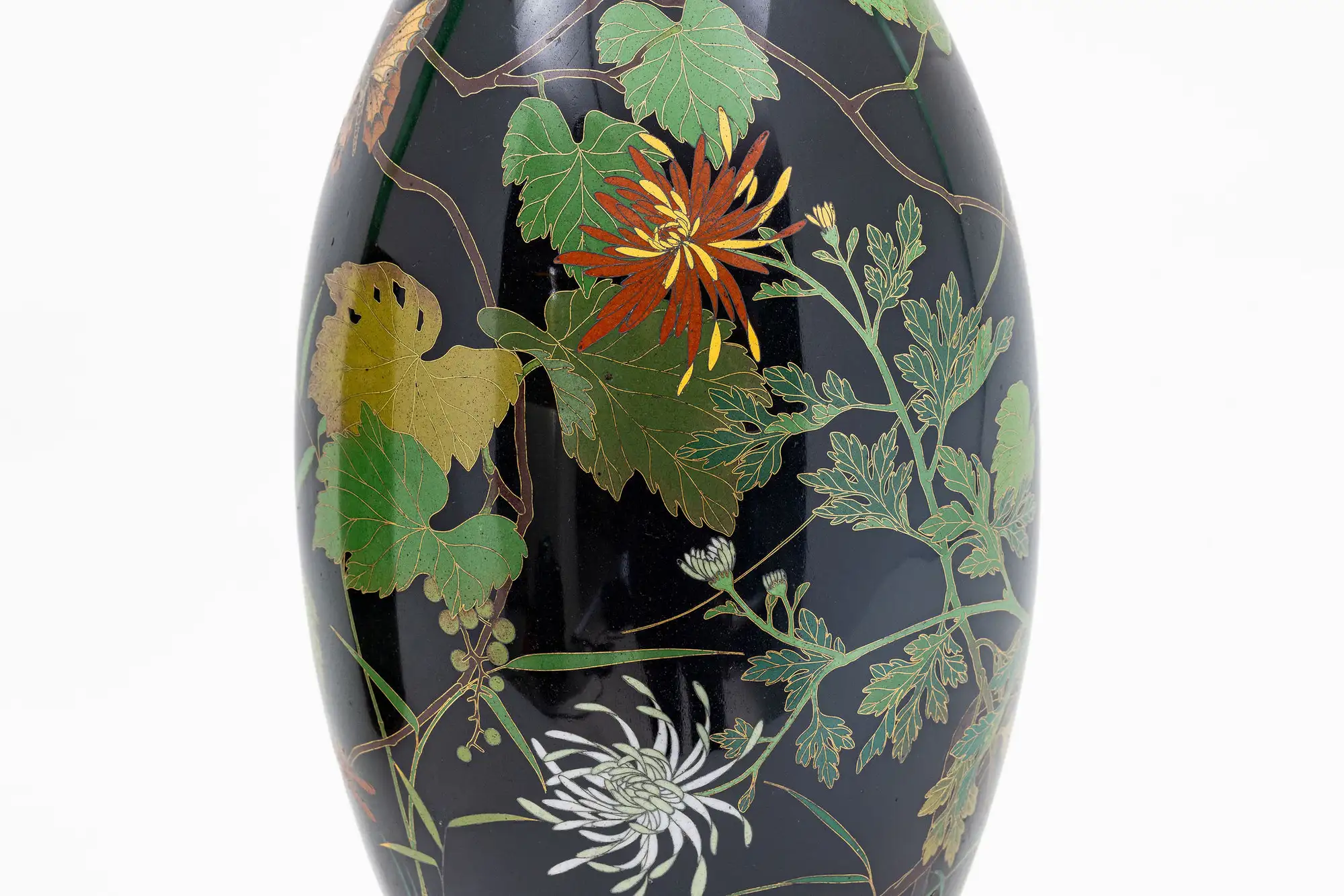
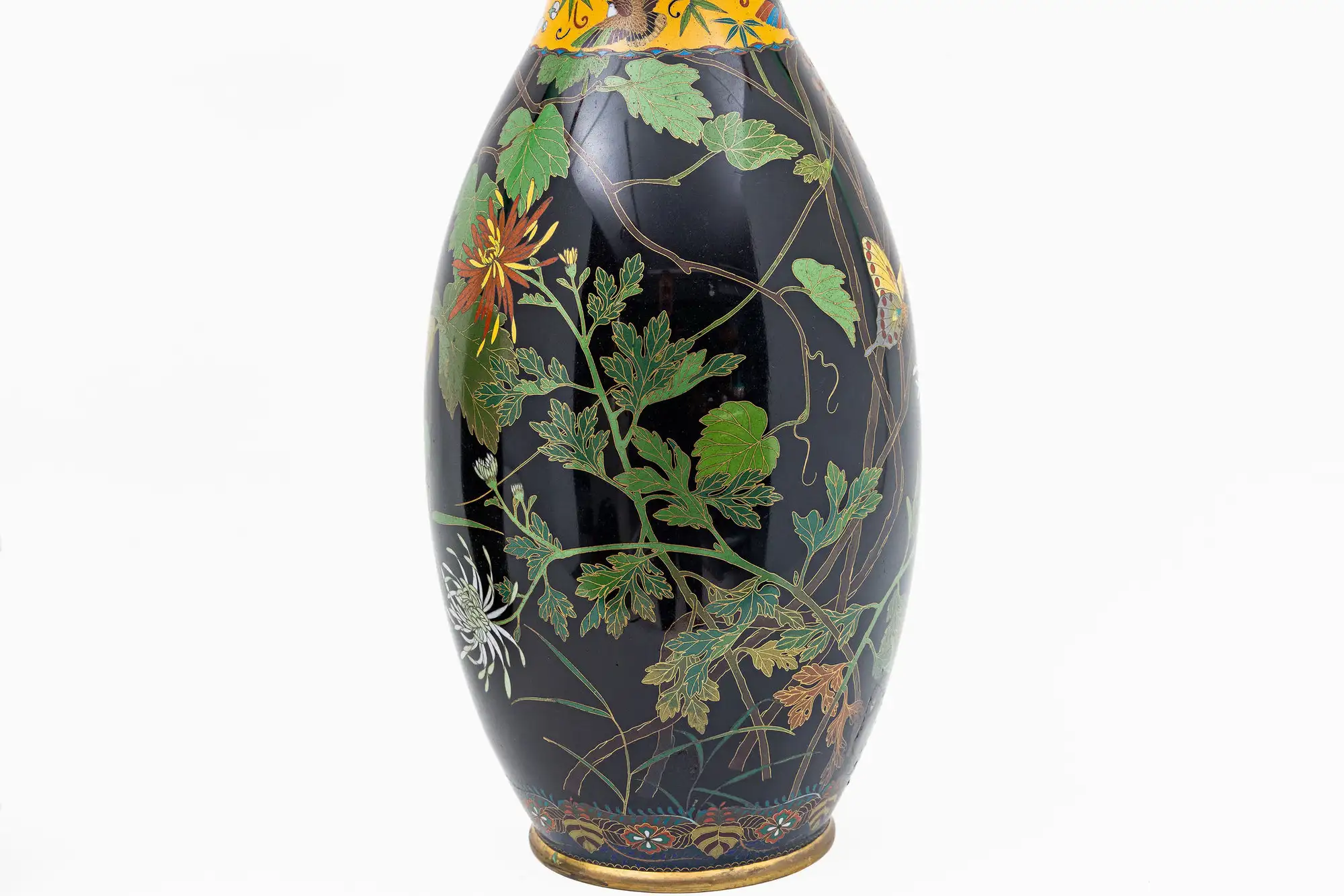
- The magnificent central vase features an intricate composition of butterflies, dragonflies, flowering plants, and intertwining vines, with beautifully articulated leaves in varying shades of emerald, olive, and pale green. Delicate insects hover among the foliage, their finely detailed wings rendered in subtle shades of amber, blue, and gold. Particularly striking is the elongated trumpet neck, decorated against a brilliant golden-yellow enamel ground with colorful birds, flowering branches, and delicate bamboo foliage. The dramatic contrast between the vibrant yellow neck and the glossy black body creates an exceptionally elegant and visually commanding composition.
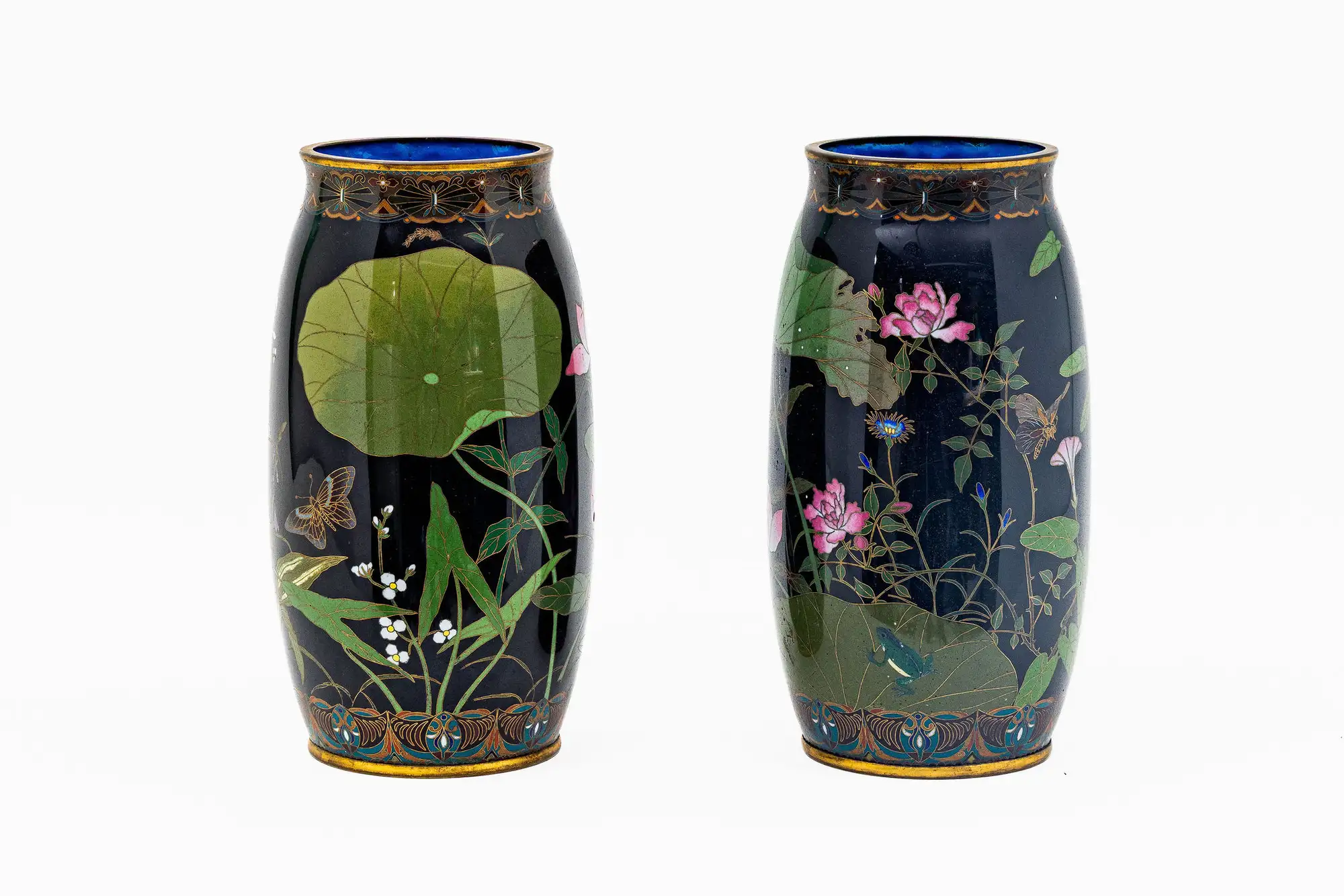
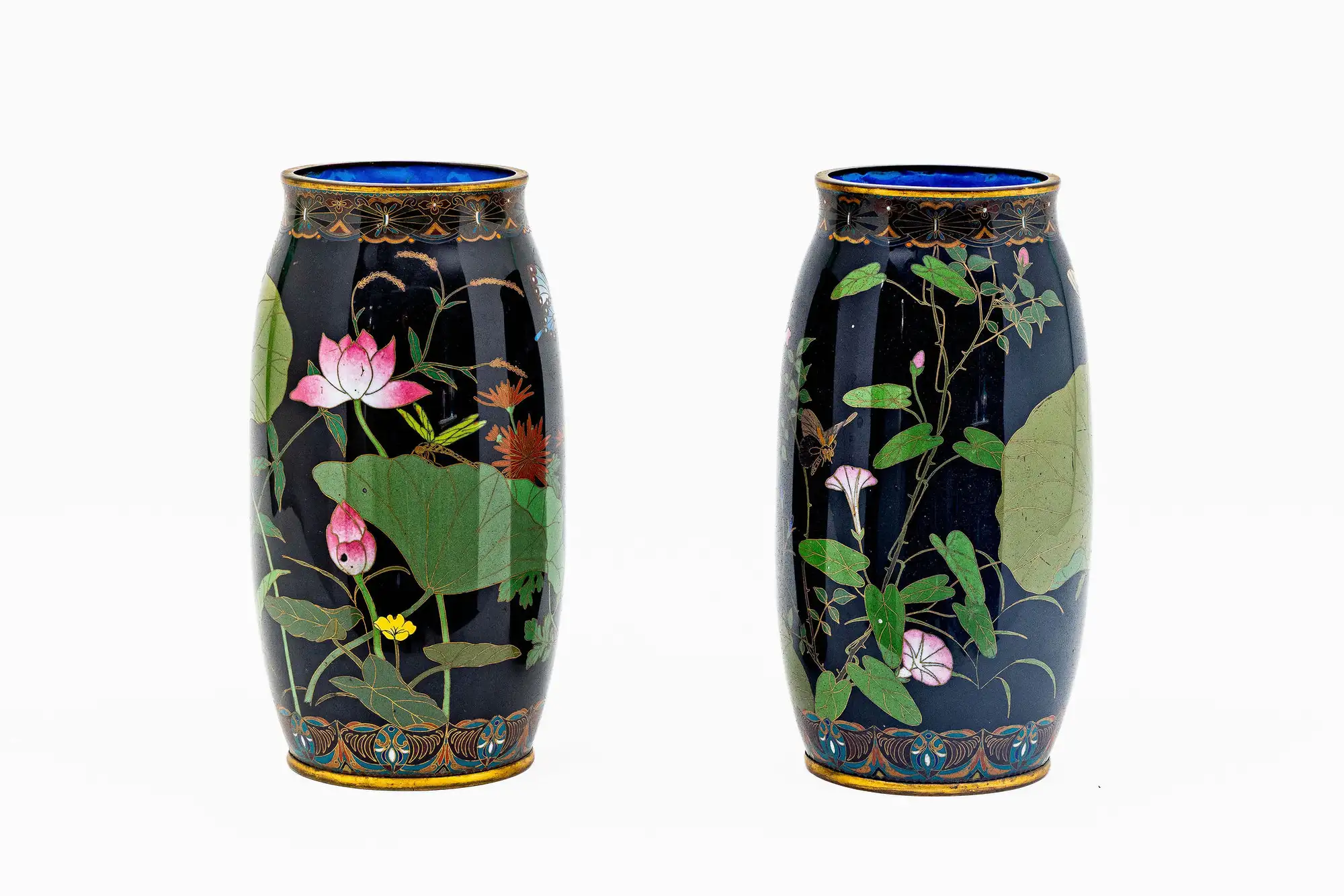
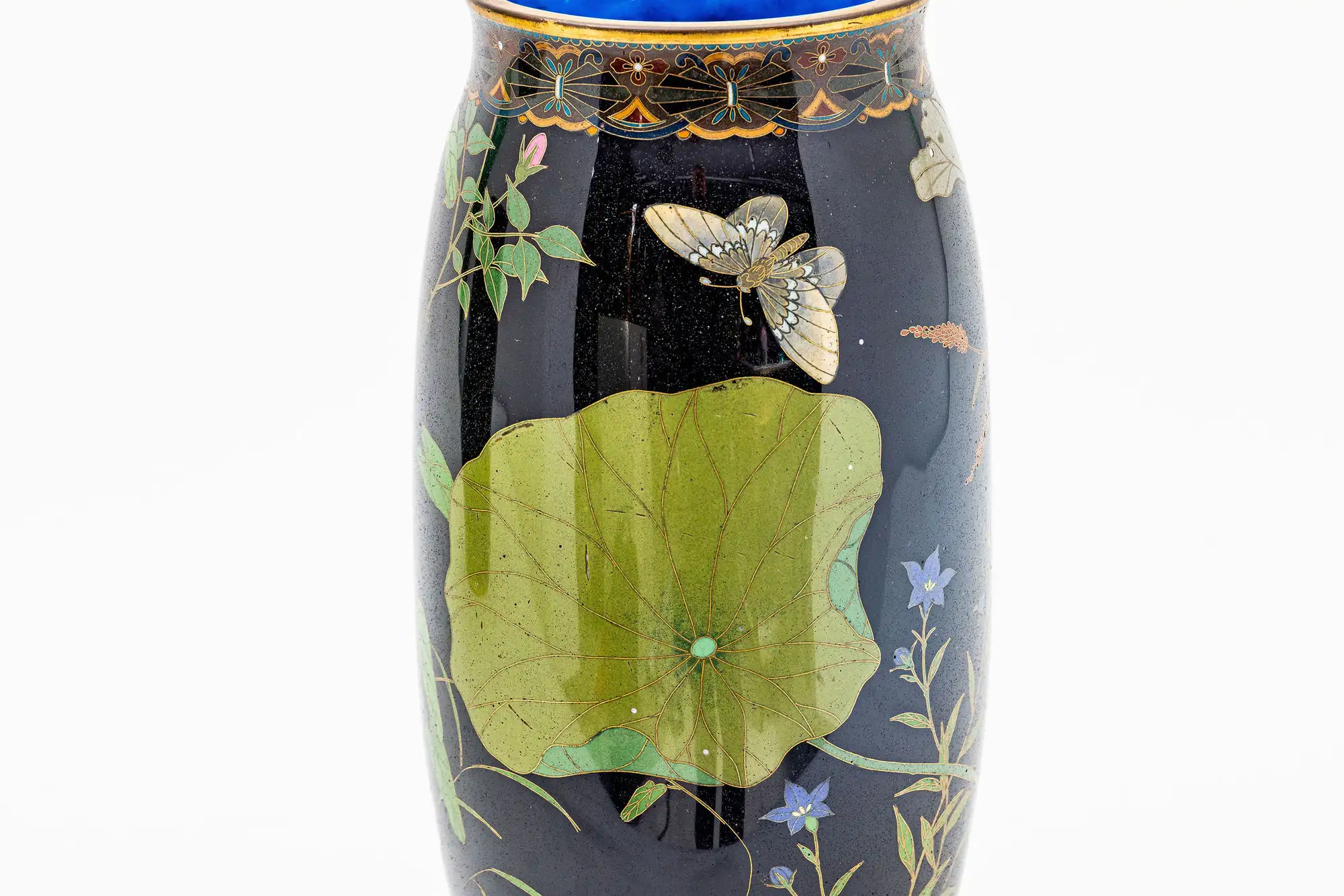
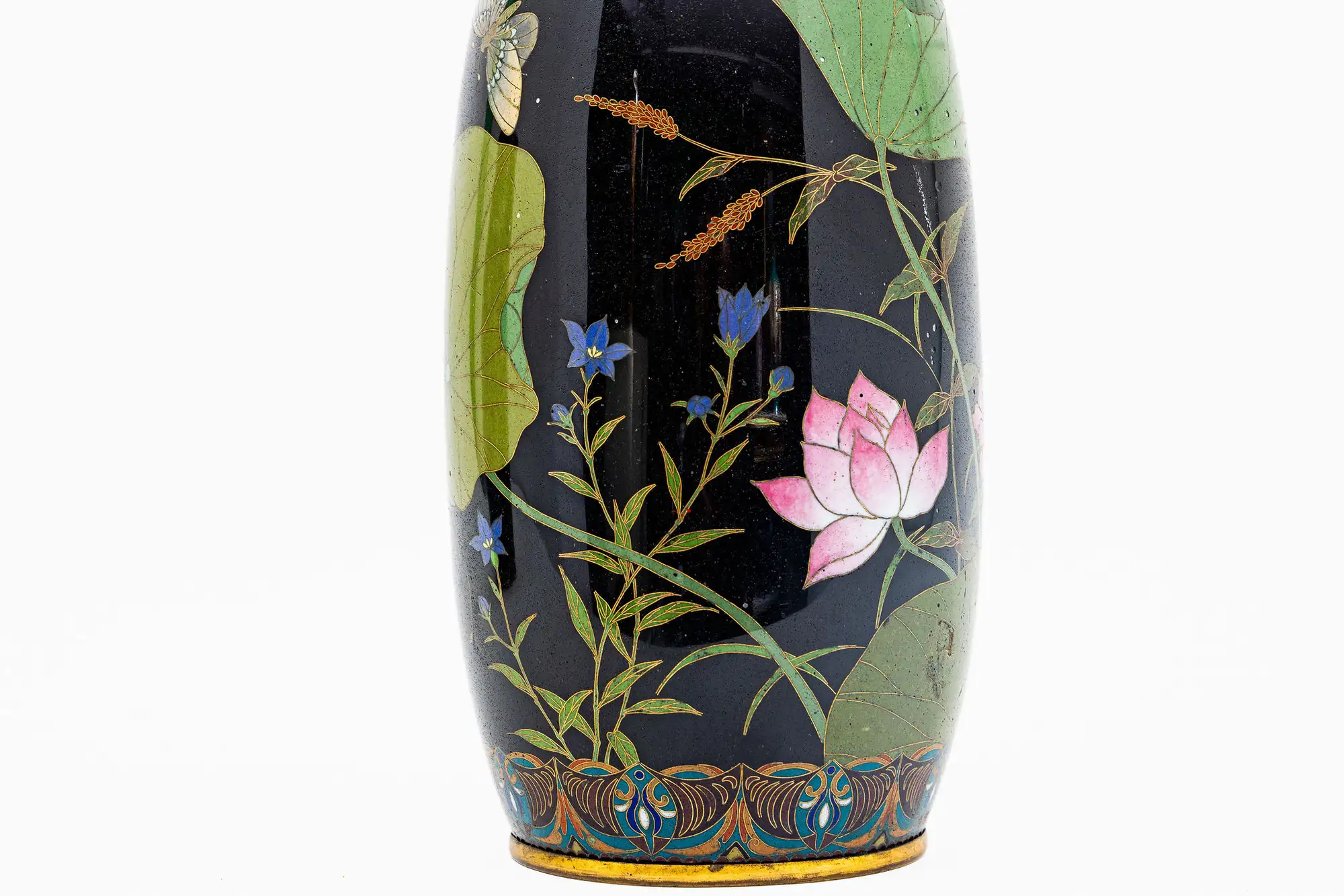
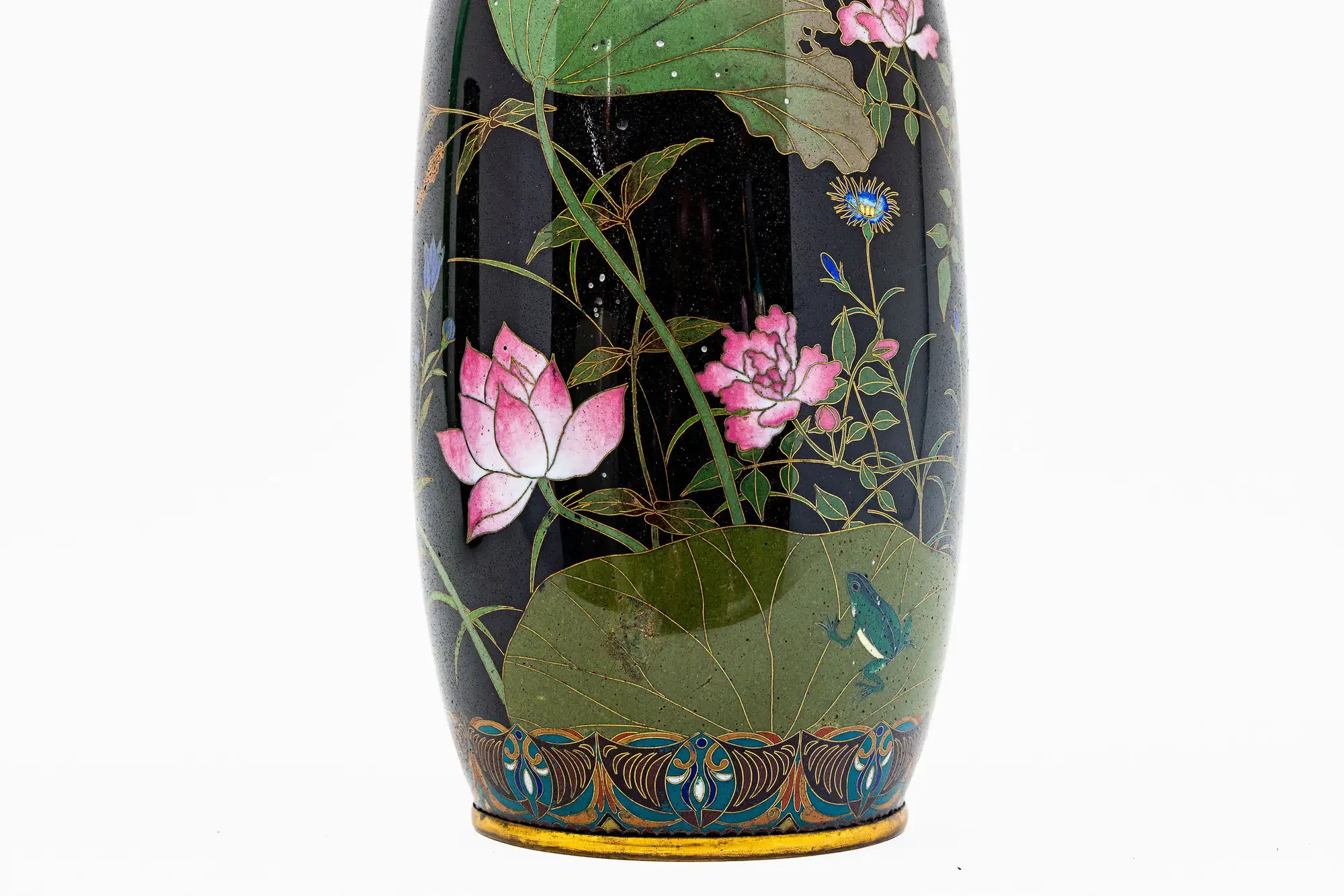
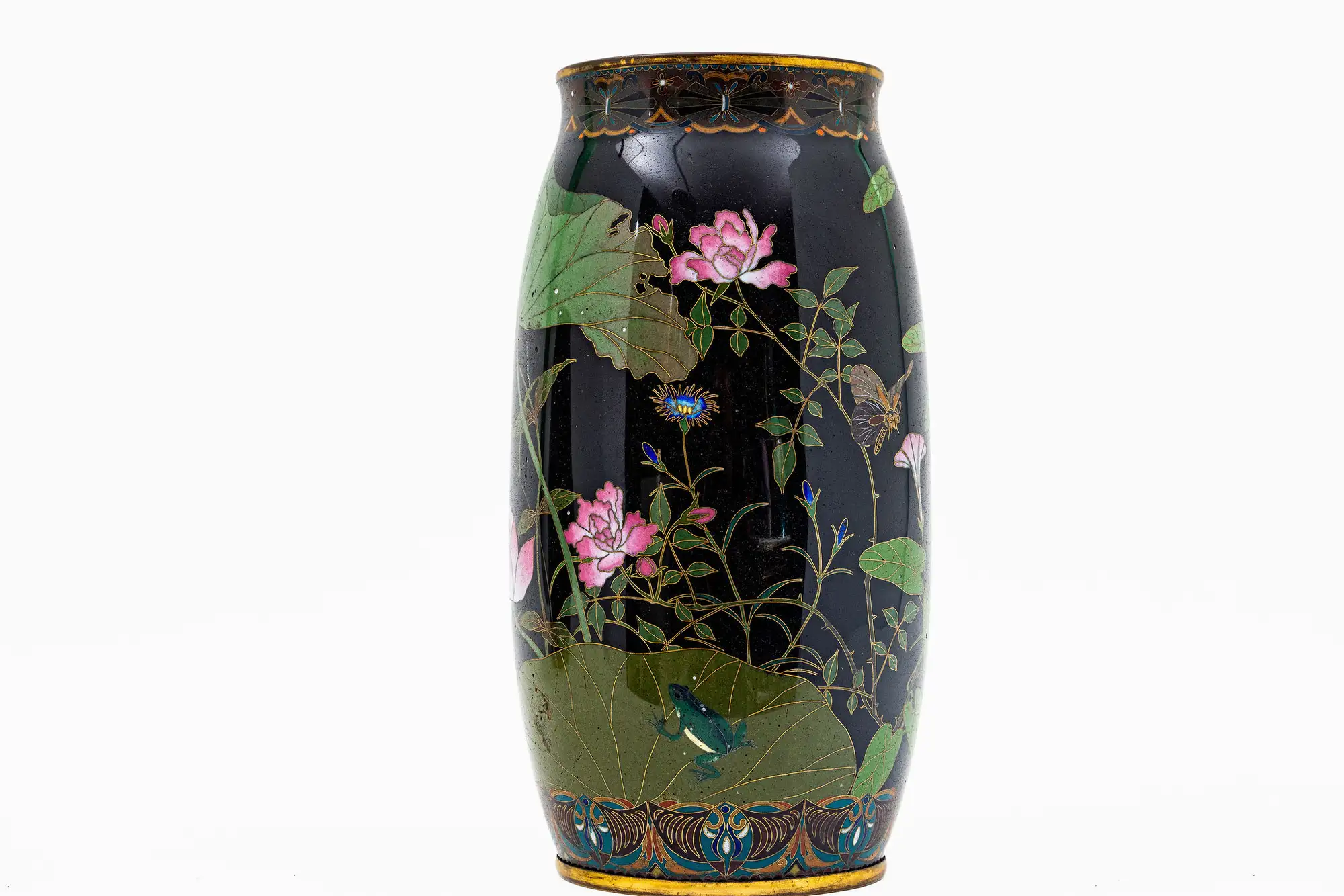
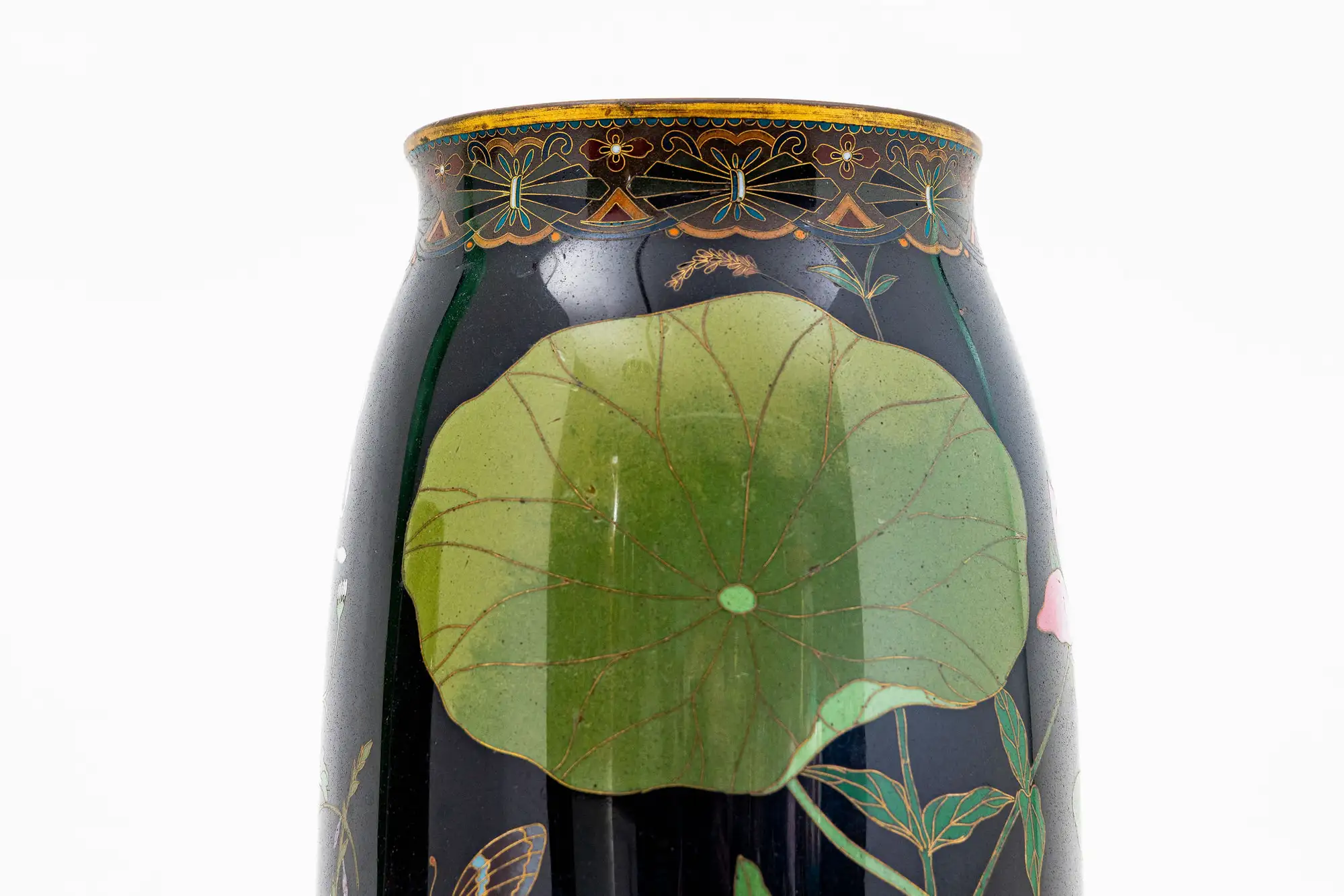
- The accompanying pair of vases is equally remarkable, each presenting a beautifully conceived Japanese pond landscape populated with flowering pink lotus blossoms, broad overlapping green lily pads, delicate aquatic plants, butterflies, and frogs. Brilliant pink and coral blossoms are complemented by orange and yellow flowers, while butterflies with intricately patterned blue, white, and multicolored wings appear suspended above the vegetation. The delicate gradations of green enamel, ranging from soft sage to deep emerald, lend remarkable depth and naturalism to the compositions.
- The decorative arrangements differ subtly between the two companion vases, creating a harmonious yet individually distinctive pair. The botanical subjects are rendered with exceptional precision, their finely outlined leaves, delicate petals, and intricate insect details demonstrating the extraordinary technical skill of the enameler.
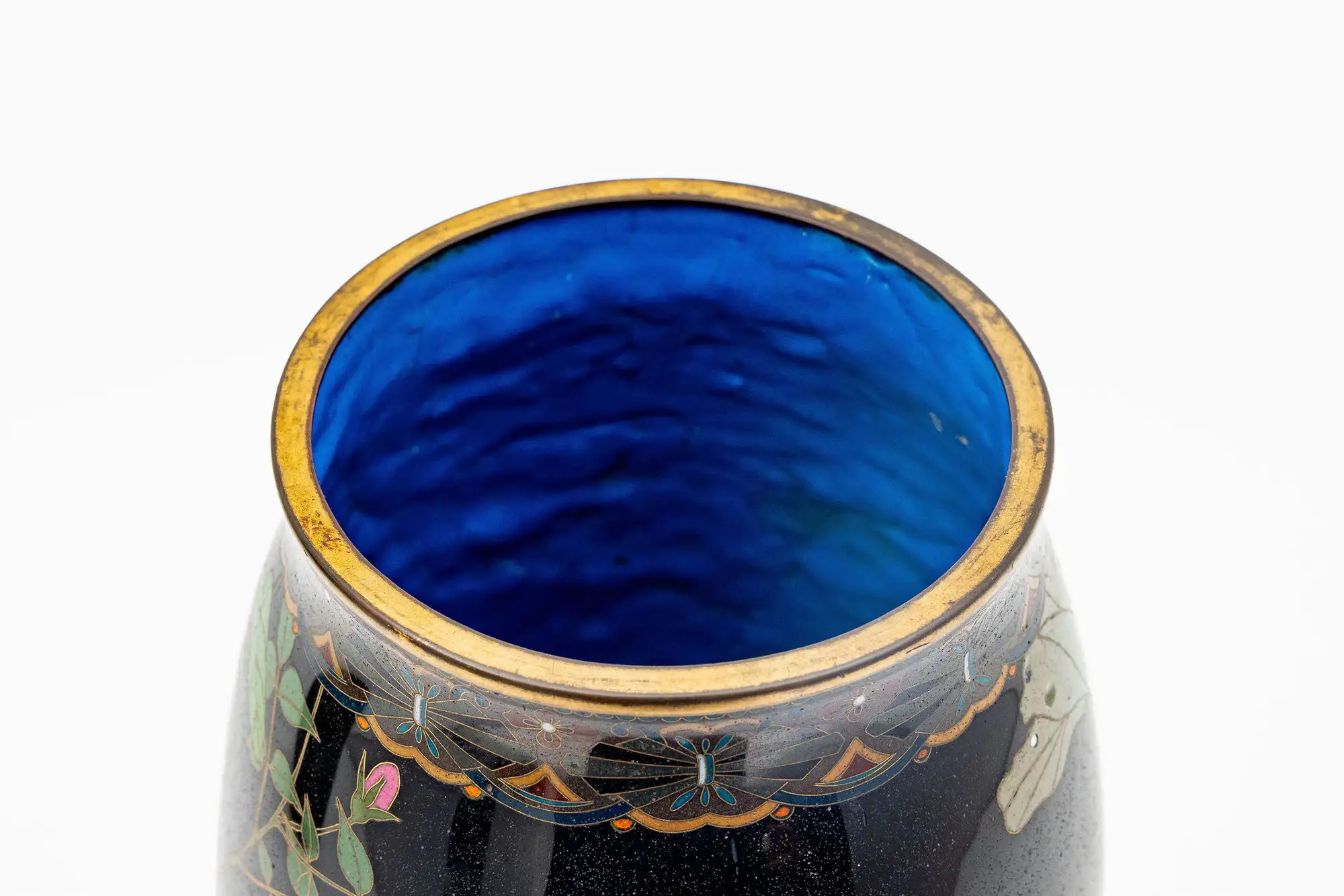
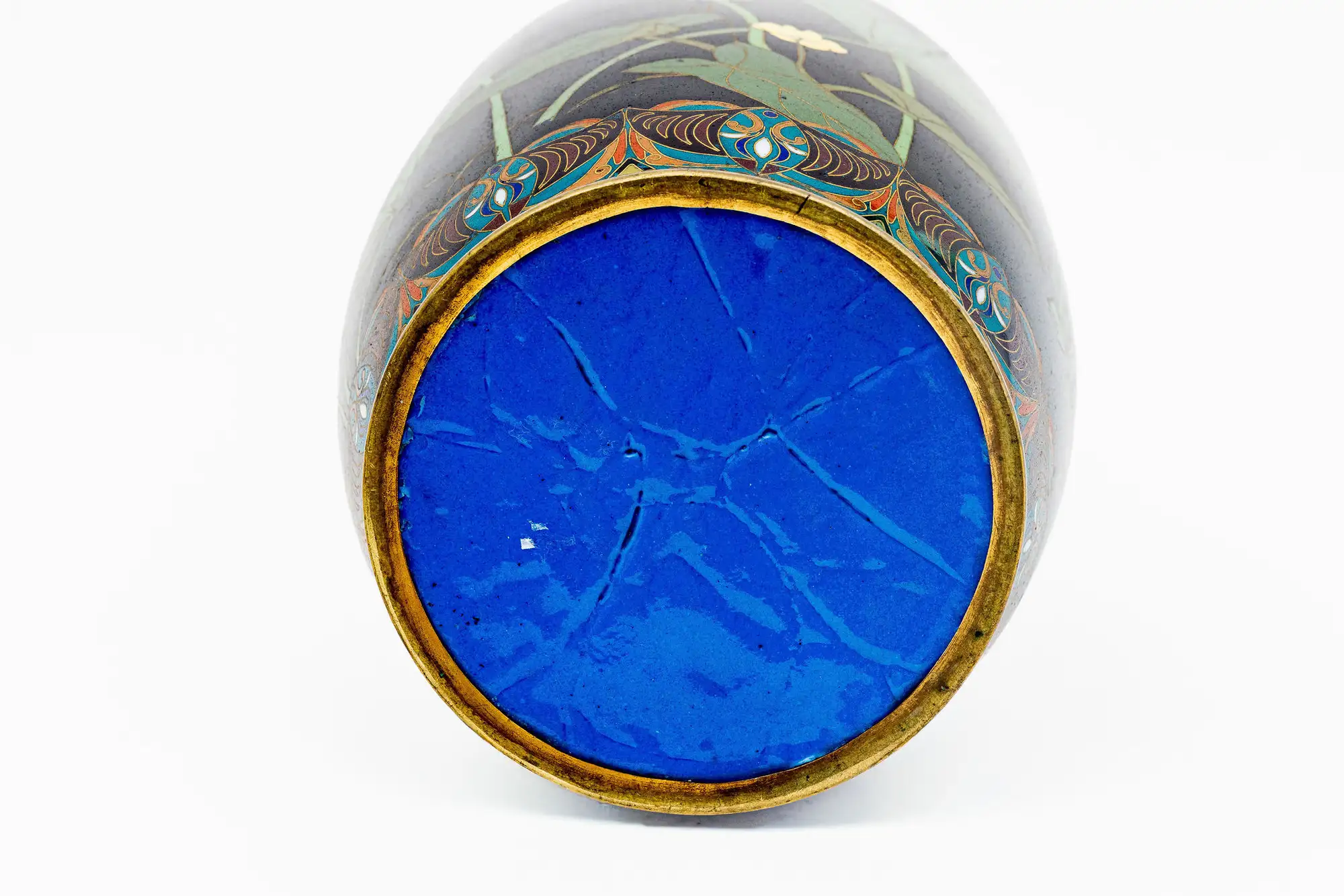
- All three vases are further enhanced by elaborate polychrome geometric borders incorporating turquoise, cobalt blue, coral red, gold, and green enamels, beautifully framing the naturalistic compositions. The exceptional quality of the wirework, brilliance of the enamel surfaces, and sophisticated balance of color and ornament are characteristic of the finest Japanese cloisonné produced during the Meiji period.
- Attribution to Goto Seizaburo:
- The attribution to Goto Seizaburo is supported by significant stylistic comparisons with documented works dating to 1881, including a cloisonné enamel plate in the Victoria and Albert Museum, London, and a related example in the National Museum of Scotland, Edinburgh
- Particularly noteworthy are the similarities in the intricate geometric borders, butterfly motifs, enamel color combinations, and exceptional technical execution. The reverse decoration of these museum examples offers especially compelling stylistic parallels with the present garniture.
- Further comparisons may be drawn with a pair of cloisonné vases by Goto Seizaburo illustrated in the catalogue of the Second National Industrial Exhibition, Tokyo, 1881.
- An exceptionally refined and visually spectacular ensemble, combining the artistic sophistication of Japanese naturalistic design with the technical mastery of Meiji-period cloisonné enameling.
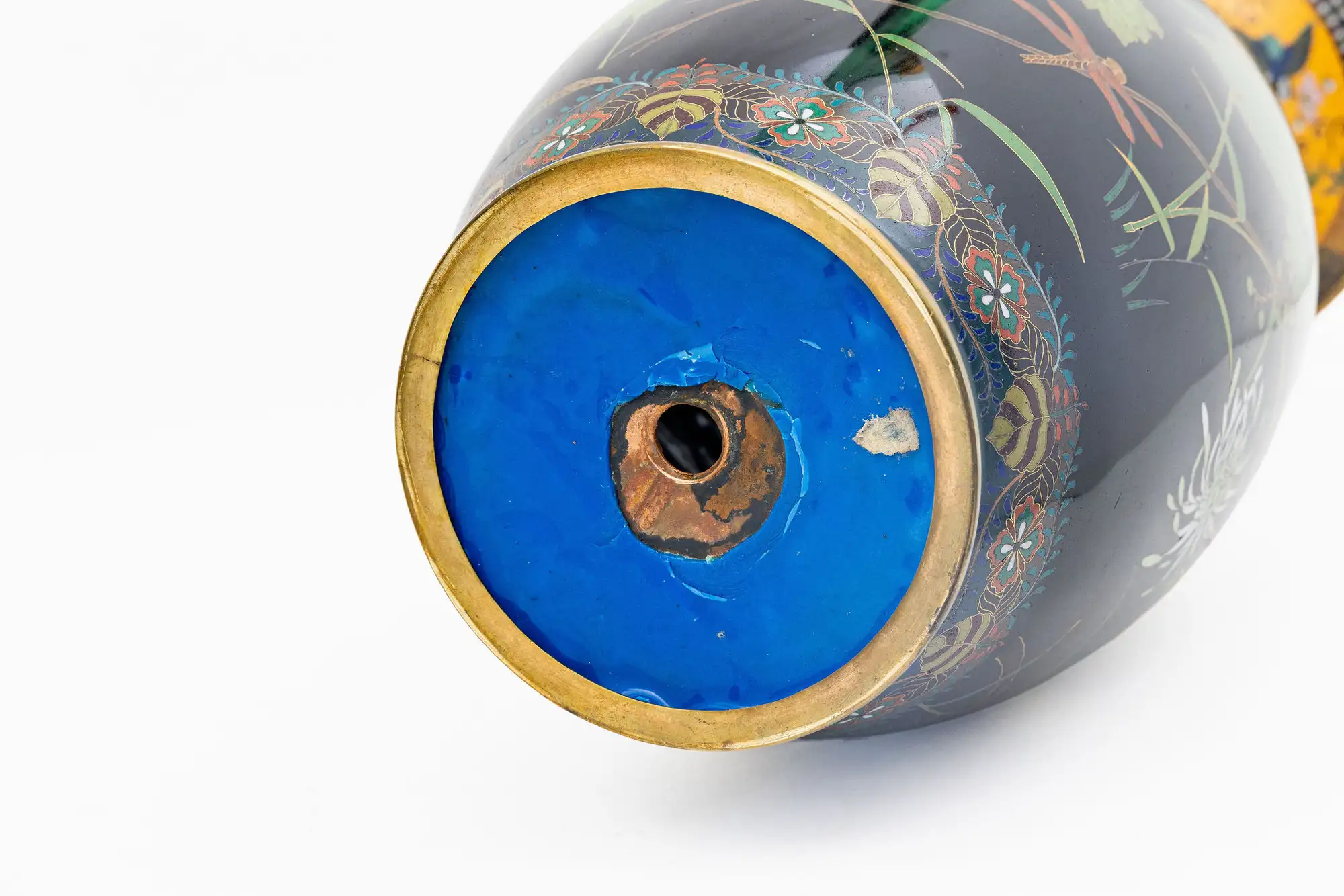
- Very good condition. Small area of restoration on the bottom border of middle vase, does not affect the appearance of the vase. Normal wear consistent with age and use.
- Pair: 10" high x 5" wide
- Center vase: 18" high x 6" wide
Period
19th Century
Sold As
Set of 3
Style
Meiji (Of the Period)
Origin
Japan
Depth
3 in (7.62 cm)
Width
6 in (15.24 cm)
Height
18 in (45.72 cm)
Date of Manufacture
19th Century
Materials & Techniques
Copper,Enamel
Condition
Good Wear consistent with age and use.
Price Range
◆
Price Range
◆ Under $5,000
◆ $5,000–$10,000
◆ $10,000–$25,000
◆ $25,000–$50,000
◆ $50,000–$100,000
◆ Over $100,000